

✮*•̩̩͙✧•̩̩͙*˚✧*˚ 𝒇𝒍𝒐𝒂𝒕𝒊𝒏𝒈 𝒕𝒉𝒓𝒐𝒖𝒈𝒉 𝒓𝒆𝒂𝒍𝒊𝒕𝒚 ˚*✧˚*•̩̩͙✧•̩̩͙*˚✮
2024
full room installation
in collaboration with
Lea Neckel
commissioned by Kulturbetriebe Burgenland
and exhibited at
Landesgalerie Burgenland
“✮*•̩̩͙✧•̩̩͙*˚✧*˚ floating through reality ˚*✧˚*•̩̩͙✧•̩̩͙*˚✮”
Landesgalerie Burgenland
Eisenstadt, AT
press
full room installation
in collaboration with
Lea Neckel
commissioned by Kulturbetriebe Burgenland
and exhibited at
Landesgalerie Burgenland
“✮*•̩̩͙✧•̩̩͙*˚✧*˚ floating through reality ˚*✧˚*•̩̩͙✧•̩̩͙*˚✮”
Landesgalerie Burgenland
Eisenstadt, AT
press
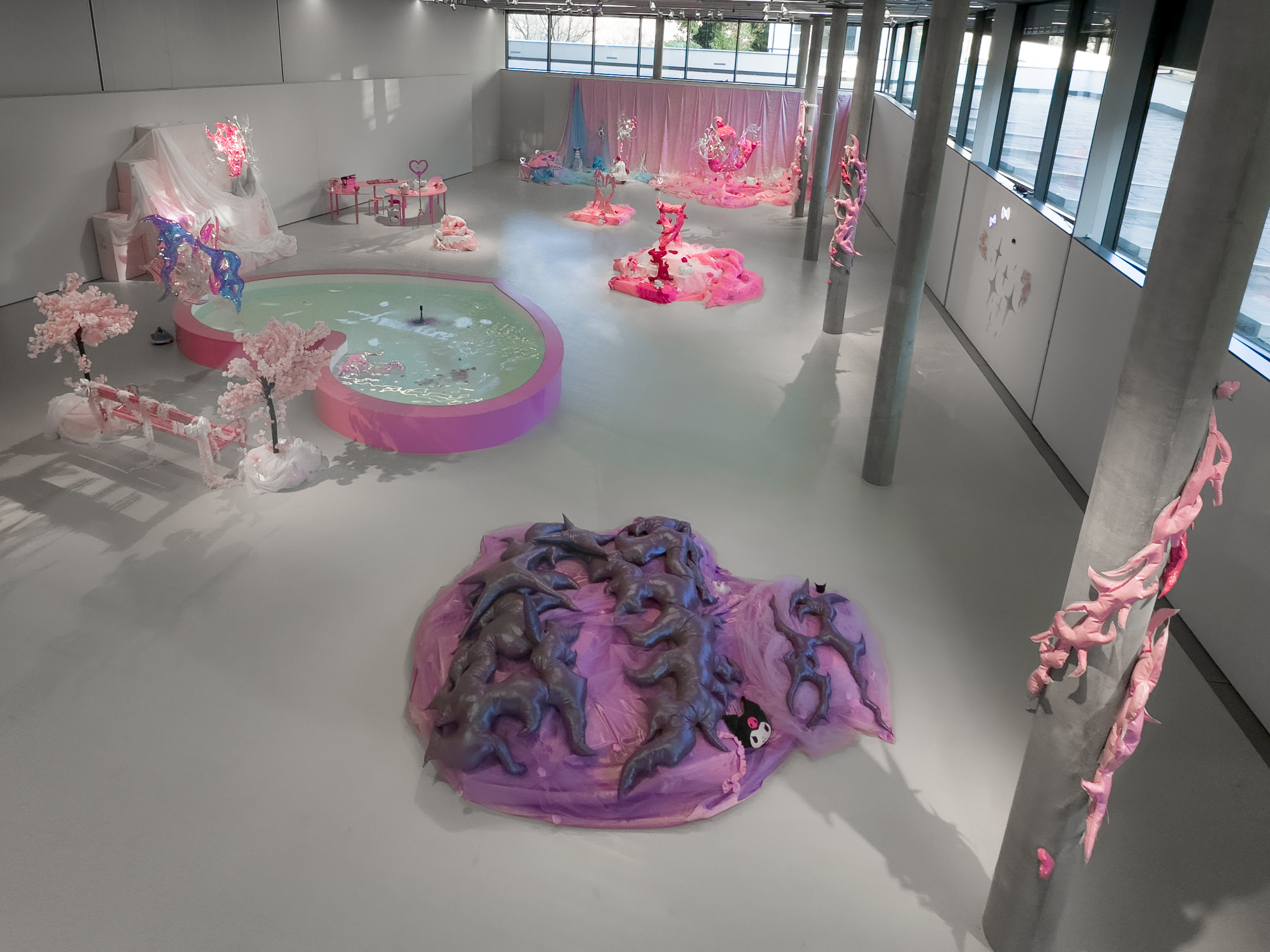
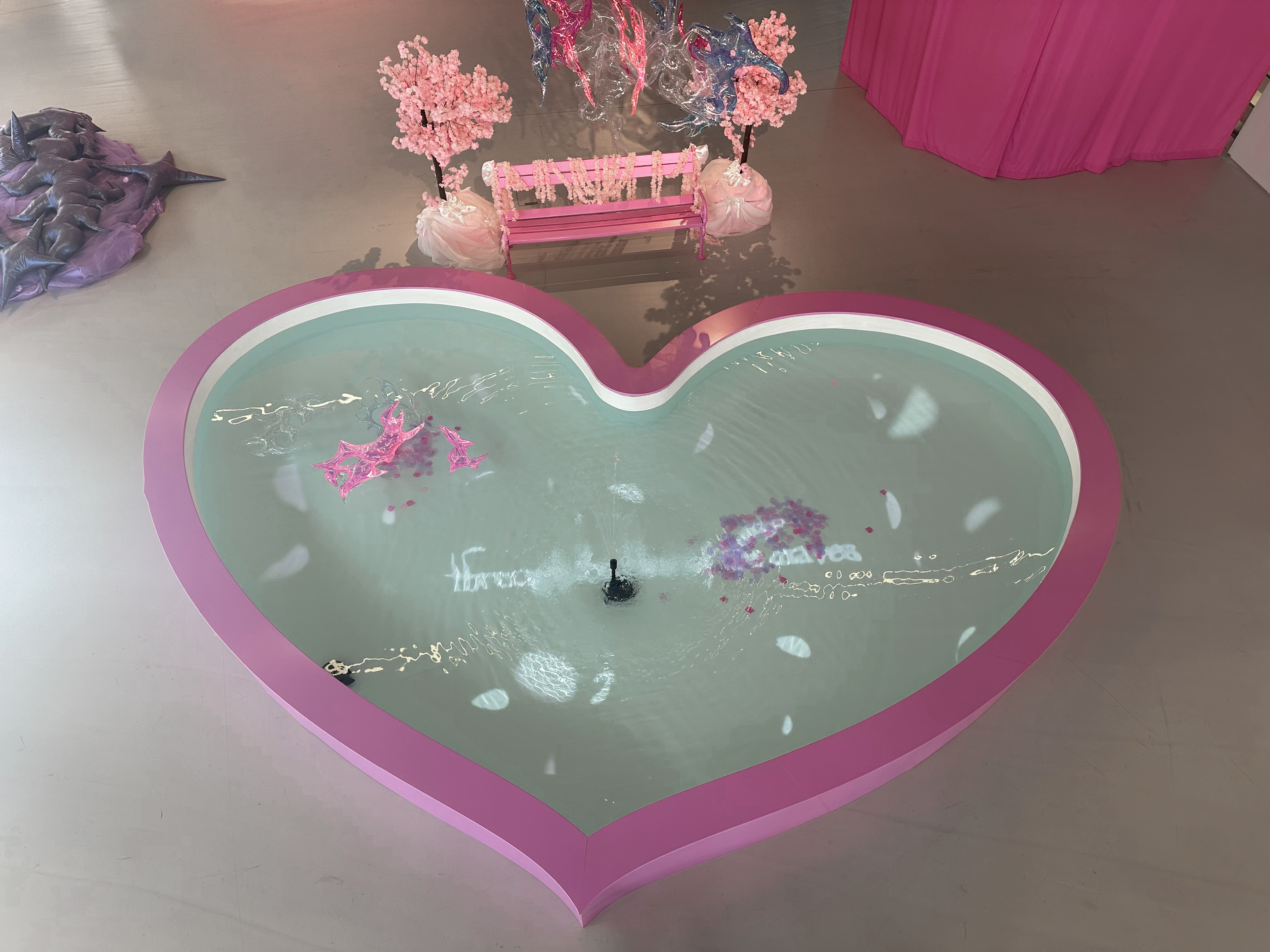
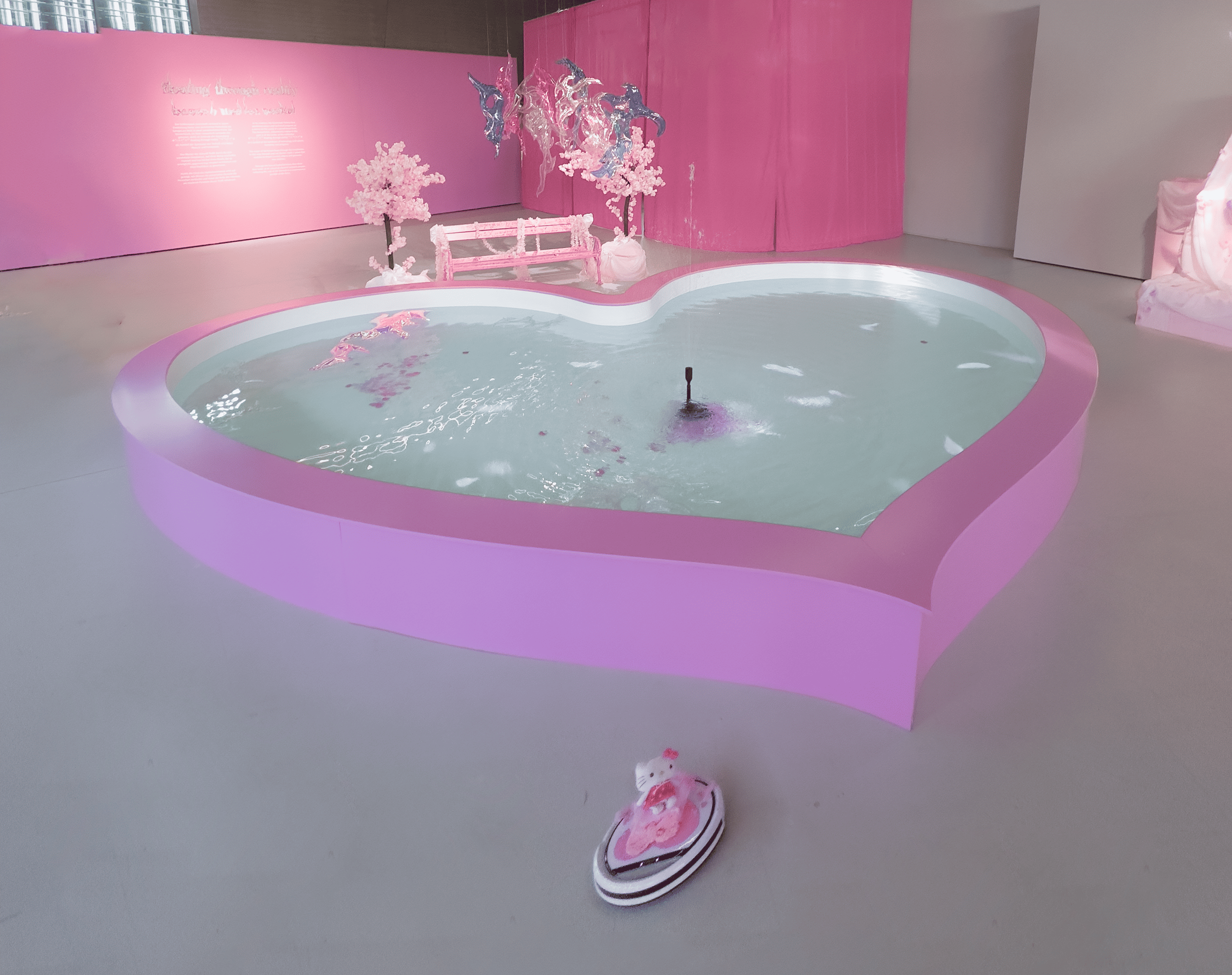
Since its creation, Eisenstadt Castle Park has combined nature and technical progress as a mirror to the world in a paradisiacal form. The Herzerlteich pond, romantically hidden in the park, is at the center of the exhibition FTR, as a symbol of the symbiosis of technology and nature, man and progress. The water of the future flows through the changing installation. In this way, Hannah and Lea Neckel create a space that makes it possible to dream present-day utopias and generate new realities.
Through the lens of hydrofeminism, they show how water connects people as a universal element, reflecting the role of the internet as a modern parallel of this force.
Through the lens of hydrofeminism, they show how water connects people as a universal element, reflecting the role of the internet as a modern parallel of this force.
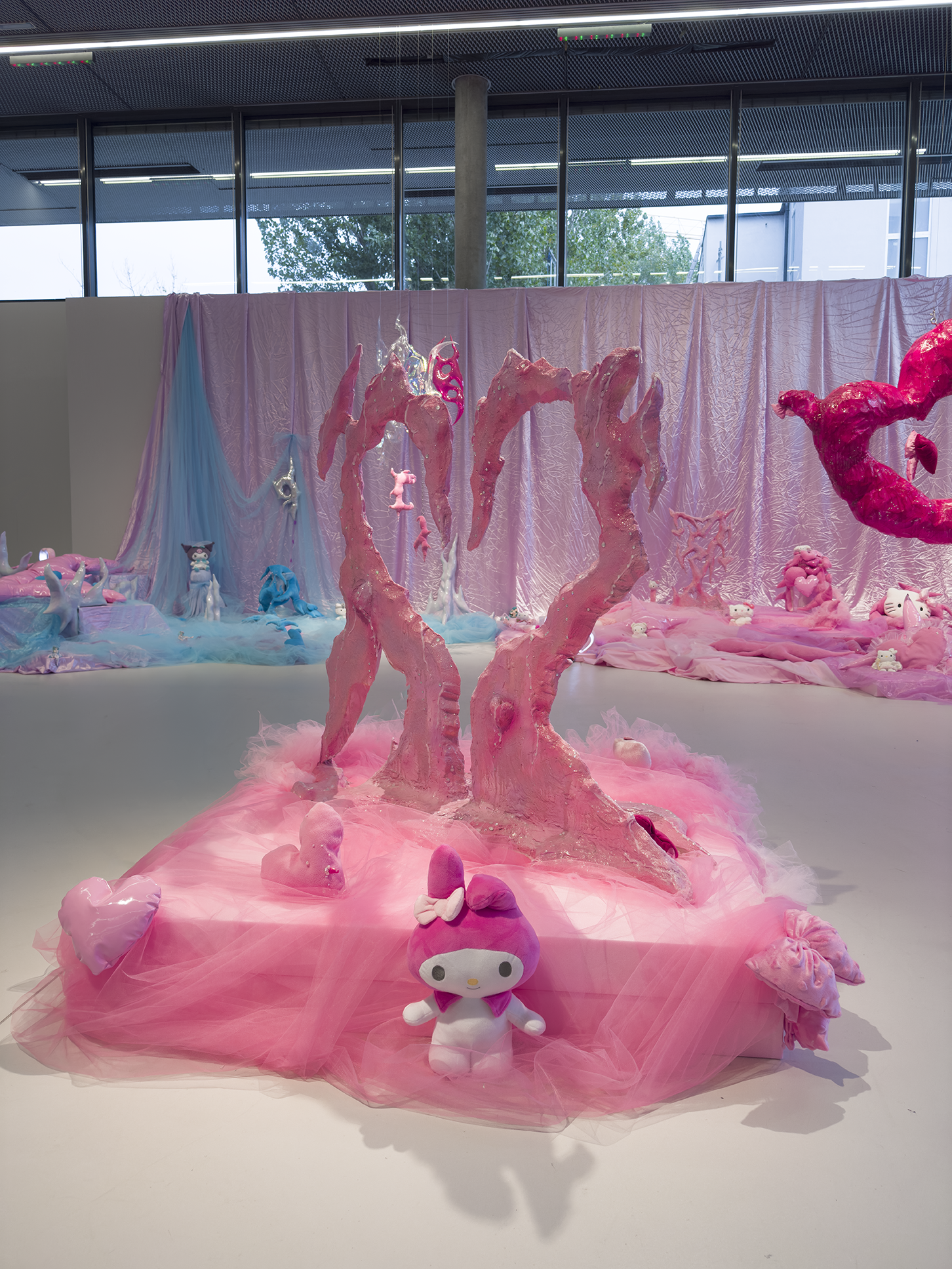
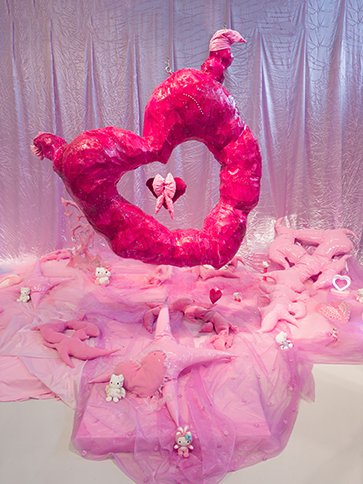

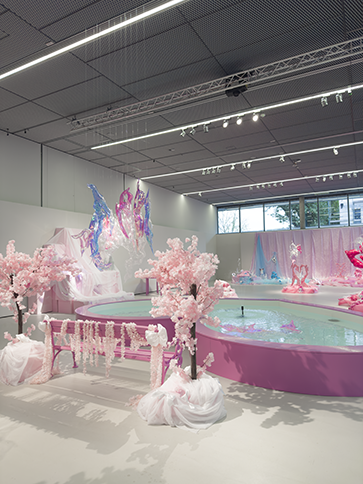
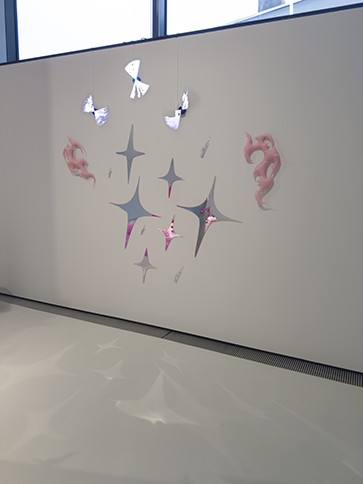
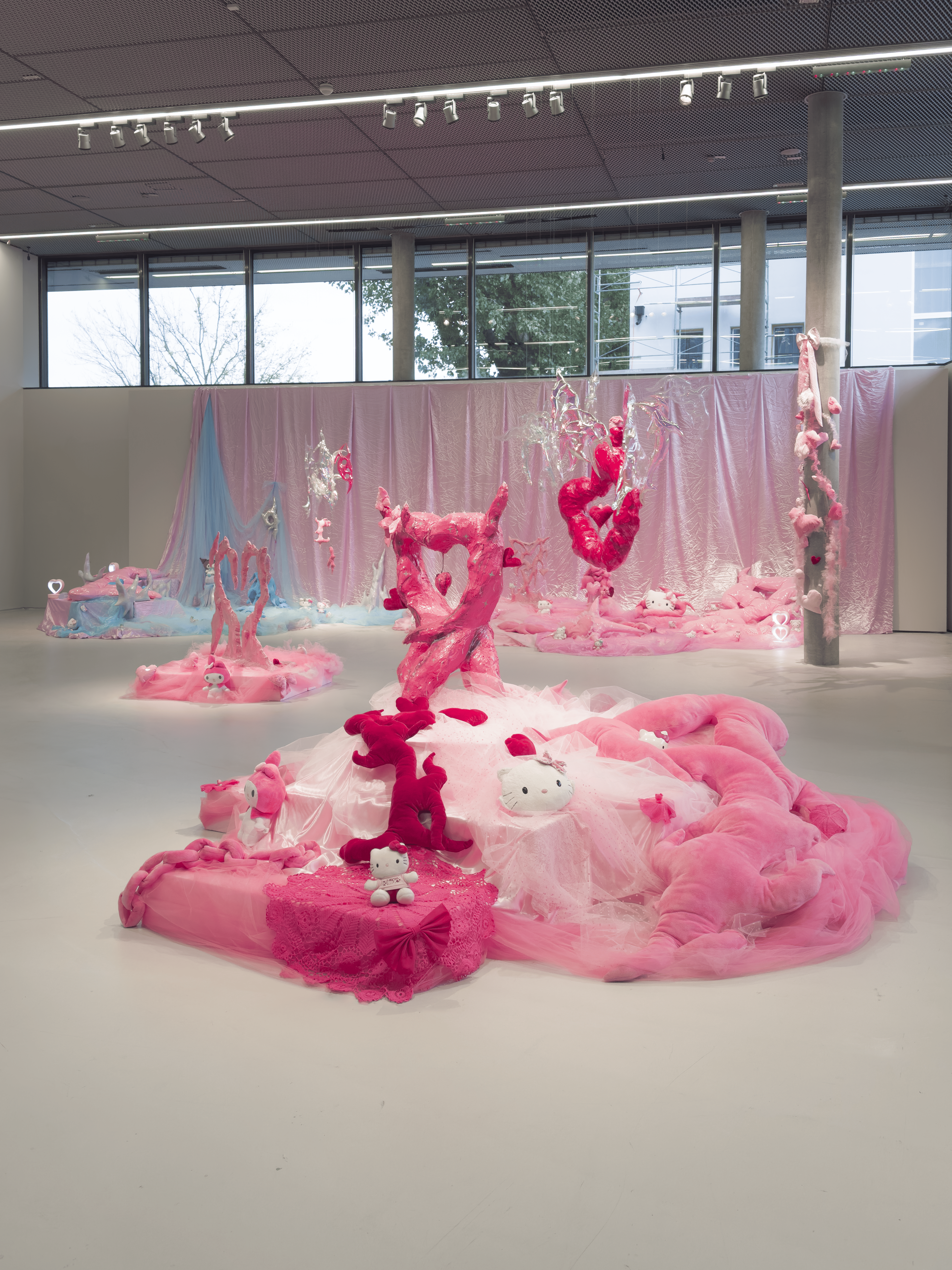
The exhibition unfolds as a constructed landscape, inviting visitors to move through the space the way one moves through a park. Paths open gradually, sightlines shift, and encounters occur without a fixed sequence. Rather than presenting a singular focal point, the installation proposes a field of relations in which movement, pause, and return become modes of engagement. The space encourages lingering, drifting, and circulating, allowing experience to accumulate over time.
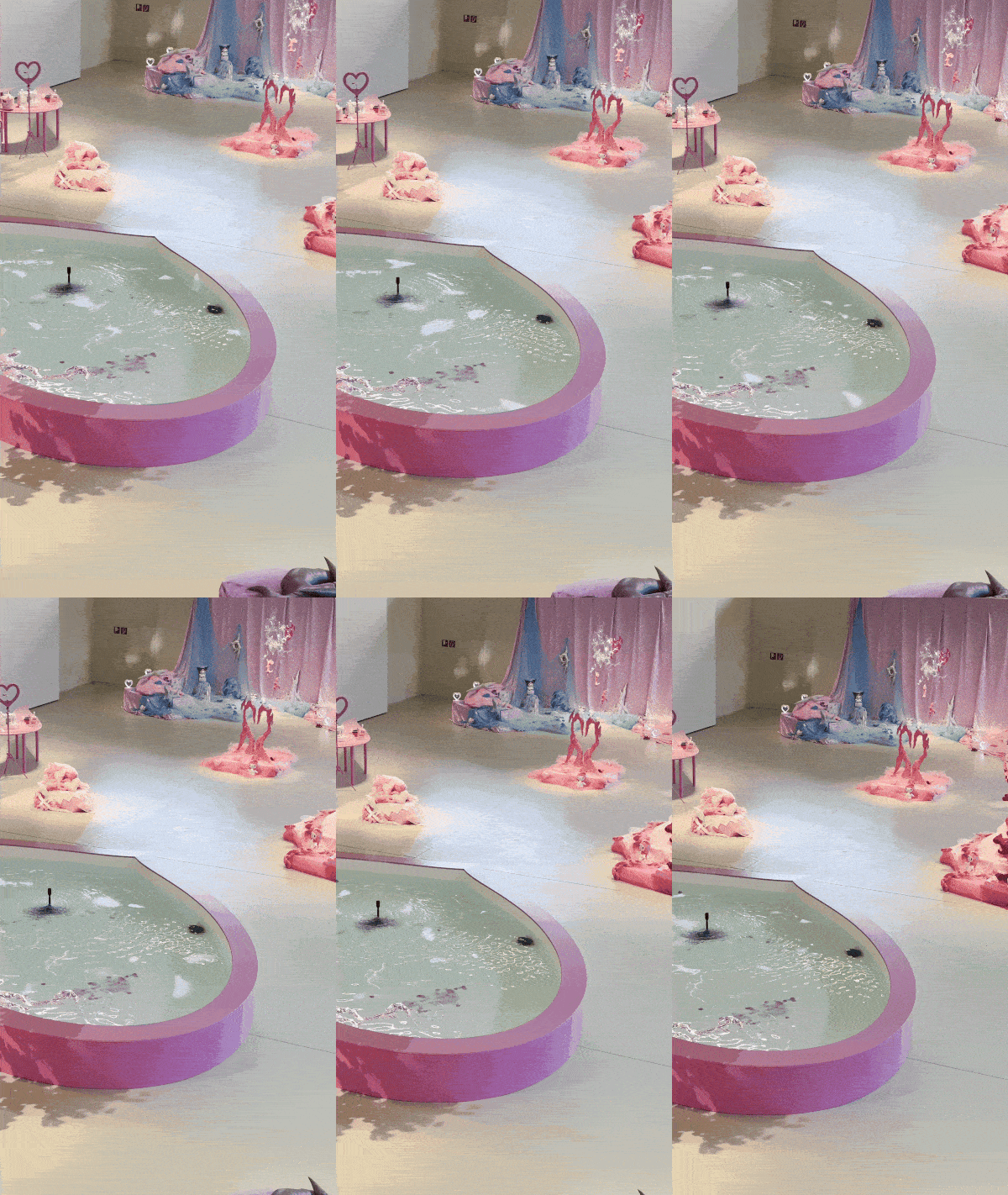
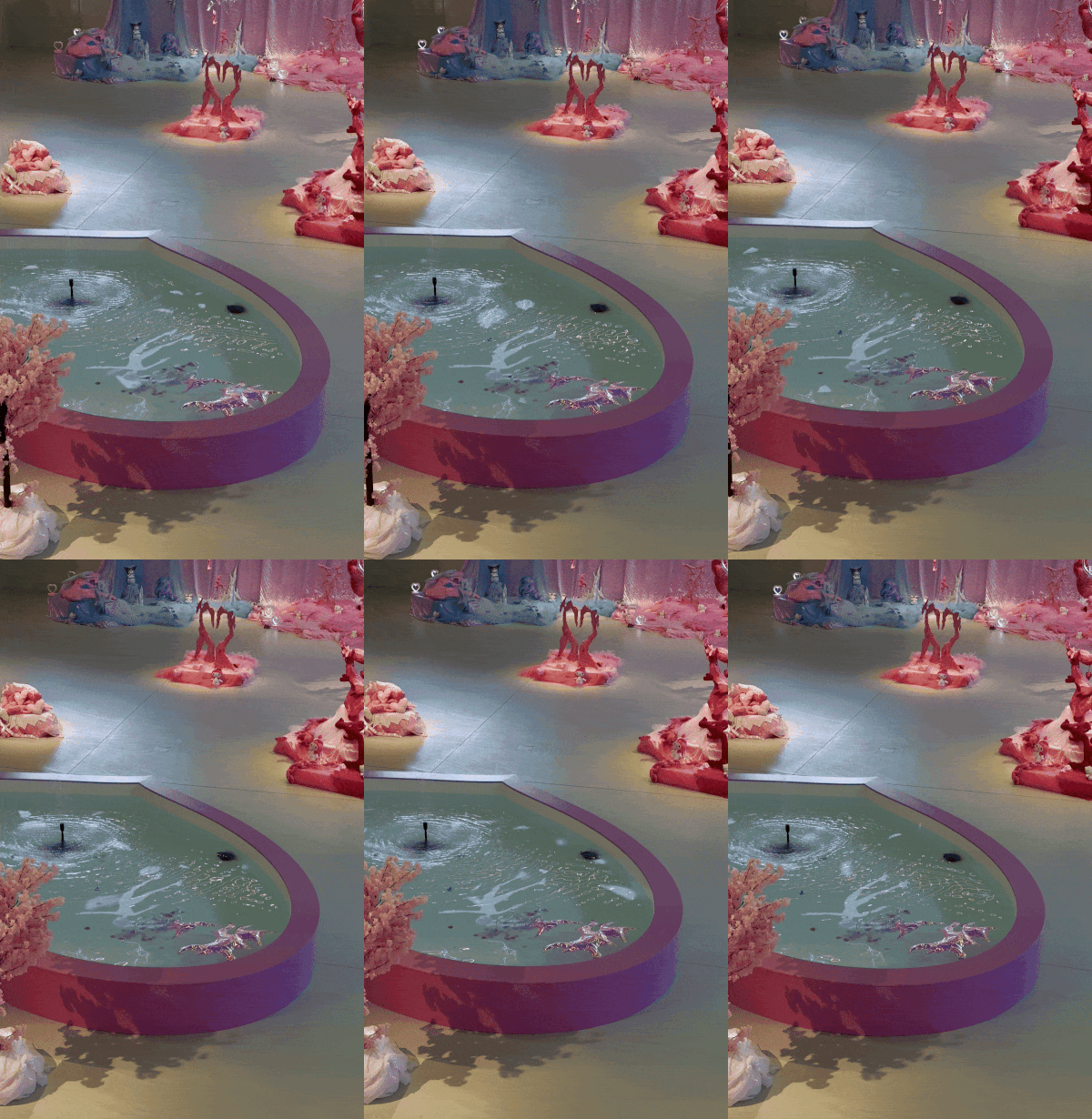
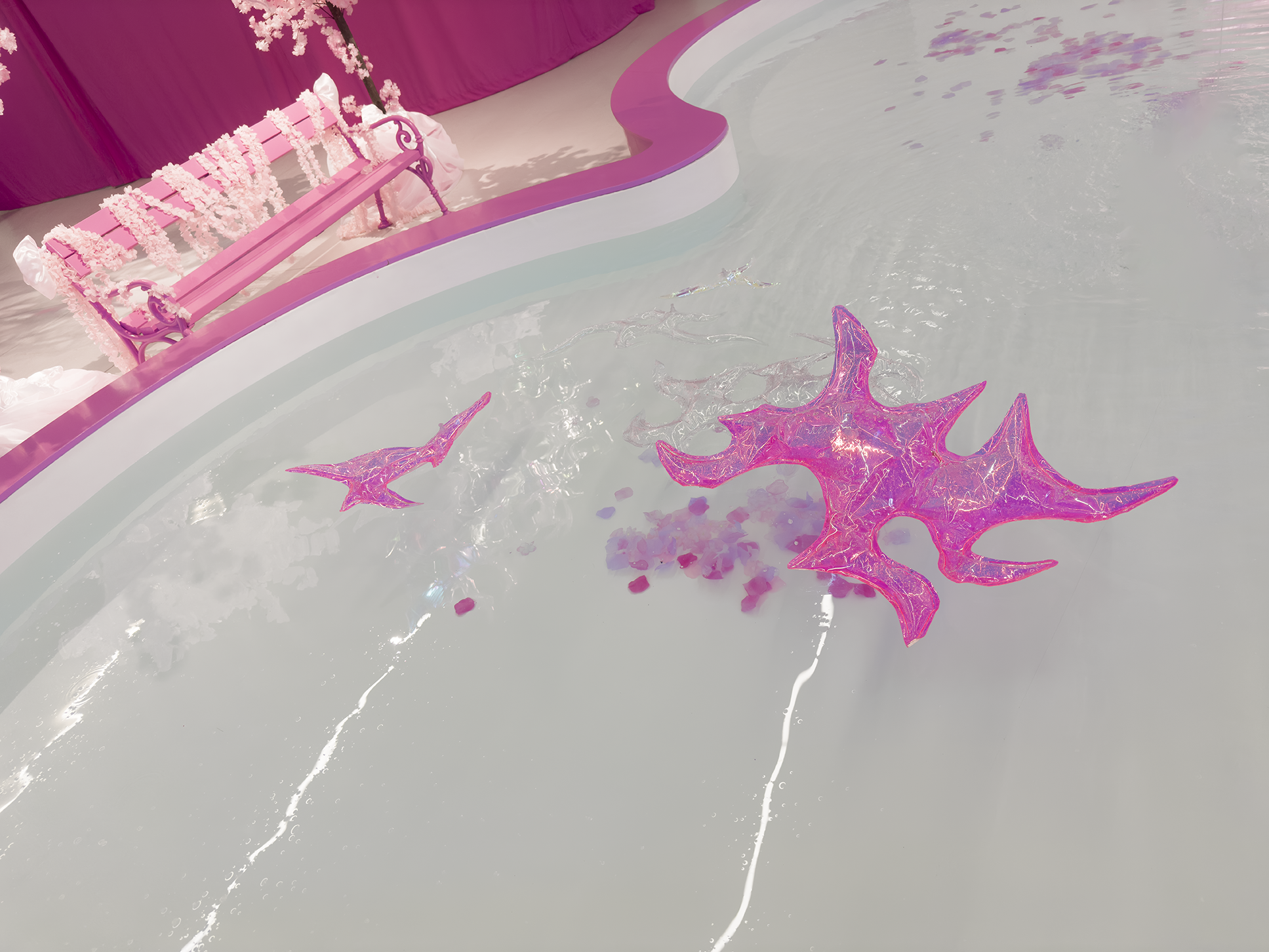
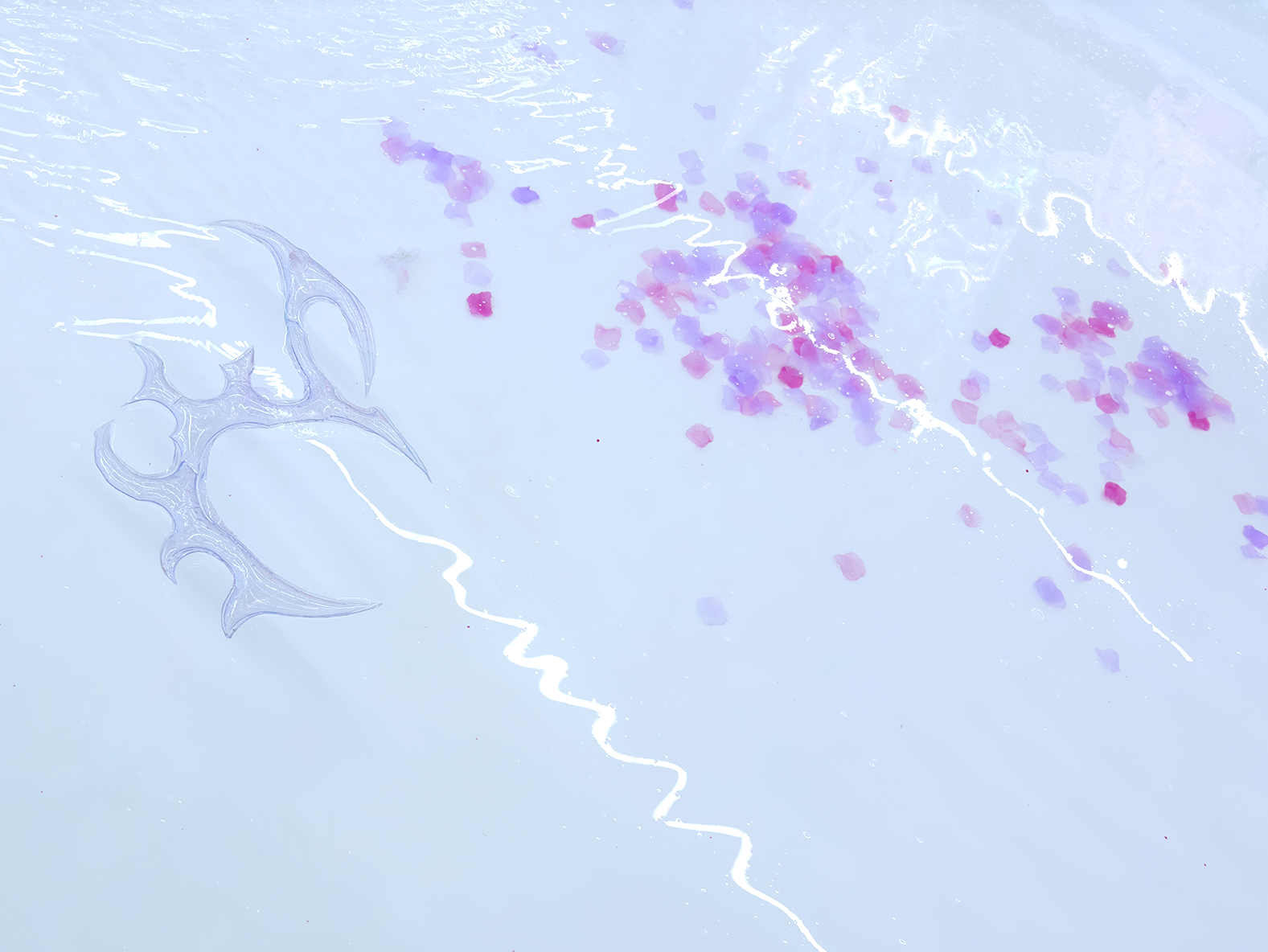
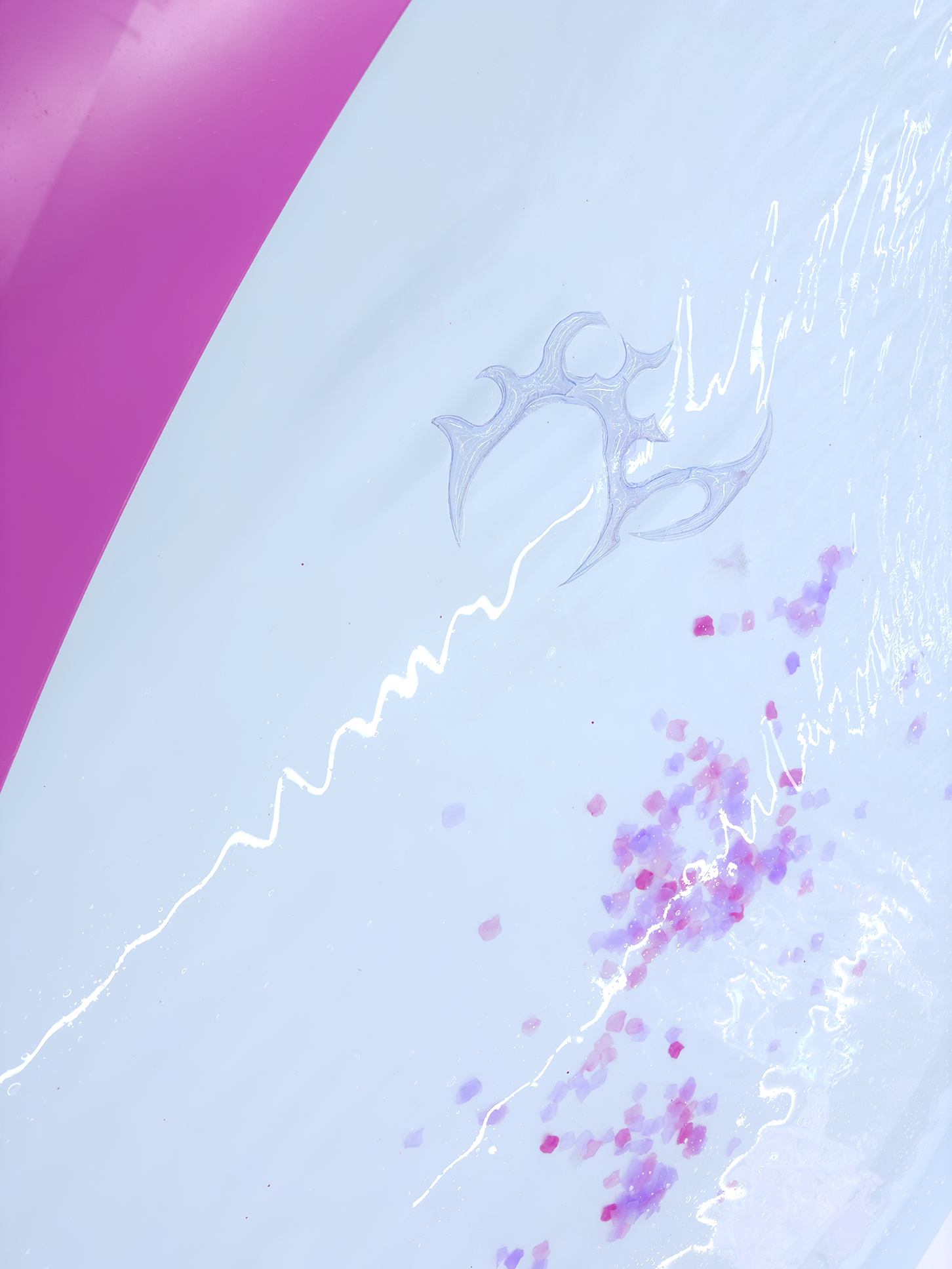
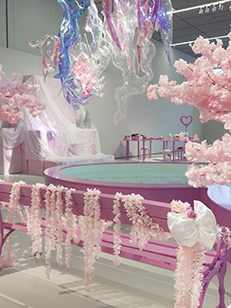
At the center lies the heart-shaped pond, a body of water that operates as both spatial anchor and affective core. Its soft pink edges and gently moving surface draw visitors inward, offering a place to stop, sit, and spend time. The pond functions as a meeting point, echoing its historical role within Eisenstadt Castle Park as a site of gathering, intimacy, and projection. Here, water is not merely an object to be viewed but an active presence, continuously circulating, reflecting light, sound, and motion. Small robotic sculptures glide across its surface, tracing slow, repetitive paths that recall digital cursors floating across screens. These gestures introduce a quiet choreography of agency, where movement appears autonomous yet deeply embedded in infrastructural systems.
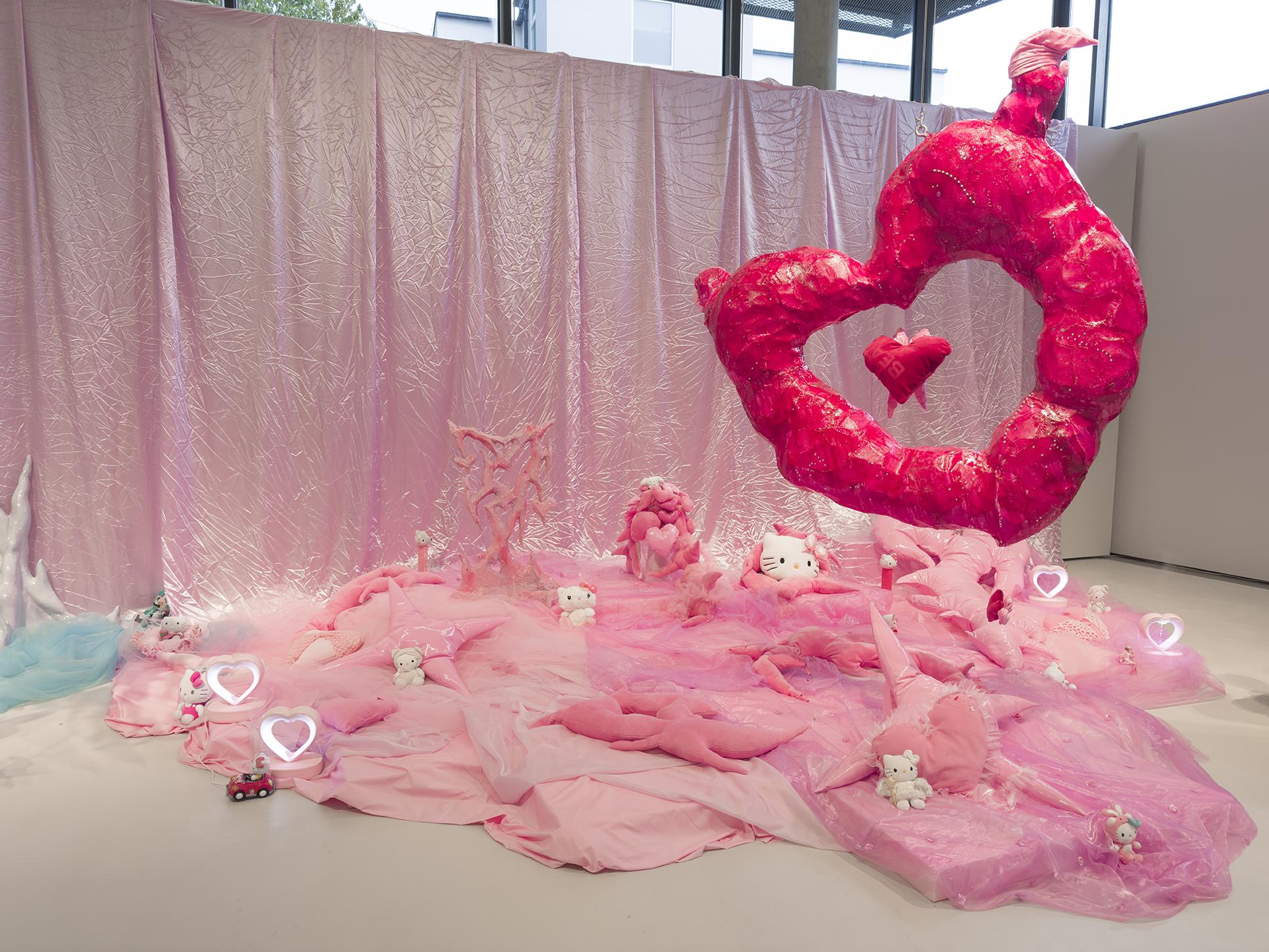
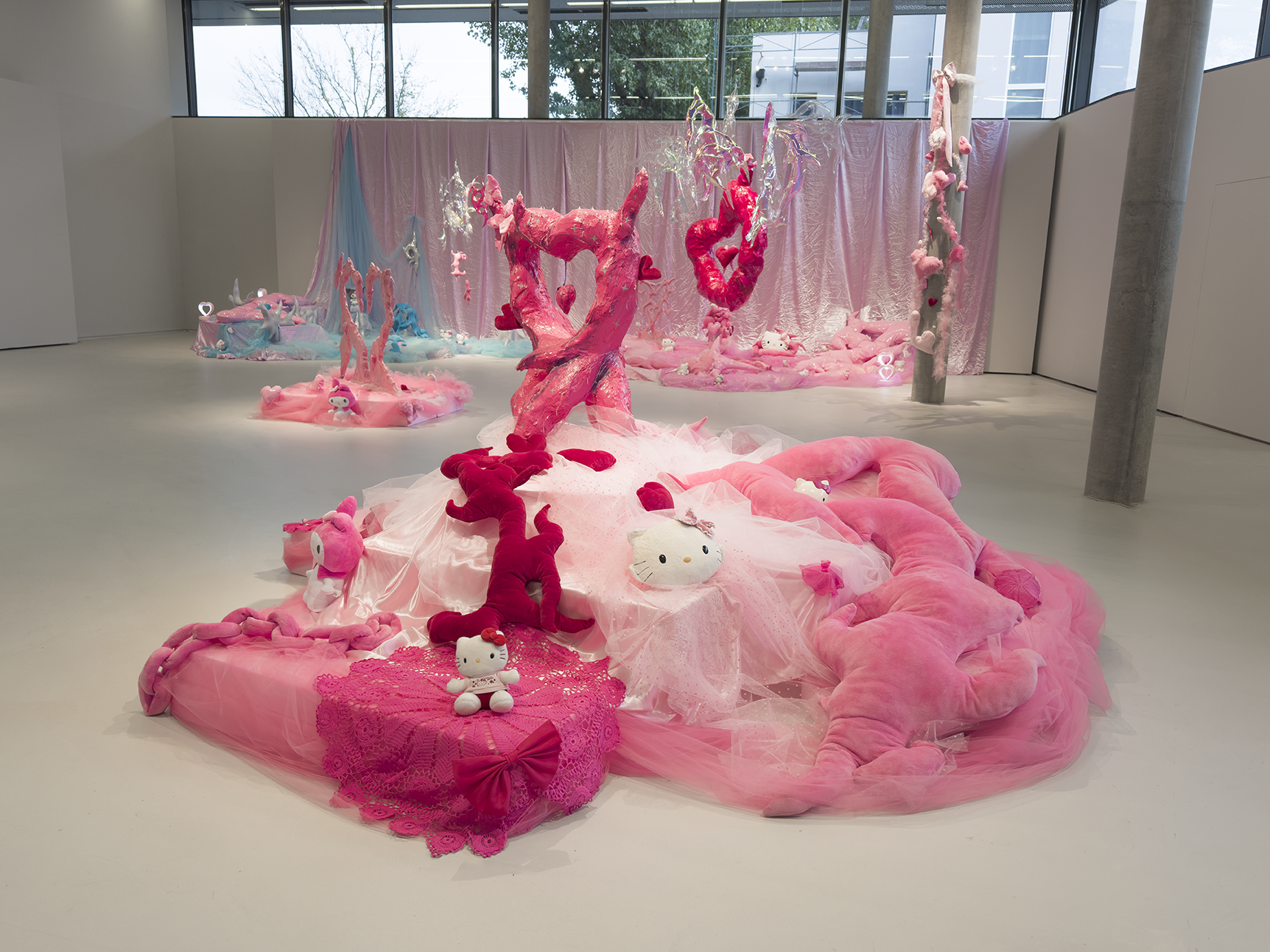
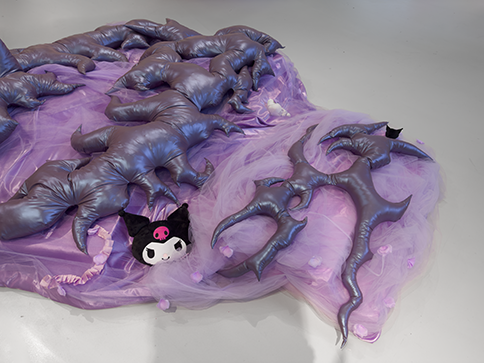
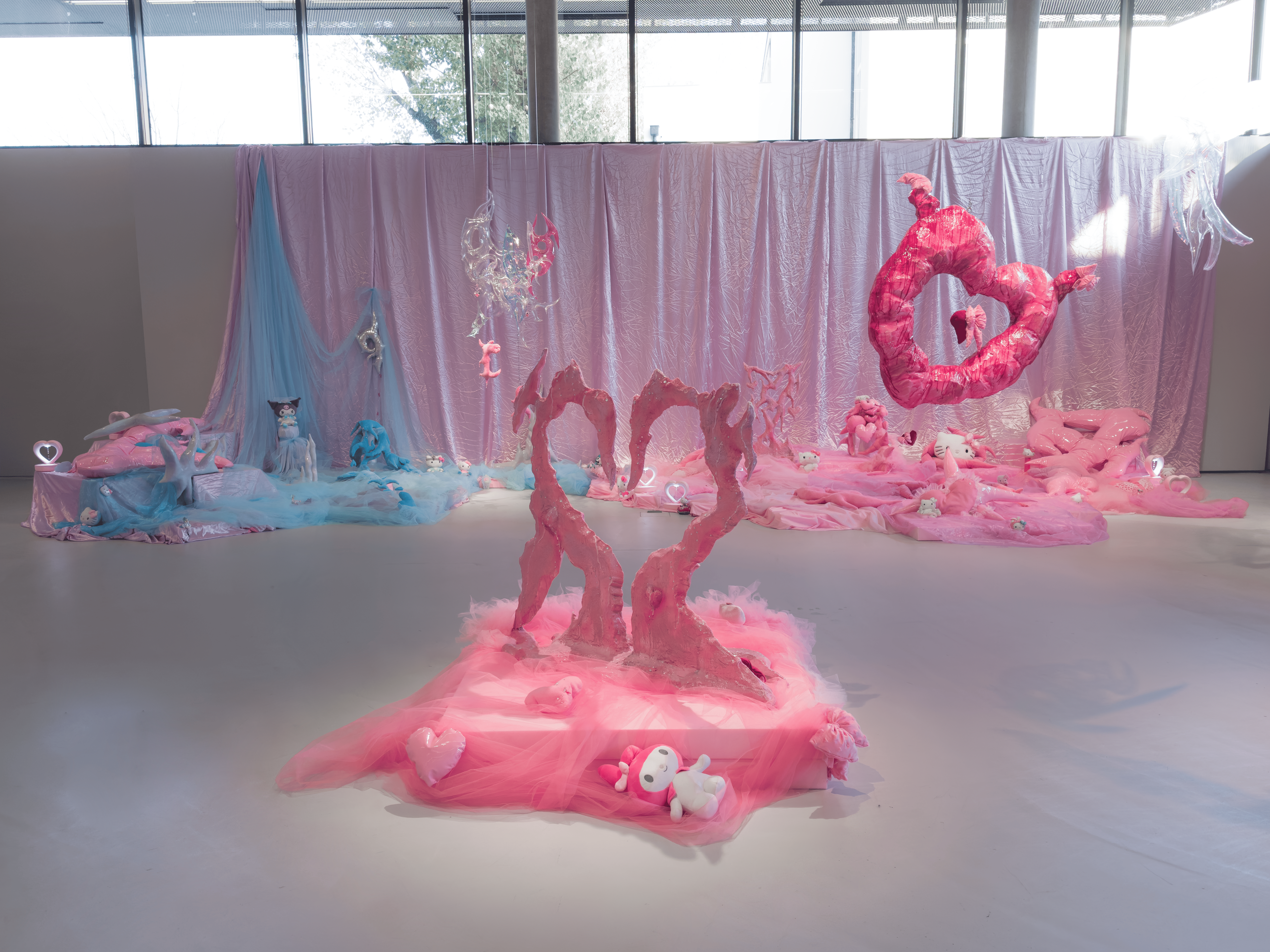
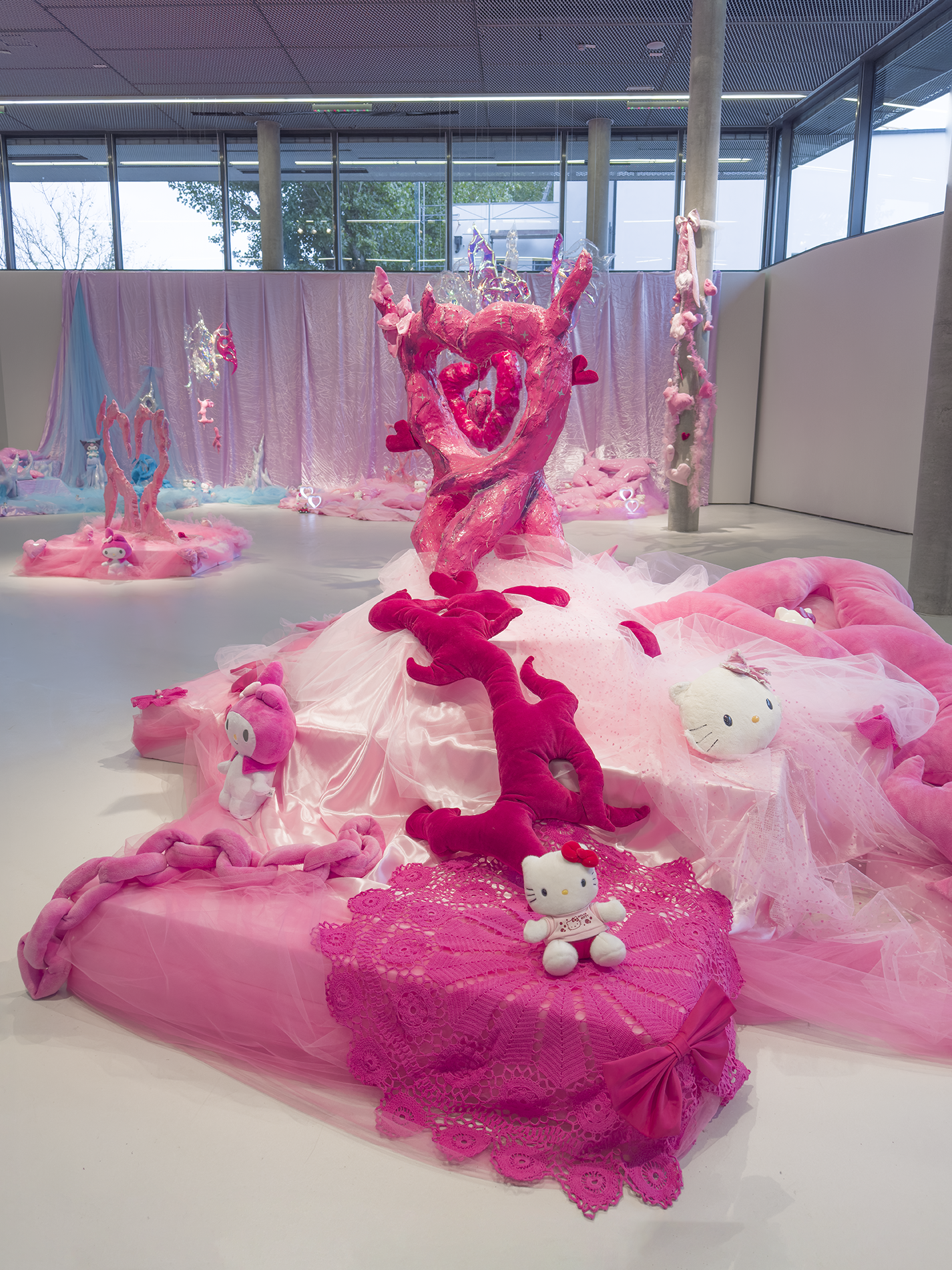
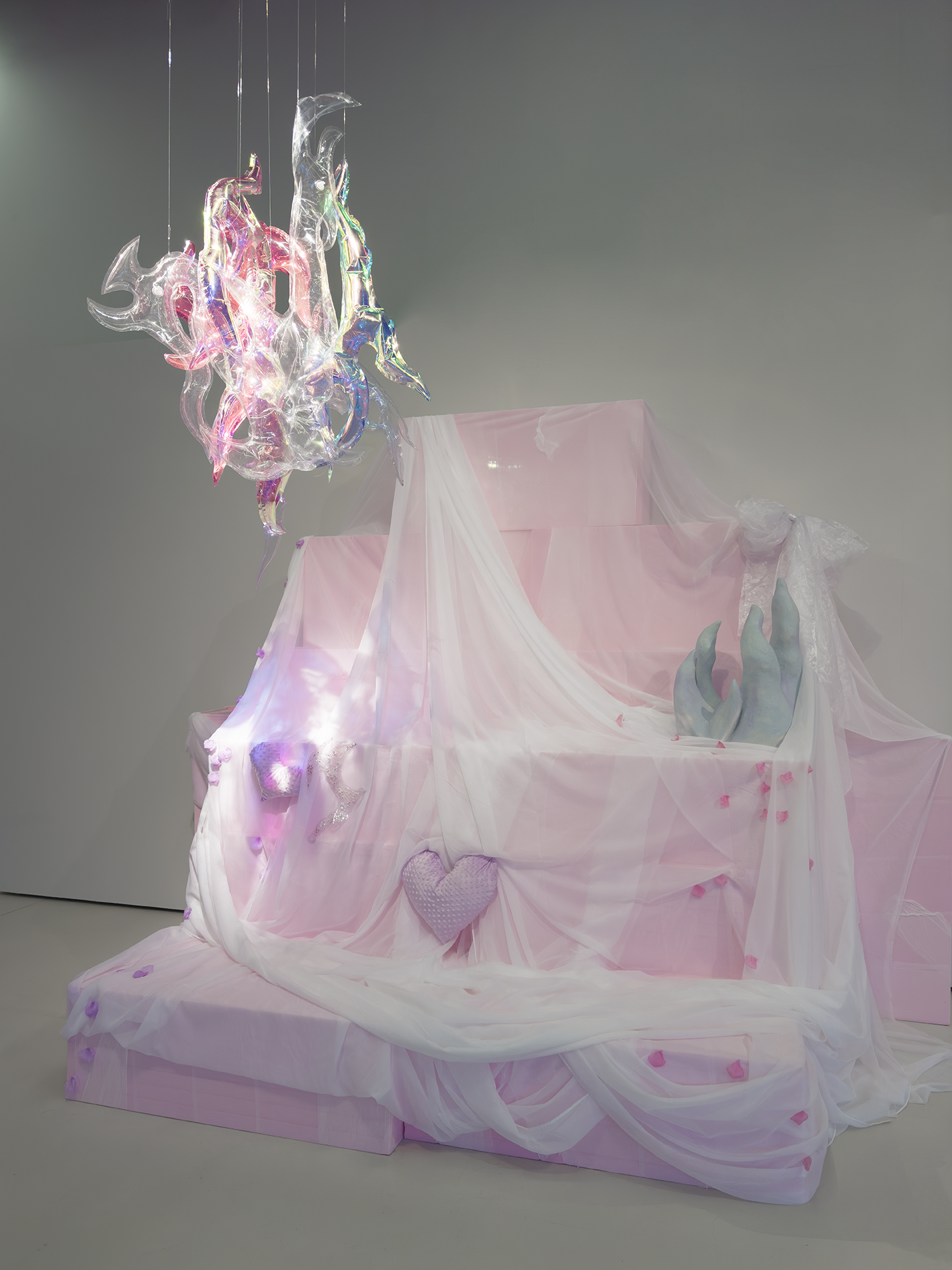
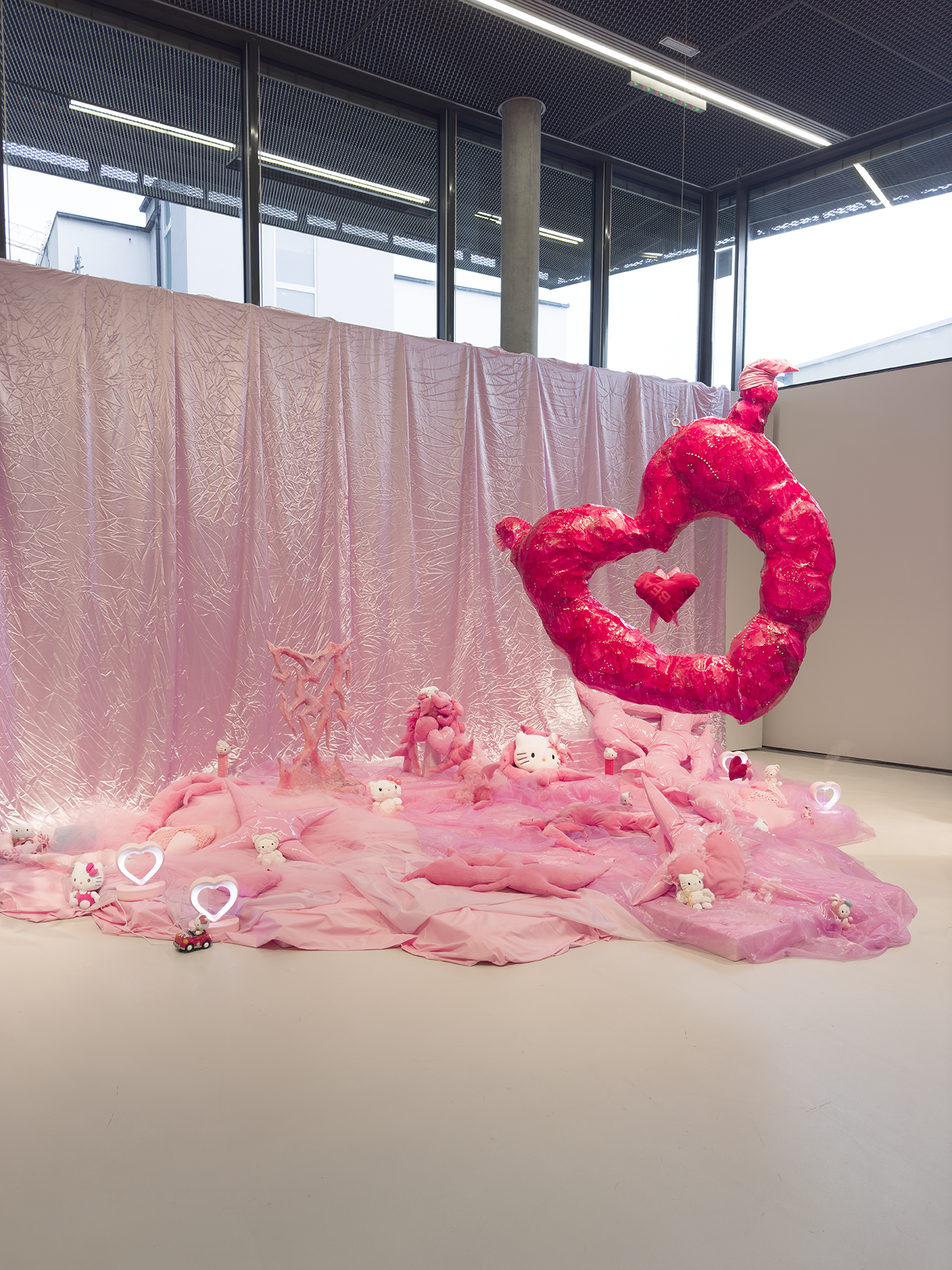
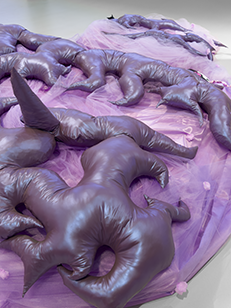
The exhibition space expands outward from this center through a series of stations that mirror the logic of a landscaped garden. Sculptural groupings emerge like islands, surrounded by translucent fabrics, cascading forms, and accumulations of material that oscillate between softness and rigidity. Heart motifs recur throughout the space in multiple scales and materialities, appearing as sculptural bodies, suspended forms, and textured surfaces. These repetitions function less as symbols than as relational markers, guiding movement and attention while remaining open to interpretation.
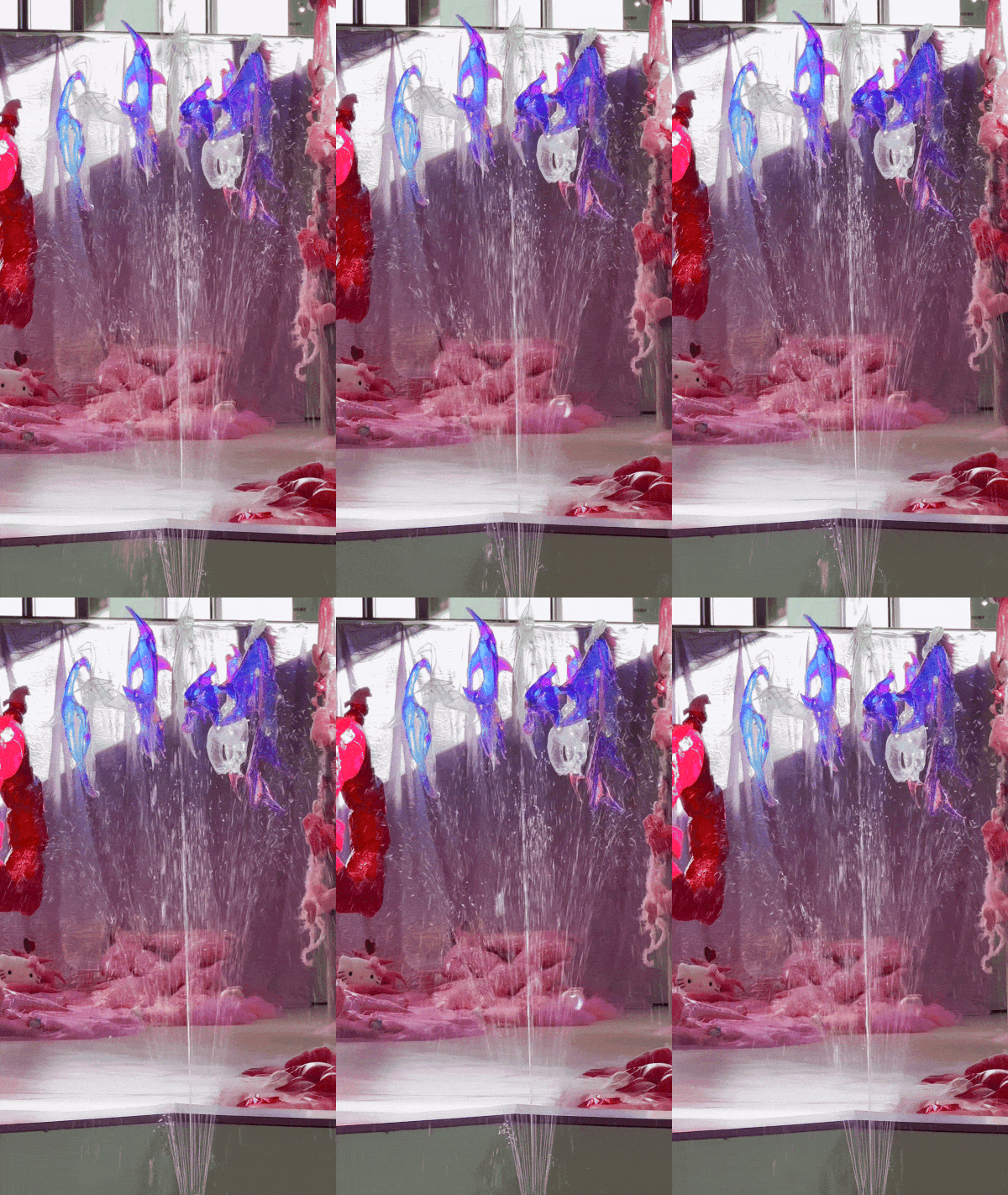
Waterfall-like structures made of fabric and Styrodur descend and pool, evoking both natural flow and artificial construction. Their material ambiguity reflects the exhibition’s interest in the porous boundary between physical and digital worlds. Soft, translucent layers coexist with hard, industrial surfaces, producing a tension between vulnerability and control, intimacy and infrastructure. The space is neither purely organic nor fully synthetic, but exists in a continuous state of negotiation.
Through the lens of hydrofeminism, water emerges as a connective substance that links bodies, technologies, and environments. It flows through the installation as a shared condition, mirroring contemporary digital networks in which connection, care, and exposure circulate simultaneously. The internet appears here not as a virtual elsewhere, but as a force comparable to water, shaping social relations through flow, repetition, and permeability. Like water, it moves through and between bodies, dissolving fixed boundaries while generating new forms of proximity.
Moving through the exhibition becomes an embodied experience of this logic. Visitors navigate between closeness and distance, immersion and observation. Time stretches at the pond, where reflection, sound, and motion invite a slower rhythm. Elsewhere, clustered forms and suspended elements produce moments of density and overload, recalling the affective intensity of online spaces. These shifts generate a landscape of emotional registers, where tenderness, excess, and speculation coexist.
The exhibition proposes space as a communal infrastructure shaped by desire, technology, and shared imaginaries. Utopia is not positioned as a distant future, but as a present practice enacted through togetherness, circulation, and the willingness to remain with uncertainty. In this environment, reality appears fluid, continuously reshaped by movement, connection, and the gentle insistence of flow.
At the center lies the heart-shaped pond, a body of water that operates as both spatial anchor and affective core. Its soft pink edges and gently moving surface draw visitors inward, offering a place to stop, sit, and spend time. The pond functions as a meeting point, echoing its historical role within Eisenstadt Castle Park as a site of gathering, intimacy, and projection. Here, water is not merely an object to be viewed but an active presence, continuously circulating, reflecting light, sound, and motion. Small robotic sculptures glide across its surface, tracing slow, repetitive paths that recall digital cursors floating across screens. These gestures introduce a quiet choreography of agency, where movement appears autonomous yet deeply embedded in infrastructural systems.
The exhibition space expands outward from this center through a series of stations that mirror the logic of a landscaped garden. Sculptural groupings emerge like islands, surrounded by translucent fabrics, cascading forms, and accumulations of material that oscillate between softness and rigidity. Heart motifs recur throughout the space in multiple scales and materialities, appearing as sculptural bodies, suspended forms, and textured surfaces. These repetitions function less as symbols than as relational markers, guiding movement and attention while remaining open to interpretation.
Waterfall-like structures made of fabric and Styrodur descend and pool, evoking both natural flow and artificial construction. Their material ambiguity reflects the exhibition’s interest in the porous boundary between physical and digital worlds. Soft, translucent layers coexist with hard, industrial surfaces, producing a tension between vulnerability and control, intimacy and infrastructure. The space is neither purely organic nor fully synthetic, but exists in a continuous state of negotiation.
Through the lens of hydrofeminism, water emerges as a connective substance that links bodies, technologies, and environments. It flows through the installation as a shared condition, mirroring contemporary digital networks in which connection, care, and exposure circulate simultaneously. The internet appears here not as a virtual elsewhere, but as a force comparable to water, shaping social relations through flow, repetition, and permeability. Like water, it moves through and between bodies, dissolving fixed boundaries while generating new forms of proximity.
Moving through the exhibition becomes an embodied experience of this logic. Visitors navigate between closeness and distance, immersion and observation. Time stretches at the pond, where reflection, sound, and motion invite a slower rhythm. Elsewhere, clustered forms and suspended elements produce moments of density and overload, recalling the affective intensity of online spaces. These shifts generate a landscape of emotional registers, where tenderness, excess, and speculation coexist.
The exhibition proposes space as a communal infrastructure shaped by desire, technology, and shared imaginaries. Utopia is not positioned as a distant future, but as a present practice enacted through togetherness, circulation, and the willingness to remain with uncertainty. In this environment, reality appears fluid, continuously reshaped by movement, connection, and the gentle insistence of flow.