











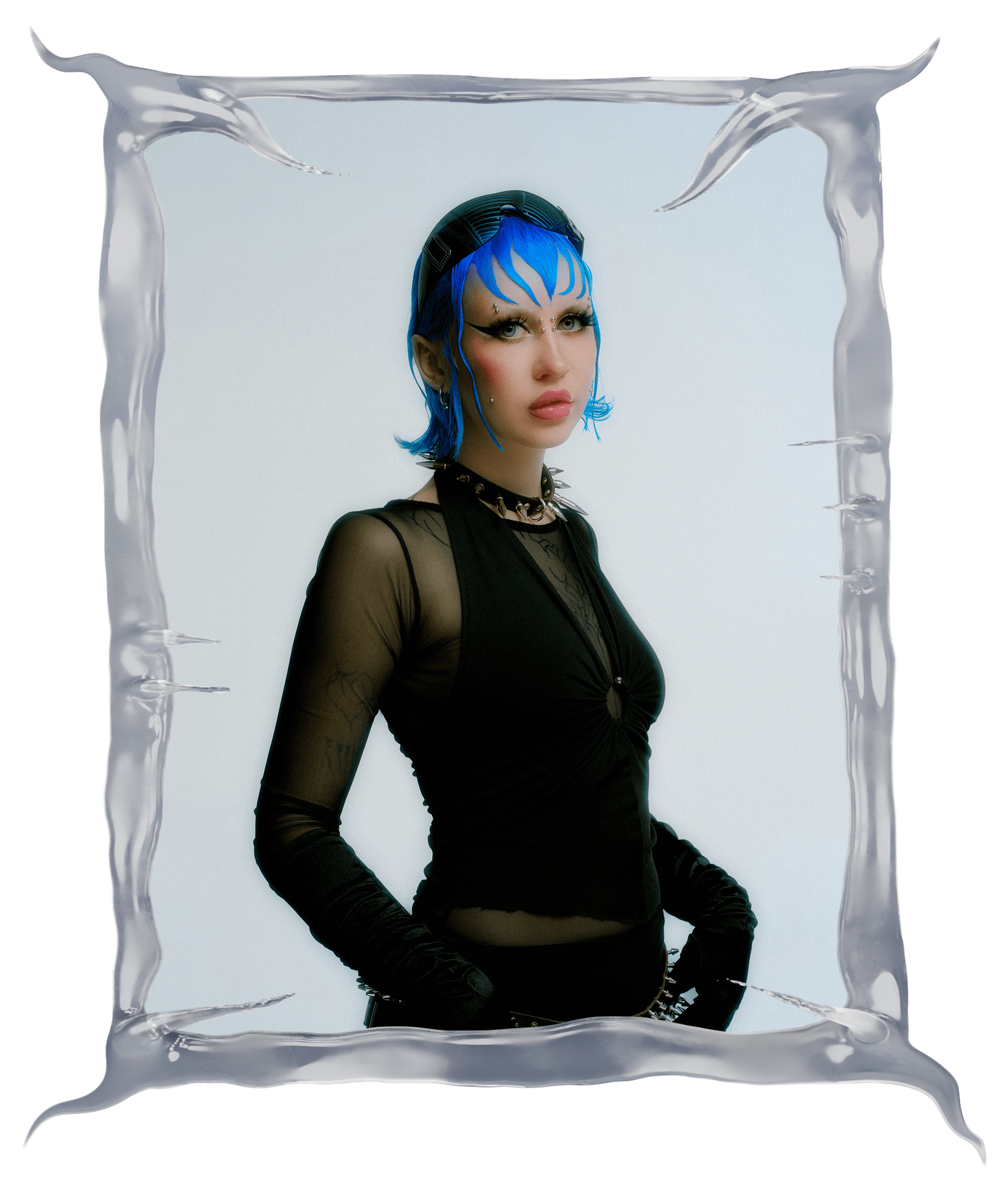
Hannah Neckel, based online as @cybervoid69 is a transmedia artist & worldbuilder, forever searching and striving towards queer futurity. She is working inbetween on & offline realms, creating emotionally infectious xxxperiences that are spilling out of the internet through the screen into the physcial world, flowing from me to you.
Fluidity acts as the main river, melting through installation, sculpture, video, sound, and digital fabrication, running on the current of queer desire, towards the dissolution of thresholds between the digital utopia and the liberation of the real, translating ephemeral online feelings into experienceable irl form, until they will manifest as reality.
⁺˚*•̩̩͙✩•̩̩͙*˚⁺‧͙⁺˚*•̩̩͙♡•̩̩͙*˚⁺‧͙⁺˚*•̩̩͙✩•̩̩͙*˚⁺‧͙
⁺˚*•̩̩͙✩•̩̩͙*˚⁺‧͙⁺˚*•̩̩͙♡•̩̩͙*˚⁺‧͙⁺˚*•̩̩͙✩•̩̩͙*˚⁺‧͙
Hannah Neckel
based in Vienna ~&~ Online
holds a Master of Fine Art with Honors
in Transmedia Art class of Brigitte Kowanz & Jakob Lena Knebl
from the University of Applied Arts Vienna, Austria
⁺˚*•̩̩͙✩•̩̩͙*˚⁺‧͙⁺˚*•̩̩͙♡•̩̩͙*˚⁺‧͙⁺˚*•̩̩͙✩•̩̩͙*˚⁺‧͙
Water, flow, and softness as material and sensation, shaping an environment where boundaries dissolve and queer futurity becomes spatial and immersive.
Technology drives this practice as an extension of desire itself, a xenofeminist technomaterialism in which computational tools and digital fabrication become instruments of gender abolition and the expansion of the imaginable. Wetware and hardware interpermeate. The screen leaks into sculptural space; bodies of water process affect and data simultaneously.
Constructing worlds where desire springs from within the present toward the horizon it generates, always already overflowing the categories that would contain it. What circulates online ~fantasy, affect, desire, emotions, fragments of community ~ is gathered, reshaped, and offered back as shared encounters.
Technology drives this practice as an extension of desire itself, a xenofeminist technomaterialism in which computational tools and digital fabrication become instruments of gender abolition and the expansion of the imaginable. Wetware and hardware interpermeate. The screen leaks into sculptural space; bodies of water process affect and data simultaneously.
Constructing worlds where desire springs from within the present toward the horizon it generates, always already overflowing the categories that would contain it. What circulates online ~fantasy, affect, desire, emotions, fragments of community ~ is gathered, reshaped, and offered back as shared encounters.
Sculpture and installation function as operational hyper spaces where desire can linger, soften edges, generating new ontologies of relation, presence and reality. Within these hyper spaces, the figure of water emerges as both metaphor and operative material. Water embodies the logic of circulation and flow: emotional, affective, and networked; functioning as an analogue for the internet’s liquidity while simultaneously destabilizing categorical boundaries.
Rather than pointing toward a distant future, the work insists on the present as a site of transformation.
Realizing utopia not as deferred fantasy but as a speculative present continuously lived into being.
![]()
Rather than pointing toward a distant future, the work insists on the present as a site of transformation.
Realizing utopia not as deferred fantasy but as a speculative present continuously lived into being.
⁺˚*•̩̩͙✩•̩̩͙*˚⁺‧͙⁺˚*•̩̩͙♡•̩̩͙*˚⁺‧͙⁺˚*•̩̩͙✩•̩̩͙*˚⁺‧͙
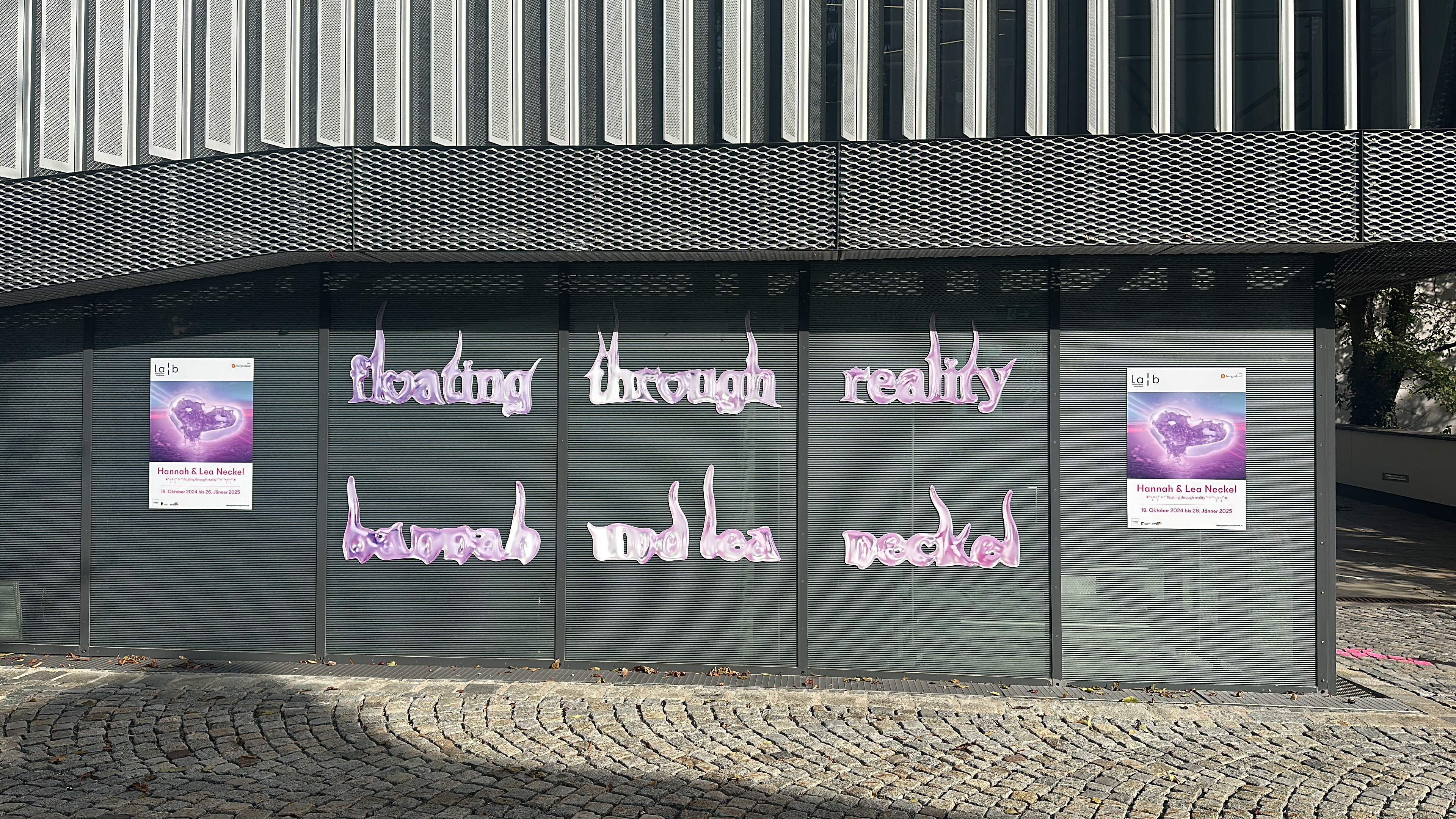
✮*•̩̩͙✧•̩̩͙*˚✧*˚ 𝒇𝒍𝒐𝒂𝒕𝒊𝒏𝒈 𝒕𝒉𝒓𝒐𝒖𝒈𝒉 𝒓𝒆𝒂𝒍𝒊𝒕𝒚 ˚*✧˚*•̩̩͙✧•̩̩͙*˚✮
2024
full room installation
in collaboration with
Lea Neckel
commissioned by Kulturbetriebe Burgenland
and exhibited at
Landesgalerie Burgenland
“✮*•̩̩͙✧•̩̩͙*˚✧*˚ floating through reality ˚*✧˚*•̩̩͙✧•̩̩͙*˚✮”
Landesgalerie Burgenland
Eisenstadt, AT
press
full room installation
in collaboration with
Lea Neckel
commissioned by Kulturbetriebe Burgenland
and exhibited at
Landesgalerie Burgenland
“✮*•̩̩͙✧•̩̩͙*˚✧*˚ floating through reality ˚*✧˚*•̩̩͙✧•̩̩͙*˚✮”
Landesgalerie Burgenland
Eisenstadt, AT
press
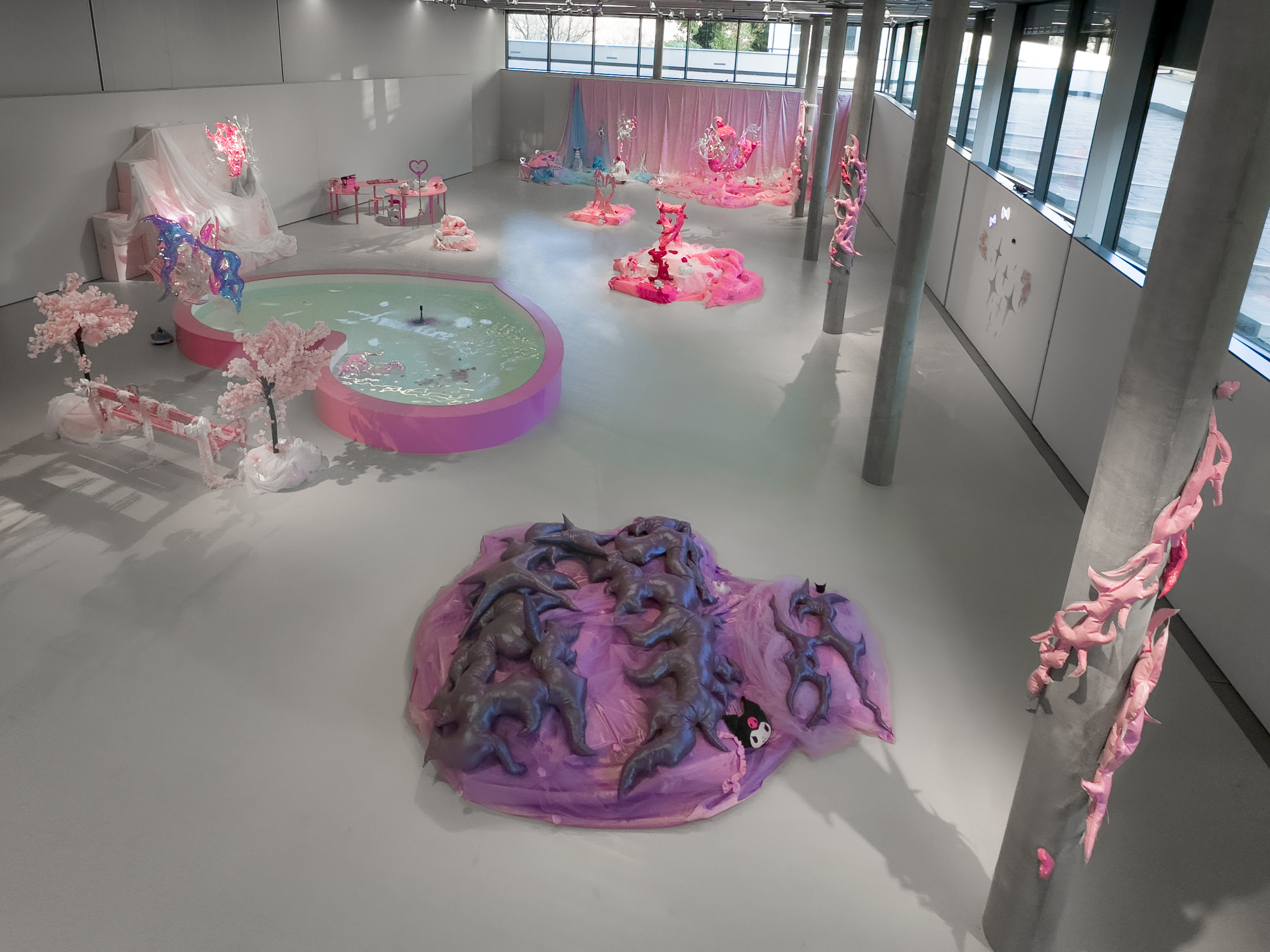
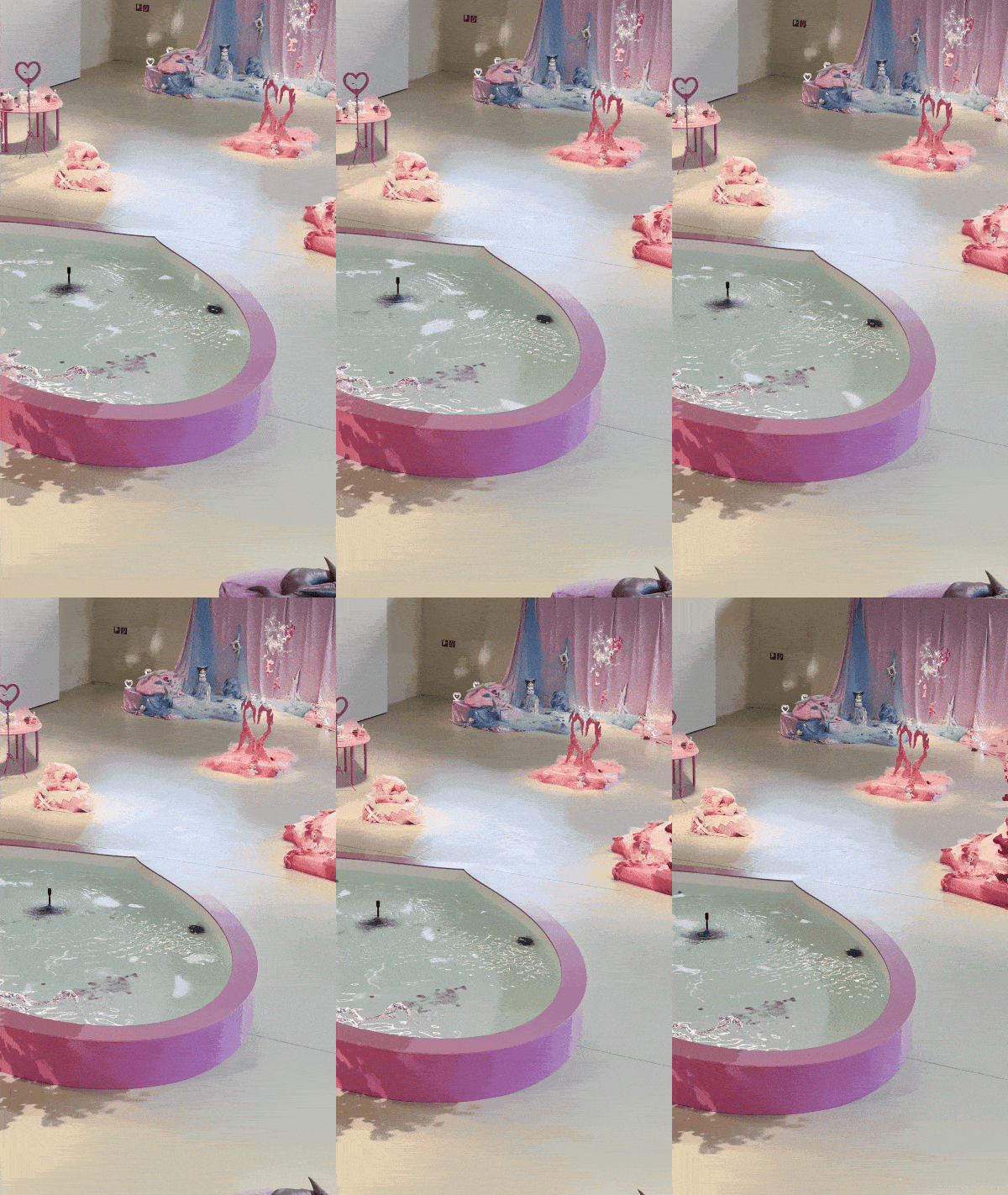
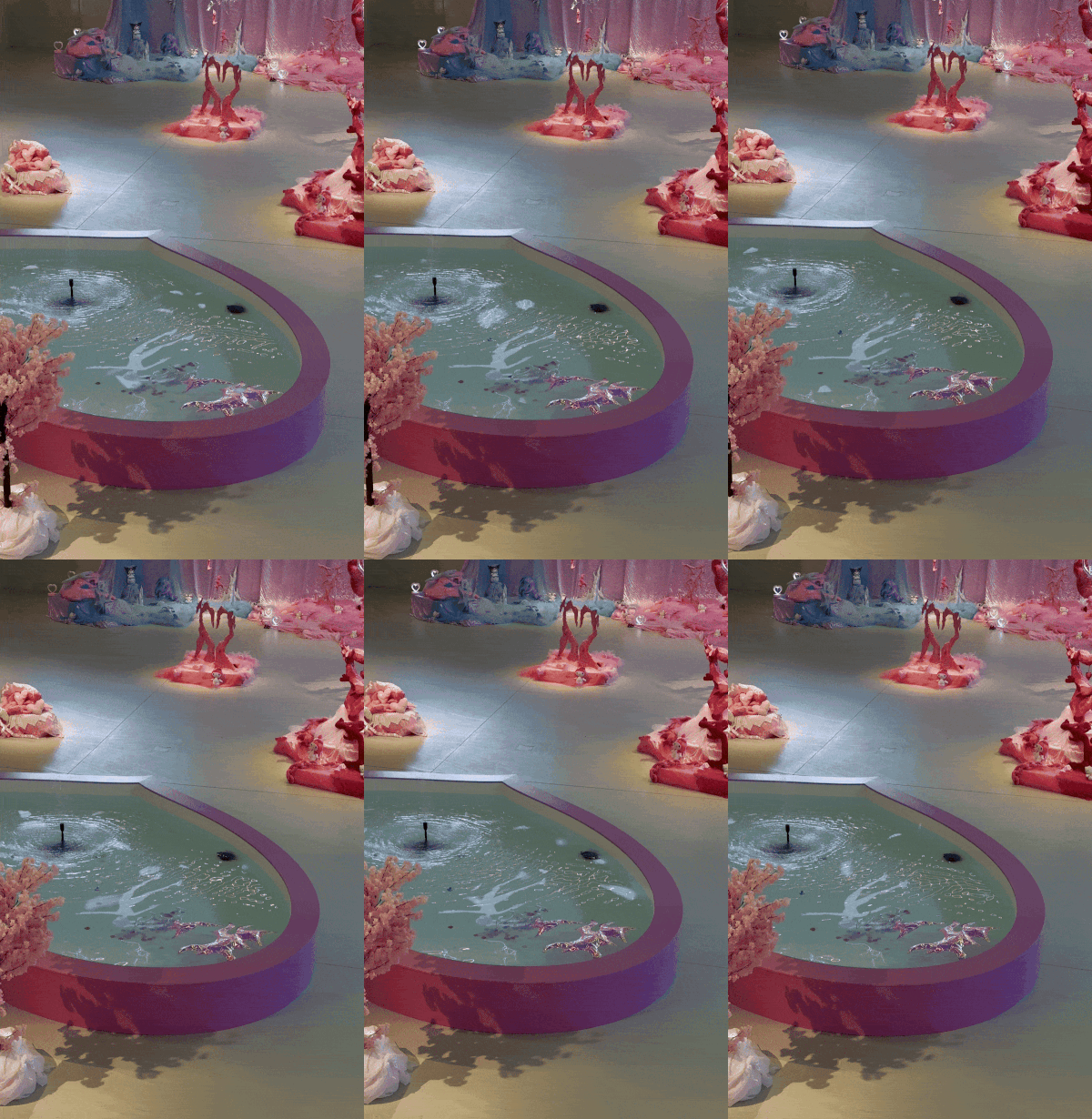
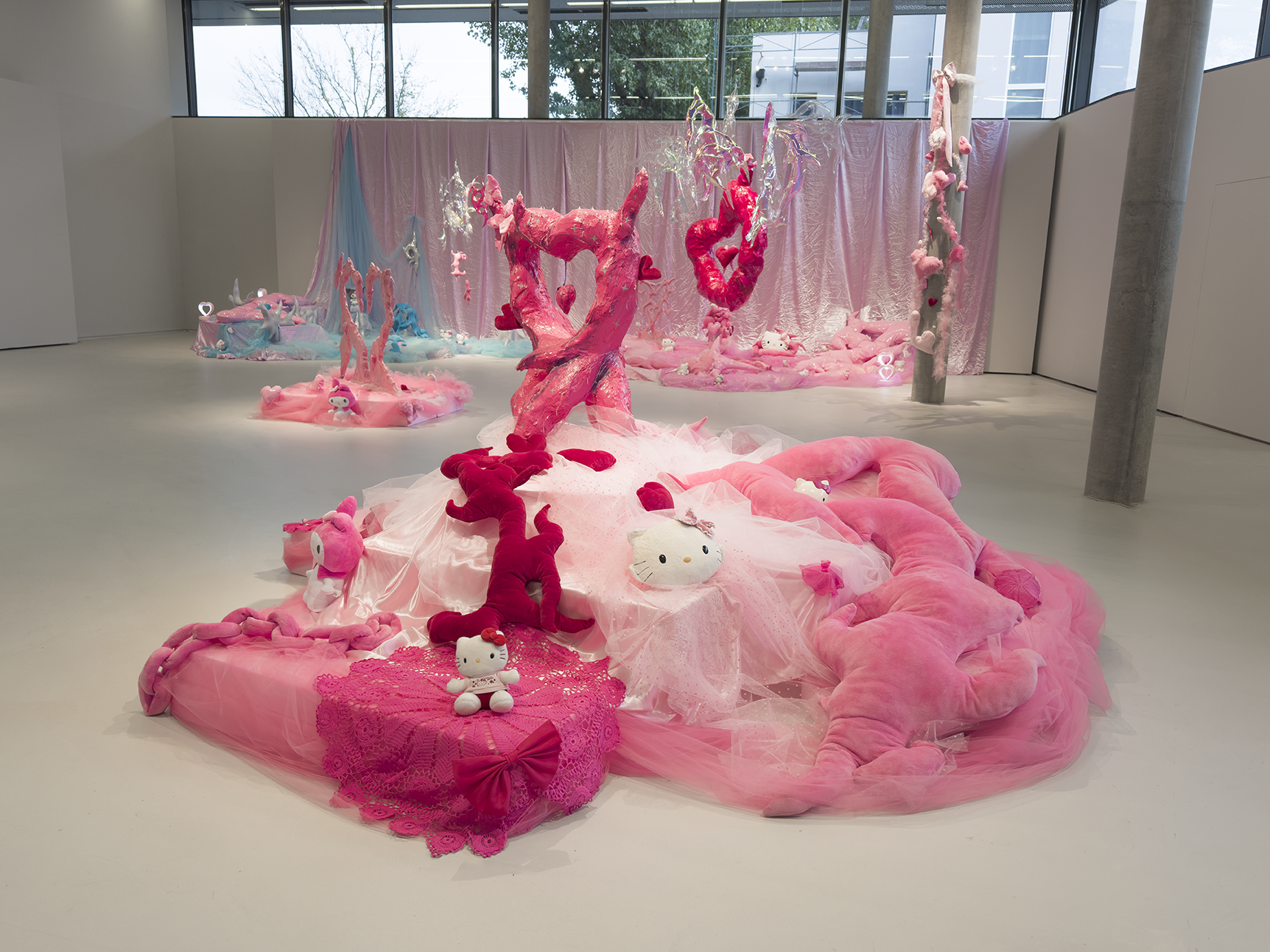
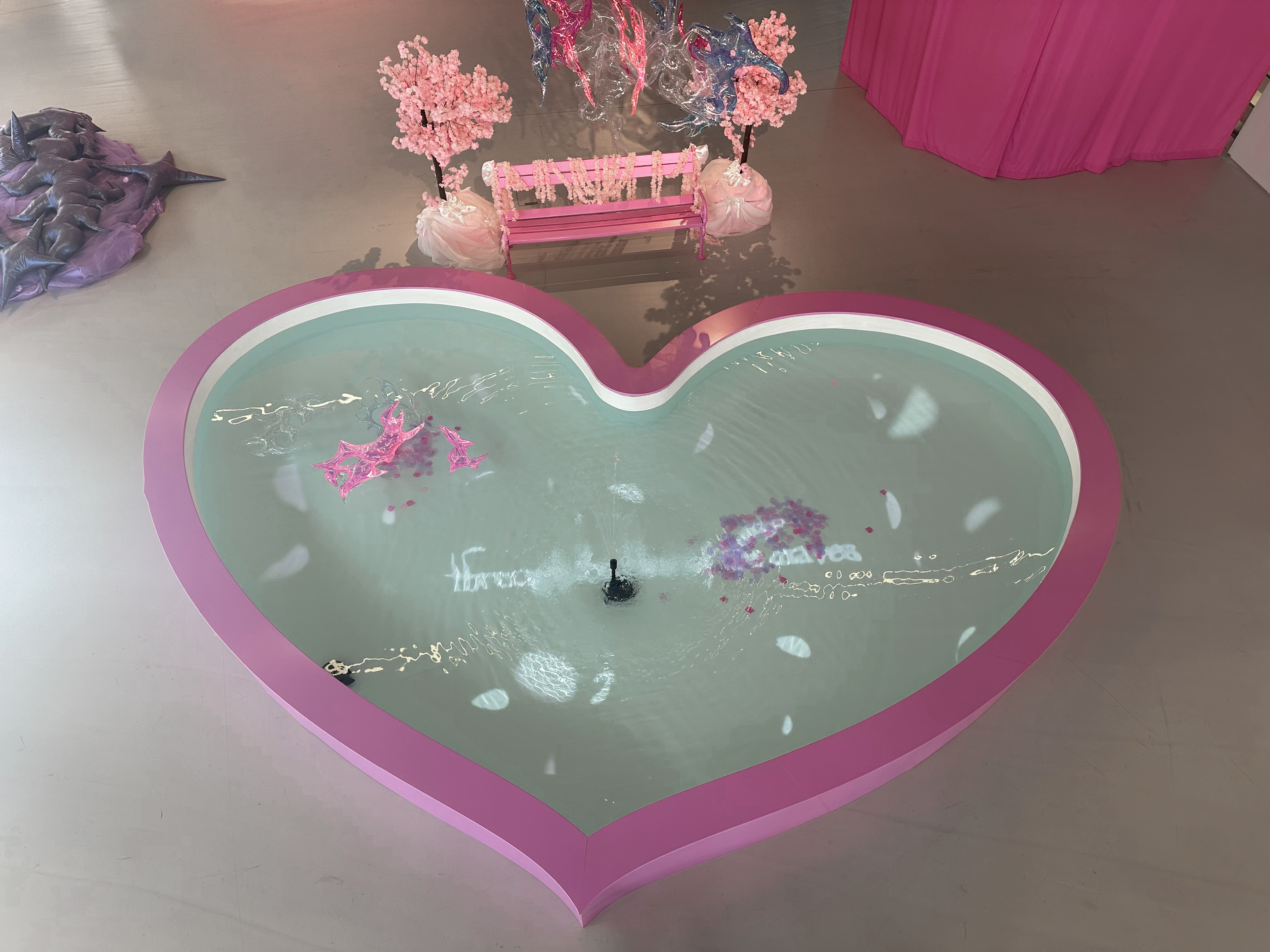
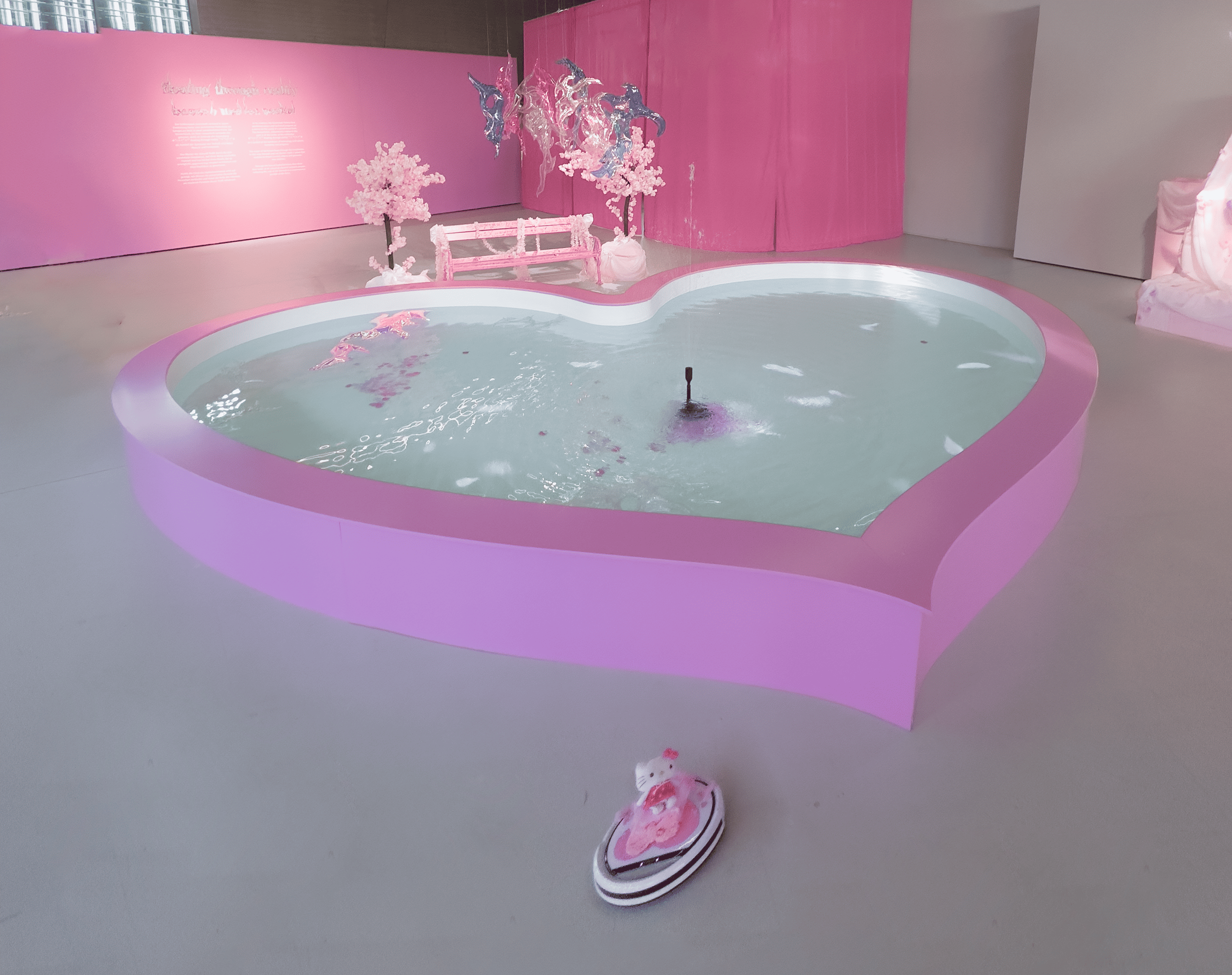
Since its creation, Eisenstadt Castle Park has combined nature and technical progress as a mirror to the world in a paradisiacal form. The Herzerlteich pond, romantically hidden in the park, is at the center of the exhibition FTR, as a symbol of the symbiosis of technology and nature, man and progress. The water of the future flows through the changing installation. In this way, Hannah and Lea Neckel create a space that makes it possible to dream present-day utopias and generate new realities.
Through the lens of hydrofeminism, they show how water connects people as a universal element, reflecting the role of the internet as a modern parallel of this force.
Through the lens of hydrofeminism, they show how water connects people as a universal element, reflecting the role of the internet as a modern parallel of this force.
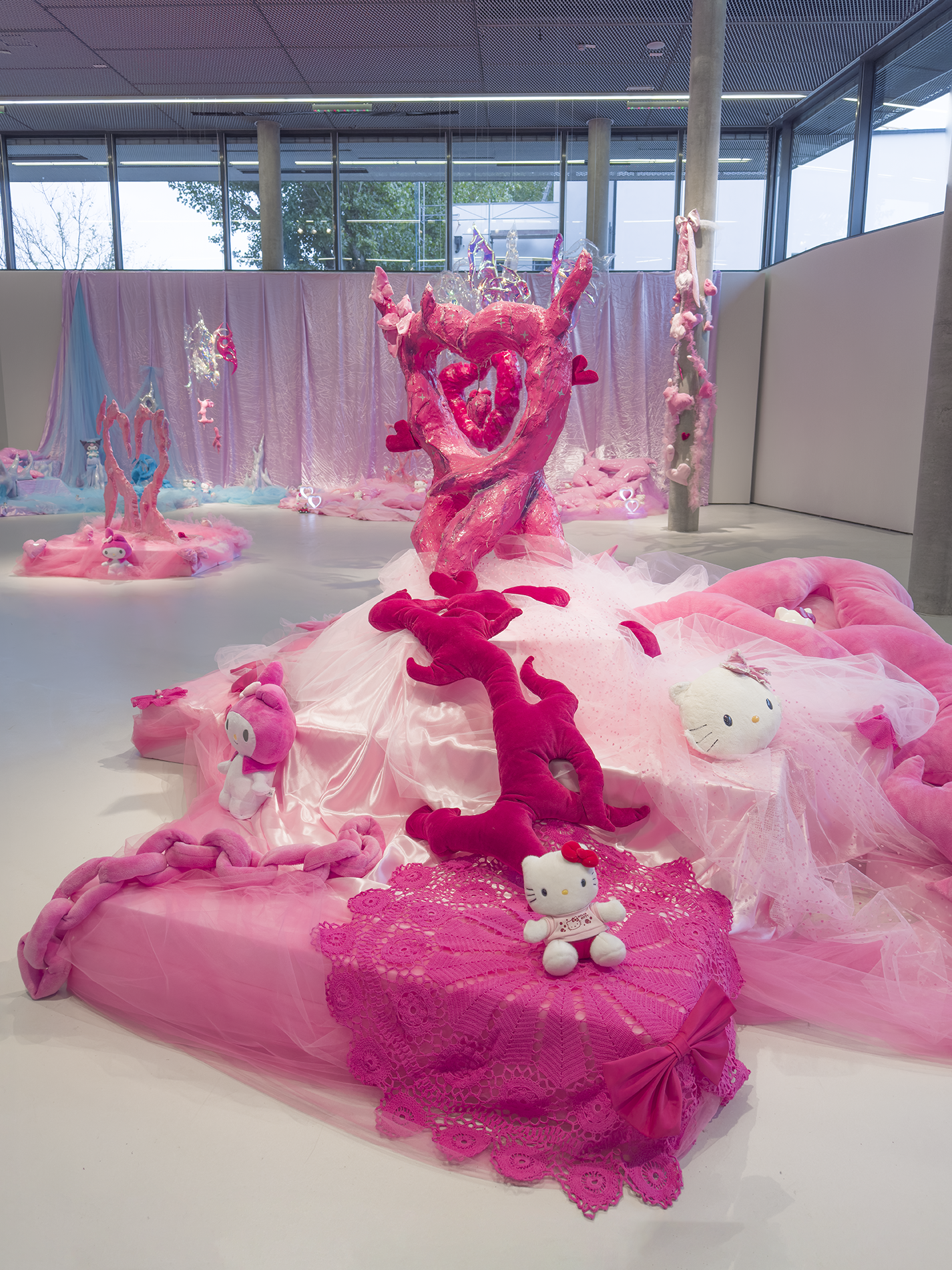
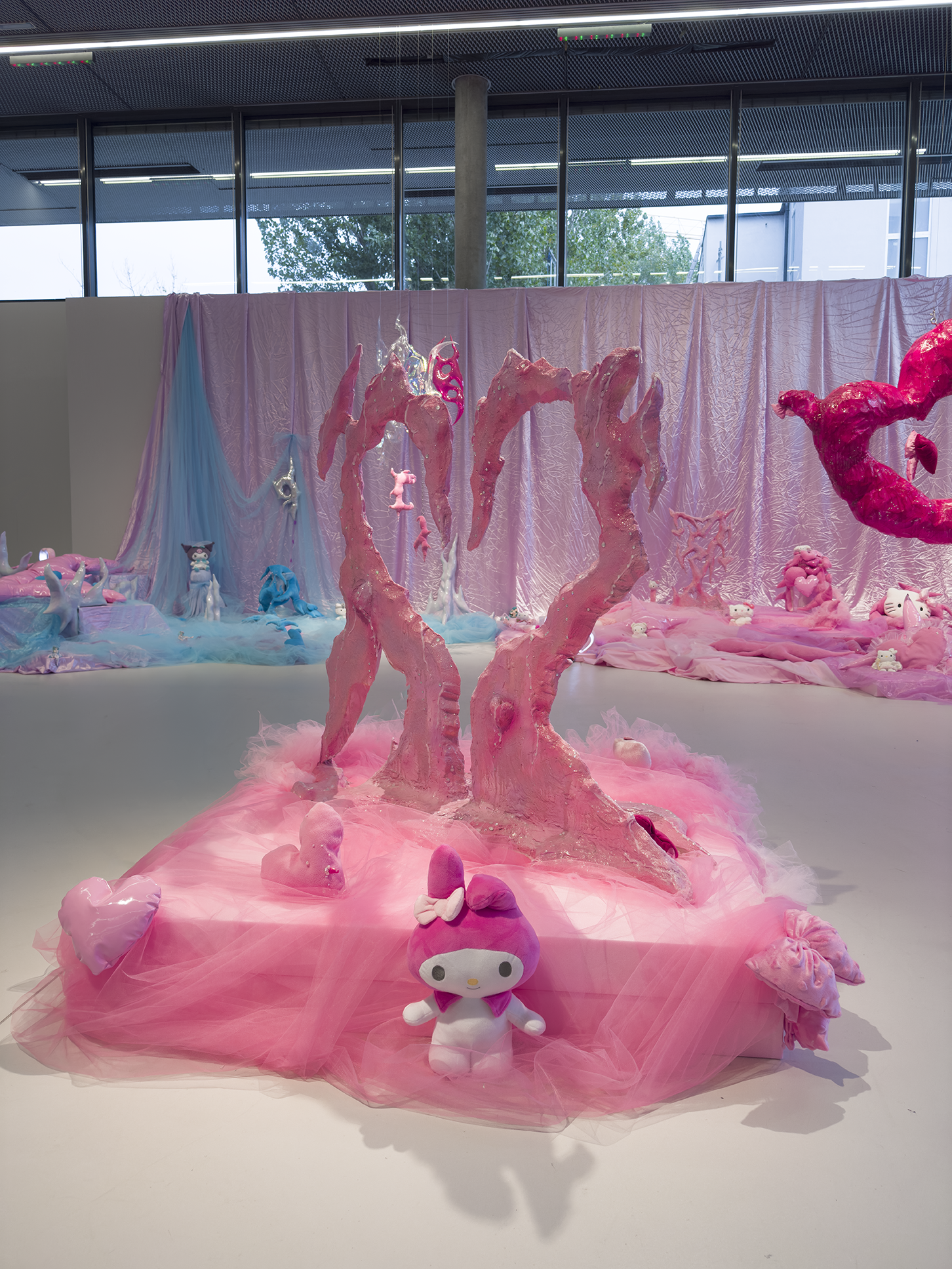
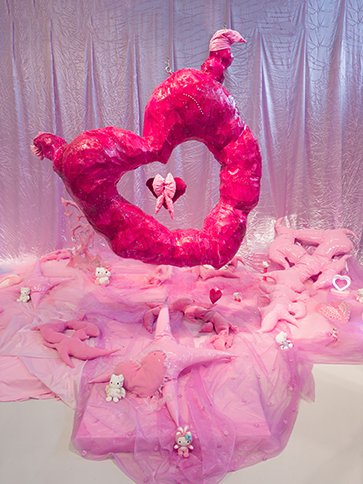
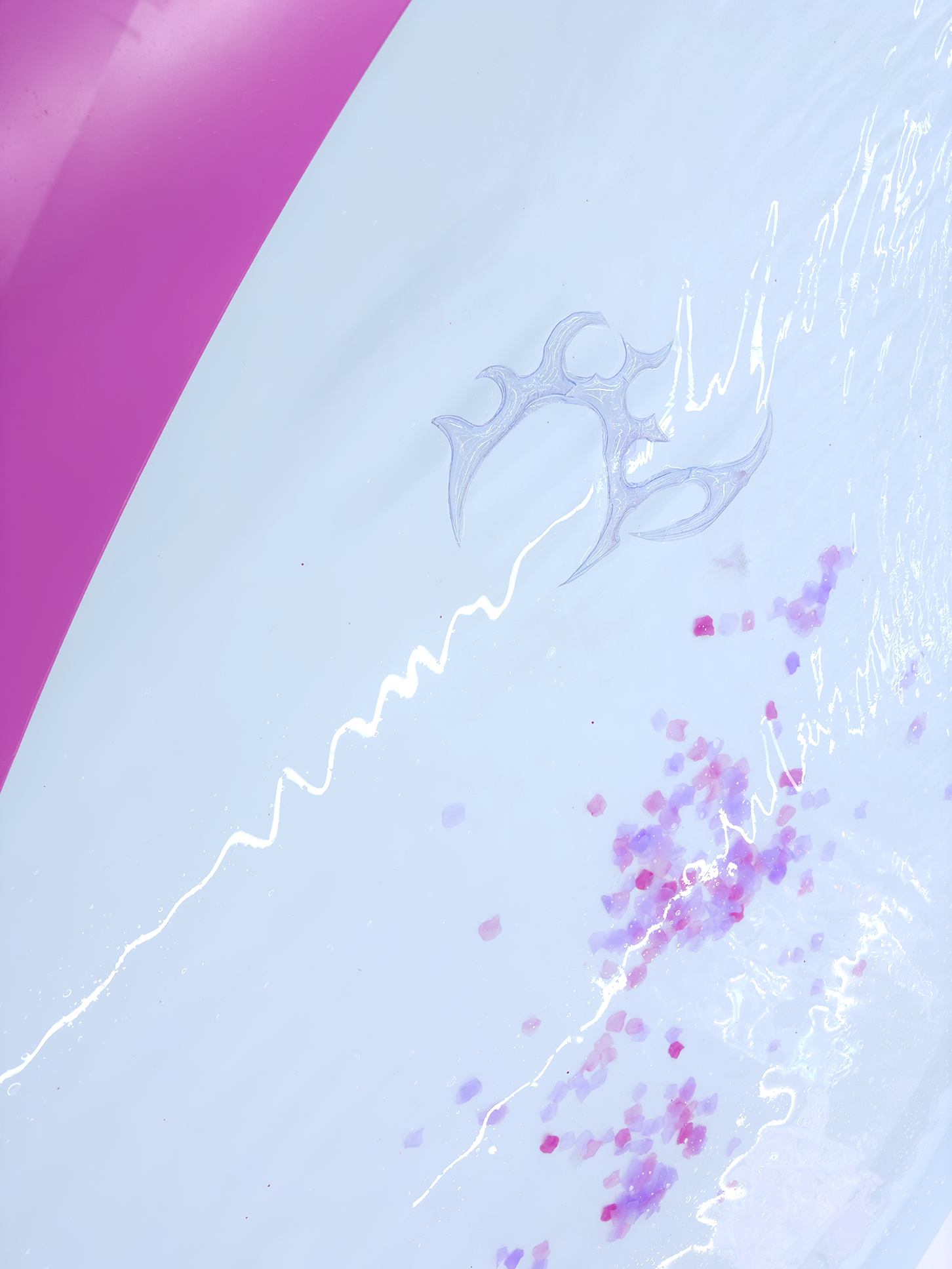
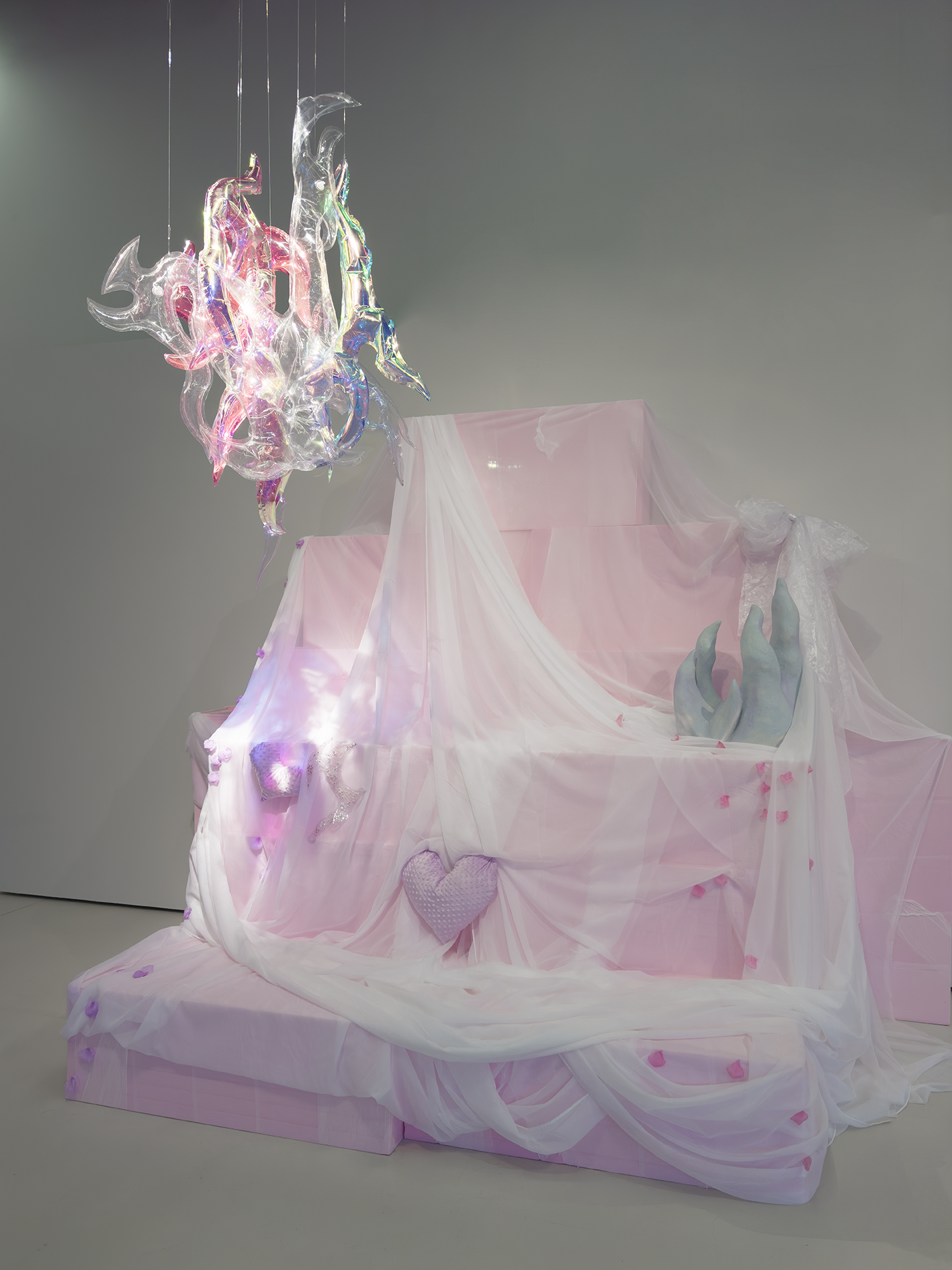

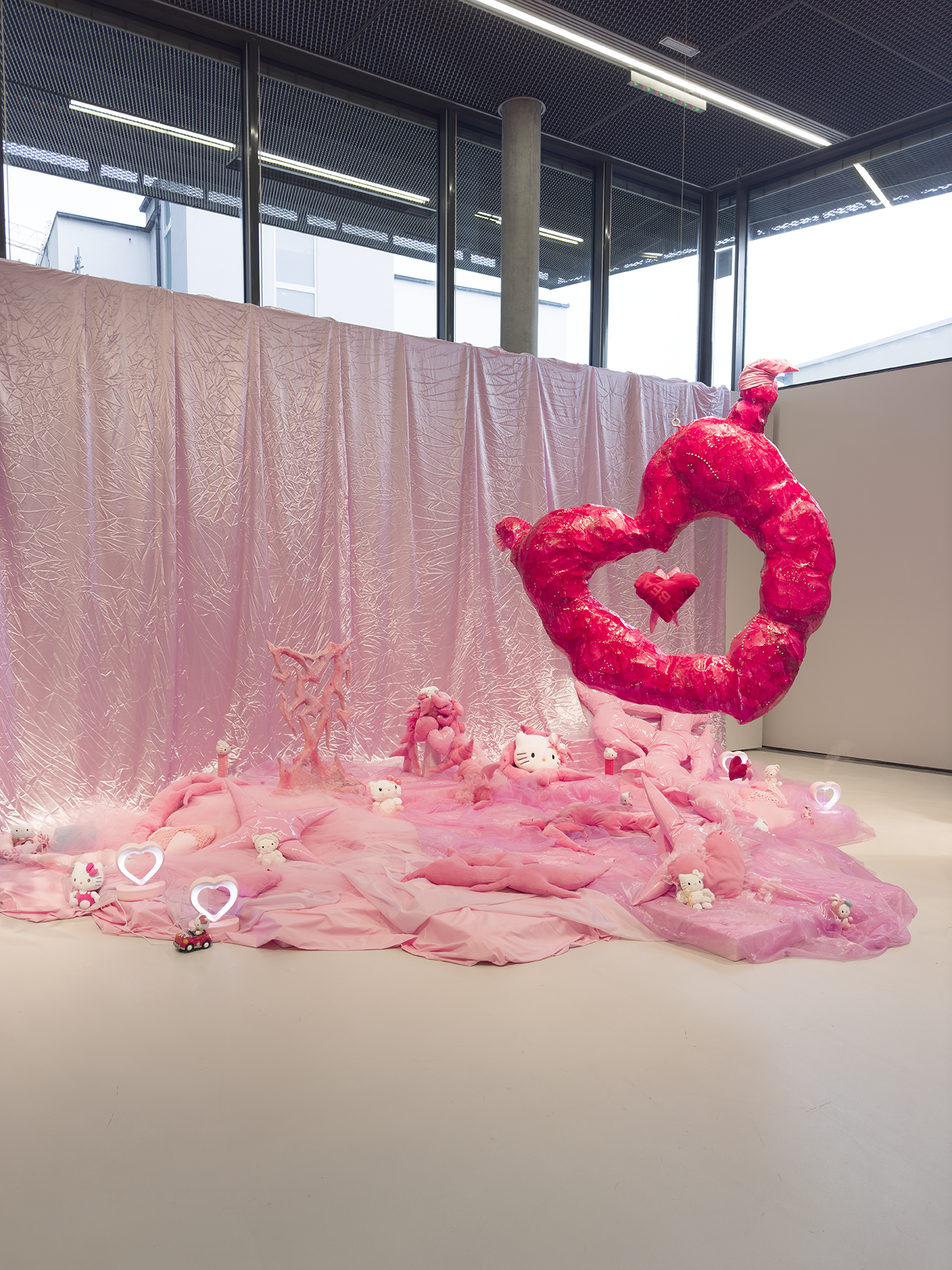
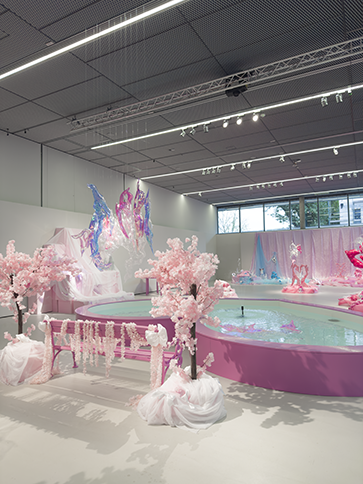
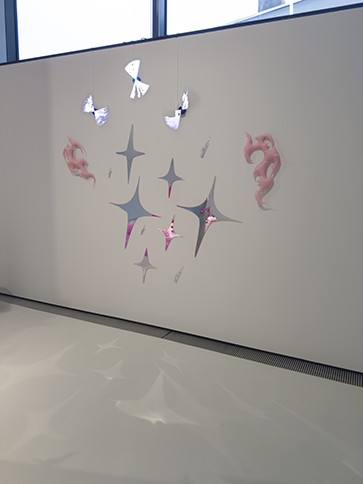
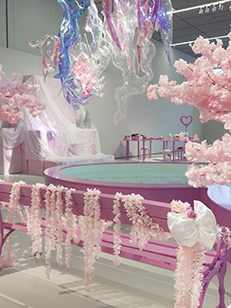
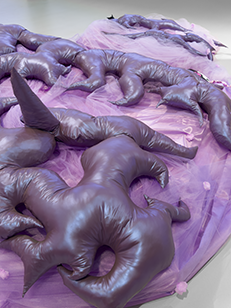
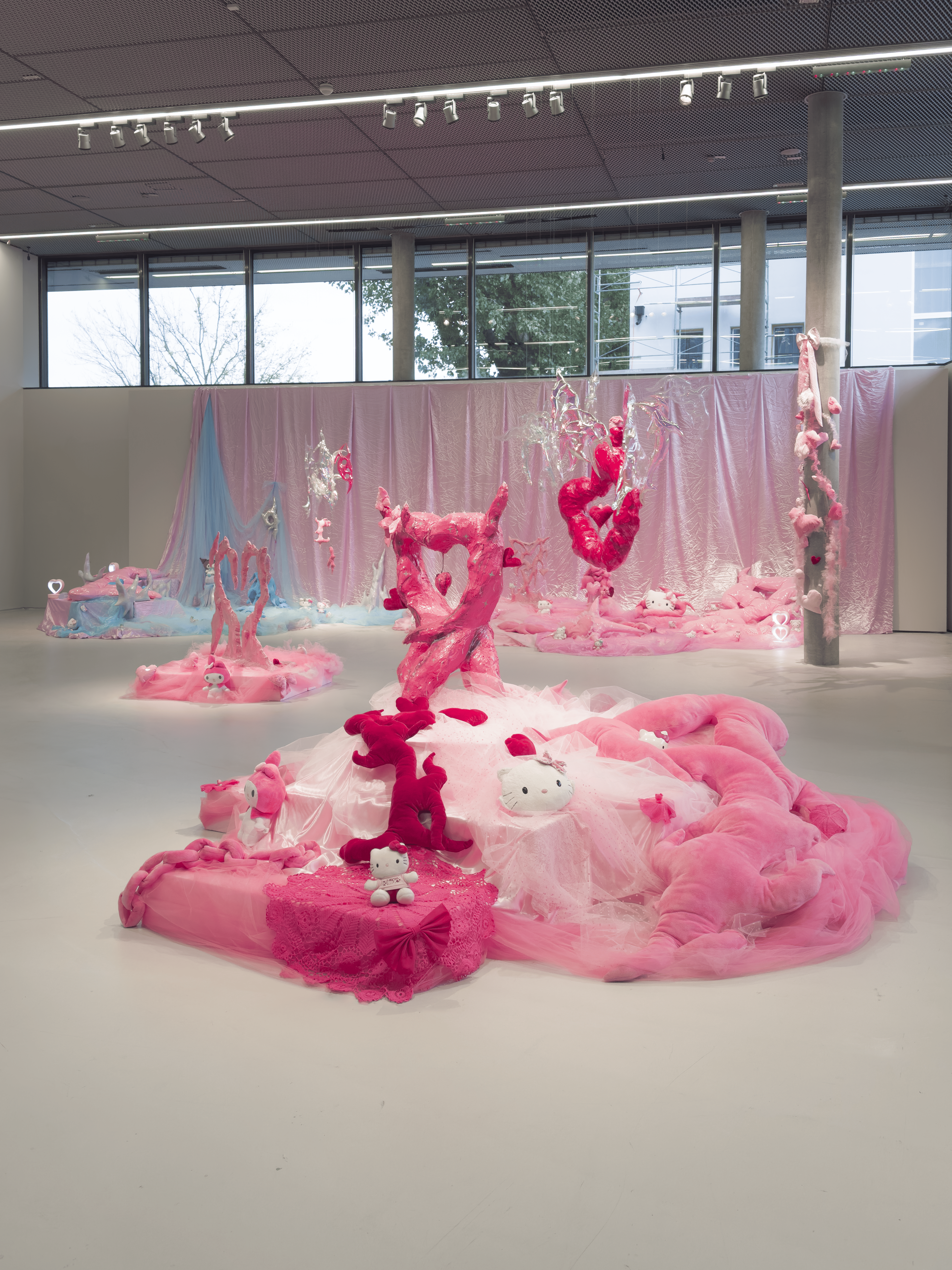
The exhibition unfolds as a constructed landscape, inviting visitors to move through the space the way one moves through a park. Paths open gradually, sightlines shift, and encounters occur without a fixed sequence. Rather than presenting a singular focal point, the installation proposes a field of relations in which movement, pause, and return become modes of engagement. The space encourages lingering, drifting, and circulating, allowing experience to accumulate over time.
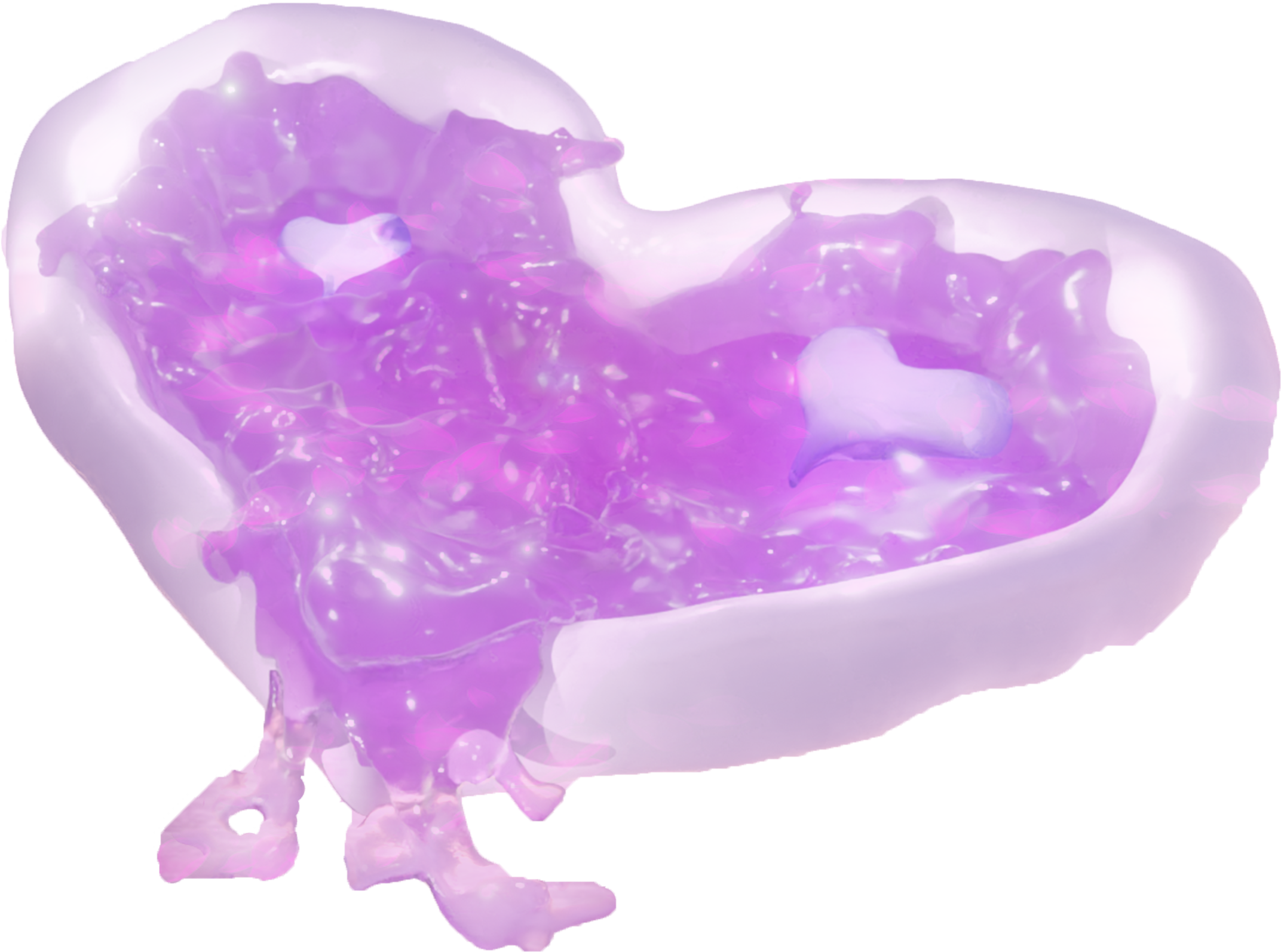
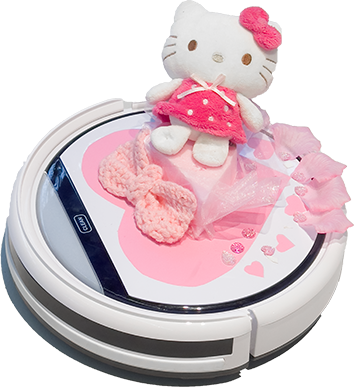
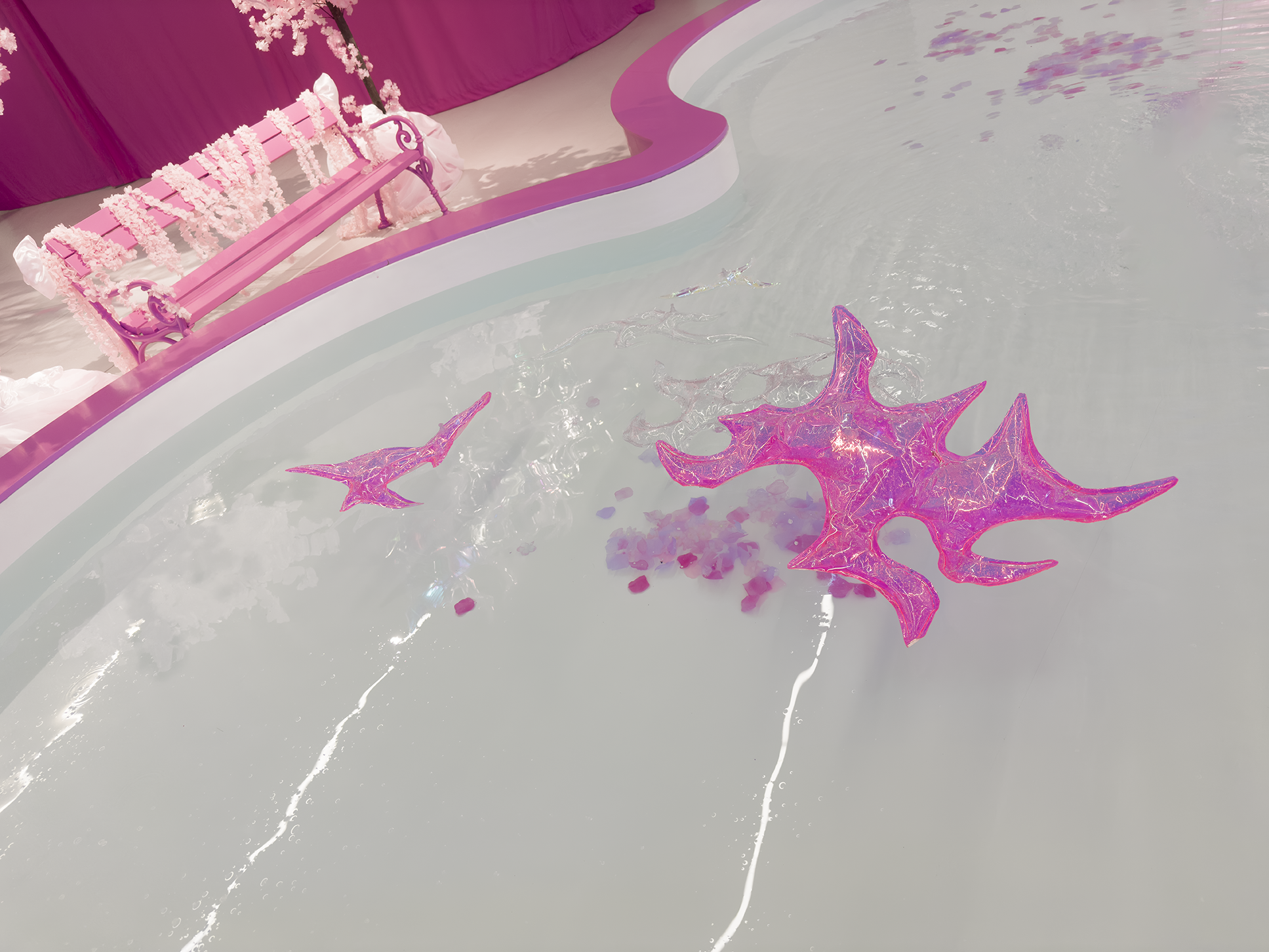
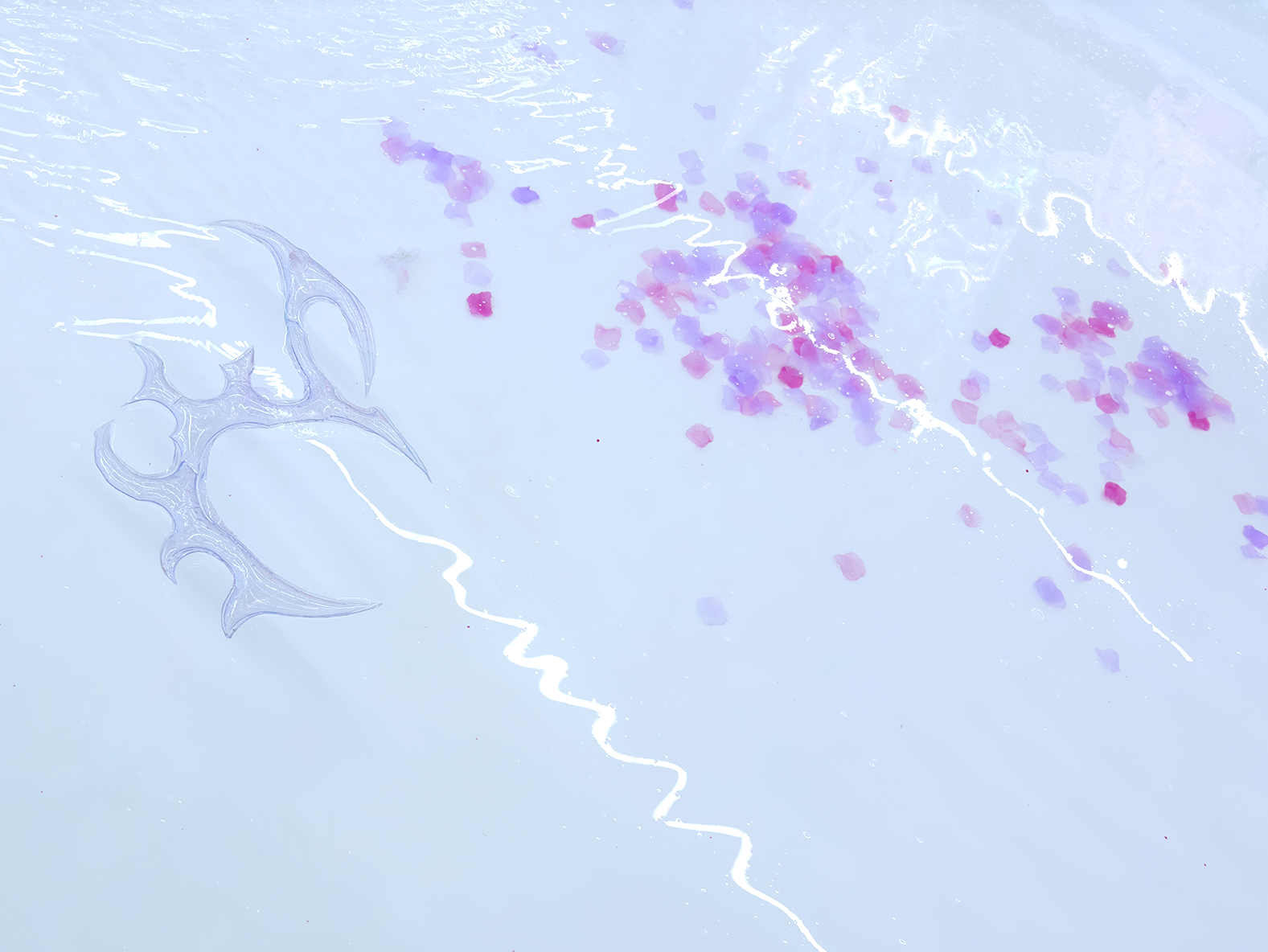
At the center lies the heart-shaped pond, a body of water that operates as both spatial anchor and affective core. Its soft pink edges and gently moving surface draw visitors inward, offering a place to stop, sit, and spend time. The pond functions as a meeting point, echoing its historical role within Eisenstadt Castle Park as a site of gathering, intimacy, and projection. Here, water is not merely an object to be viewed but an active presence, continuously circulating, reflecting light, sound, and motion. Small robotic sculptures glide across its surface, tracing slow, repetitive paths that recall digital cursors floating across screens. These gestures introduce a quiet choreography of agency, where movement appears autonomous yet deeply embedded in infrastructural systems.
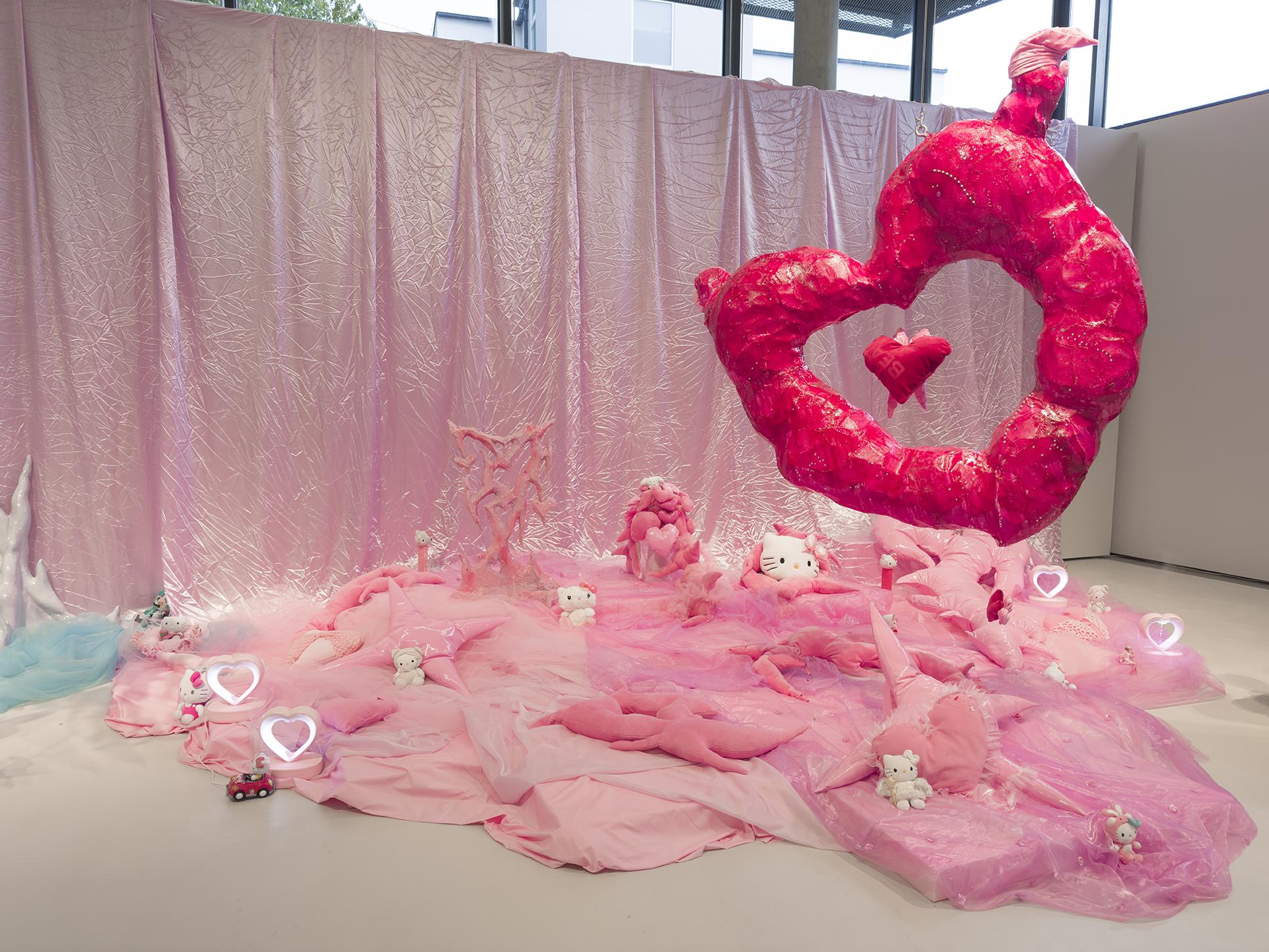
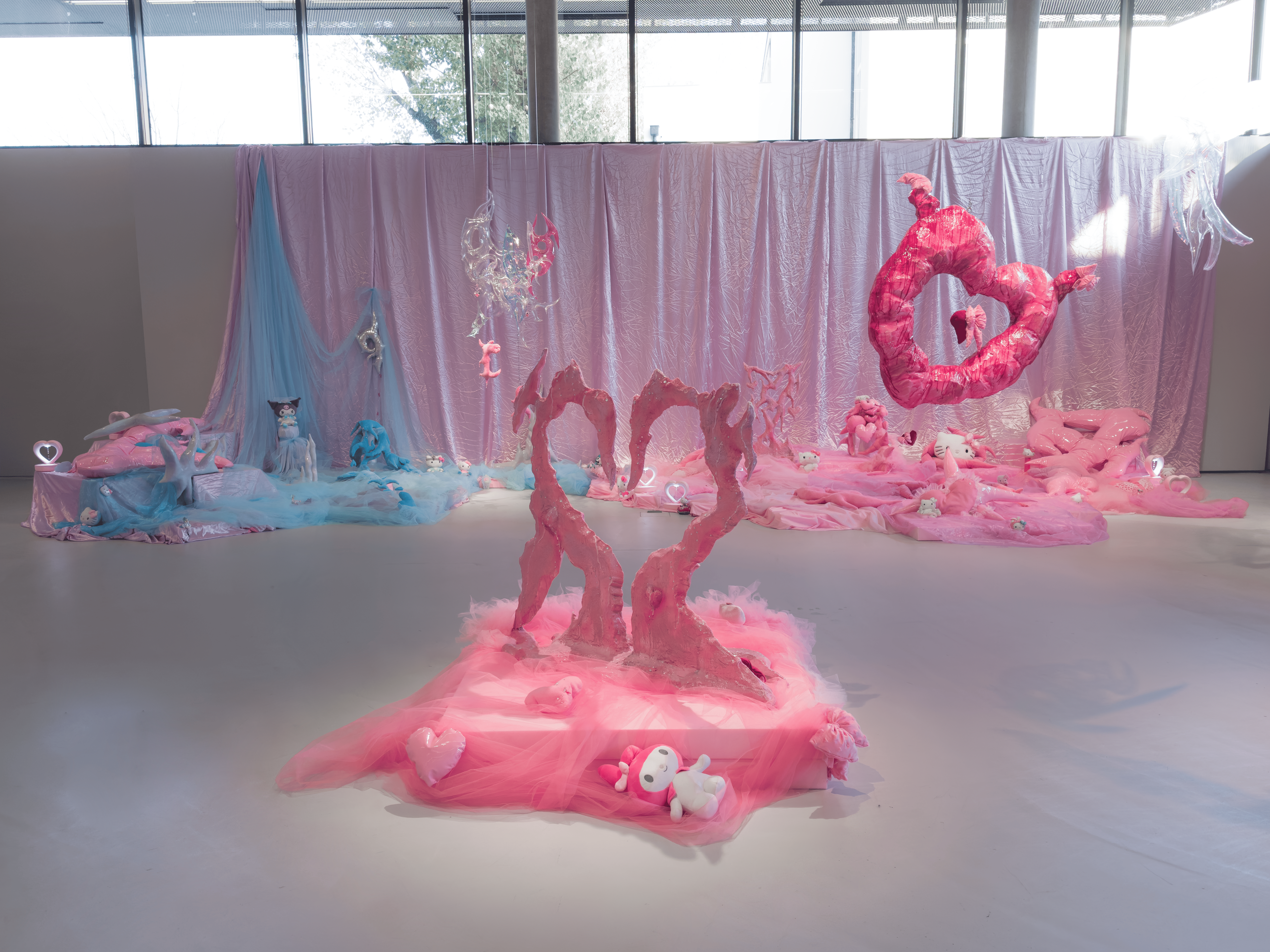
The exhibition space expands outward from this center through a series of stations that mirror the logic of a landscaped garden. Sculptural groupings emerge like islands, surrounded by translucent fabrics, cascading forms, and accumulations of material that oscillate between softness and rigidity. Heart motifs recur throughout the space in multiple scales and materialities, appearing as sculptural bodies, suspended forms, and textured surfaces. These repetitions function less as symbols than as relational markers, guiding movement and attention while remaining open to interpretation.
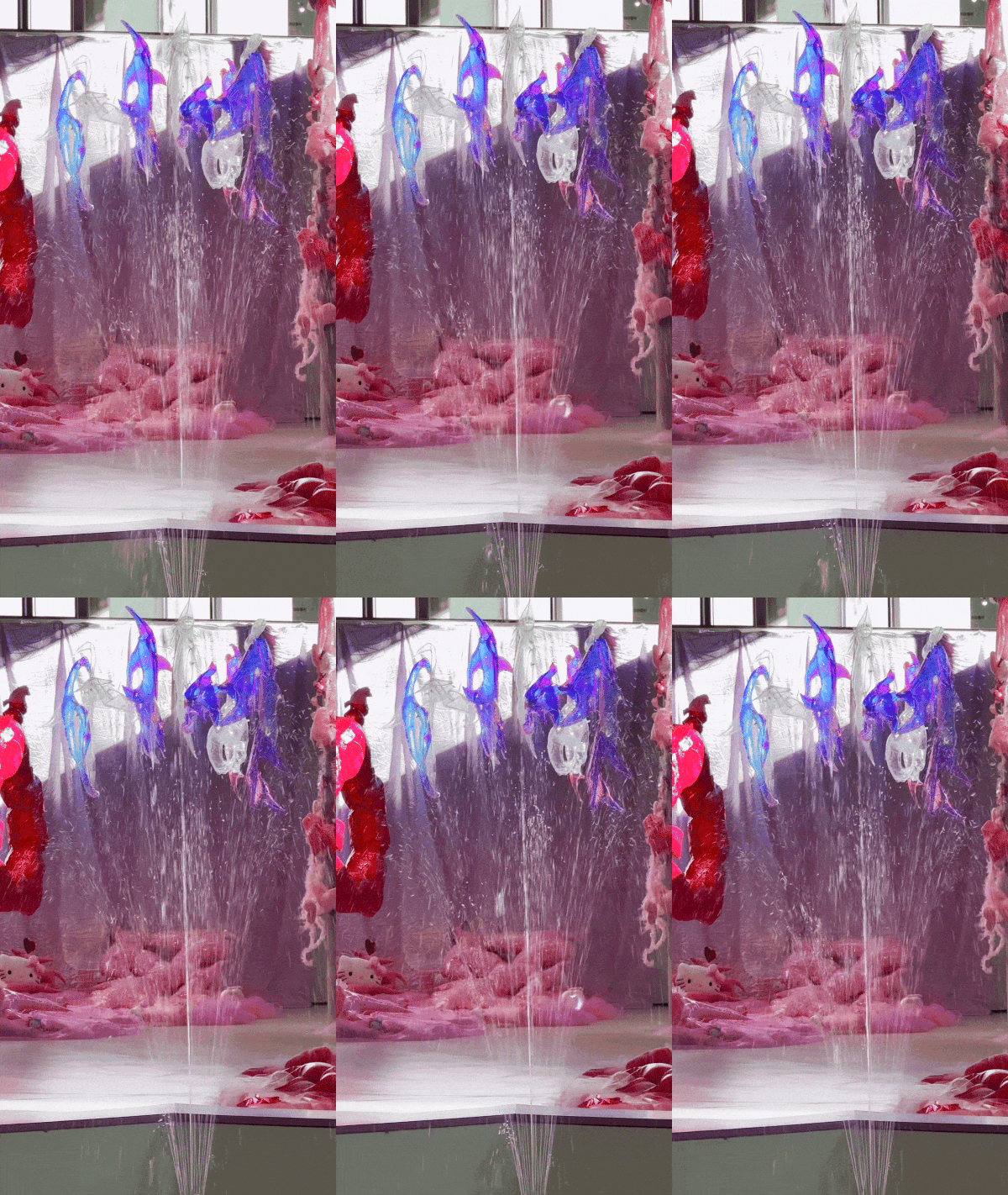
Waterfall-like structures made of fabric and Styrodur descend and pool, evoking both natural flow and artificial construction. Their material ambiguity reflects the exhibition’s interest in the porous boundary between physical and digital worlds. Soft, translucent layers coexist with hard, industrial surfaces, producing a tension between vulnerability and control, intimacy and infrastructure. The space is neither purely organic nor fully synthetic, but exists in a continuous state of negotiation.
Through the lens of hydrofeminism, water emerges as a connective substance that links bodies, technologies, and environments. It flows through the installation as a shared condition, mirroring contemporary digital networks in which connection, care, and exposure circulate simultaneously. The internet appears here not as a virtual elsewhere, but as a force comparable to water, shaping social relations through flow, repetition, and permeability. Like water, it moves through and between bodies, dissolving fixed boundaries while generating new forms of proximity.
Moving through the exhibition becomes an embodied experience of this logic. Visitors navigate between closeness and distance, immersion and observation. Time stretches at the pond, where reflection, sound, and motion invite a slower rhythm. Elsewhere, clustered forms and suspended elements produce moments of density and overload, recalling the affective intensity of online spaces. These shifts generate a landscape of emotional registers, where tenderness, excess, and speculation coexist.
The exhibition proposes space as a communal infrastructure shaped by desire, technology, and shared imaginaries. Utopia is not positioned as a distant future, but as a present practice enacted through togetherness, circulation, and the willingness to remain with uncertainty. In this environment, reality appears fluid, continuously reshaped by movement, connection, and the gentle insistence of flow.
At the center lies the heart-shaped pond, a body of water that operates as both spatial anchor and affective core. Its soft pink edges and gently moving surface draw visitors inward, offering a place to stop, sit, and spend time. The pond functions as a meeting point, echoing its historical role within Eisenstadt Castle Park as a site of gathering, intimacy, and projection. Here, water is not merely an object to be viewed but an active presence, continuously circulating, reflecting light, sound, and motion. Small robotic sculptures glide across its surface, tracing slow, repetitive paths that recall digital cursors floating across screens. These gestures introduce a quiet choreography of agency, where movement appears autonomous yet deeply embedded in infrastructural systems.
The exhibition space expands outward from this center through a series of stations that mirror the logic of a landscaped garden. Sculptural groupings emerge like islands, surrounded by translucent fabrics, cascading forms, and accumulations of material that oscillate between softness and rigidity. Heart motifs recur throughout the space in multiple scales and materialities, appearing as sculptural bodies, suspended forms, and textured surfaces. These repetitions function less as symbols than as relational markers, guiding movement and attention while remaining open to interpretation.
Waterfall-like structures made of fabric and Styrodur descend and pool, evoking both natural flow and artificial construction. Their material ambiguity reflects the exhibition’s interest in the porous boundary between physical and digital worlds. Soft, translucent layers coexist with hard, industrial surfaces, producing a tension between vulnerability and control, intimacy and infrastructure. The space is neither purely organic nor fully synthetic, but exists in a continuous state of negotiation.
Through the lens of hydrofeminism, water emerges as a connective substance that links bodies, technologies, and environments. It flows through the installation as a shared condition, mirroring contemporary digital networks in which connection, care, and exposure circulate simultaneously. The internet appears here not as a virtual elsewhere, but as a force comparable to water, shaping social relations through flow, repetition, and permeability. Like water, it moves through and between bodies, dissolving fixed boundaries while generating new forms of proximity.
Moving through the exhibition becomes an embodied experience of this logic. Visitors navigate between closeness and distance, immersion and observation. Time stretches at the pond, where reflection, sound, and motion invite a slower rhythm. Elsewhere, clustered forms and suspended elements produce moments of density and overload, recalling the affective intensity of online spaces. These shifts generate a landscape of emotional registers, where tenderness, excess, and speculation coexist.
The exhibition proposes space as a communal infrastructure shaped by desire, technology, and shared imaginaries. Utopia is not positioned as a distant future, but as a present practice enacted through togetherness, circulation, and the willingness to remain with uncertainty. In this environment, reality appears fluid, continuously reshaped by movement, connection, and the gentle insistence of flow.
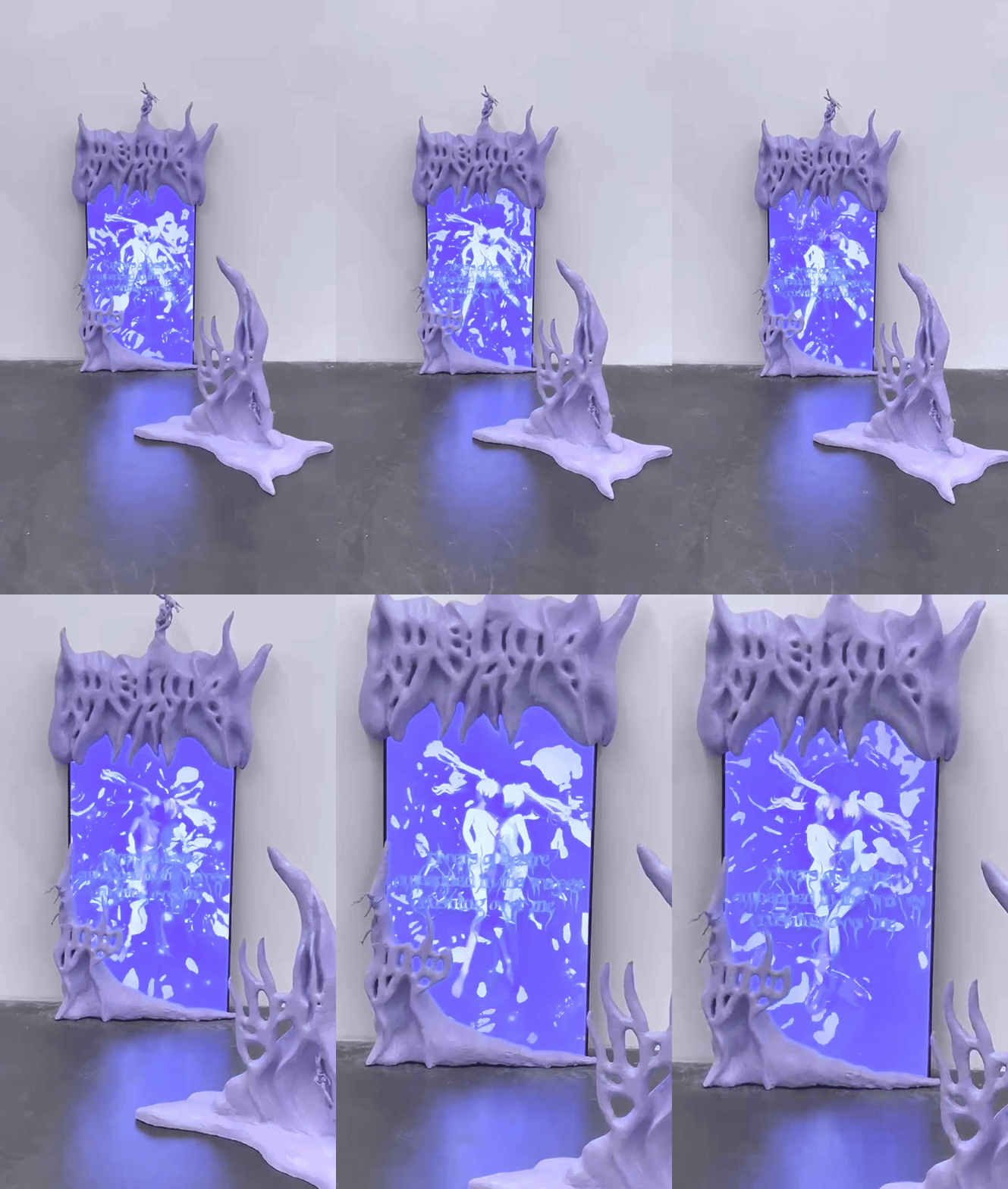
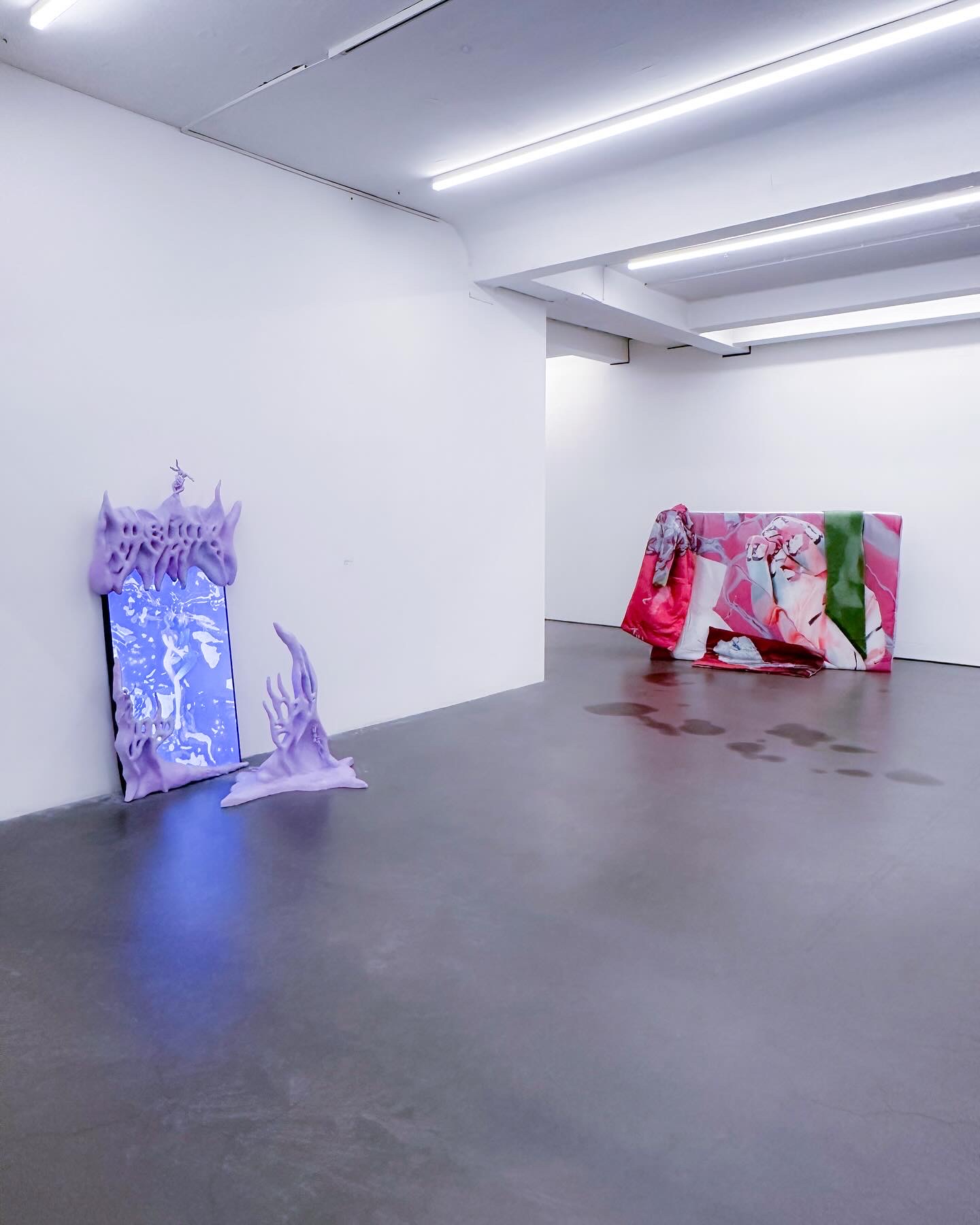
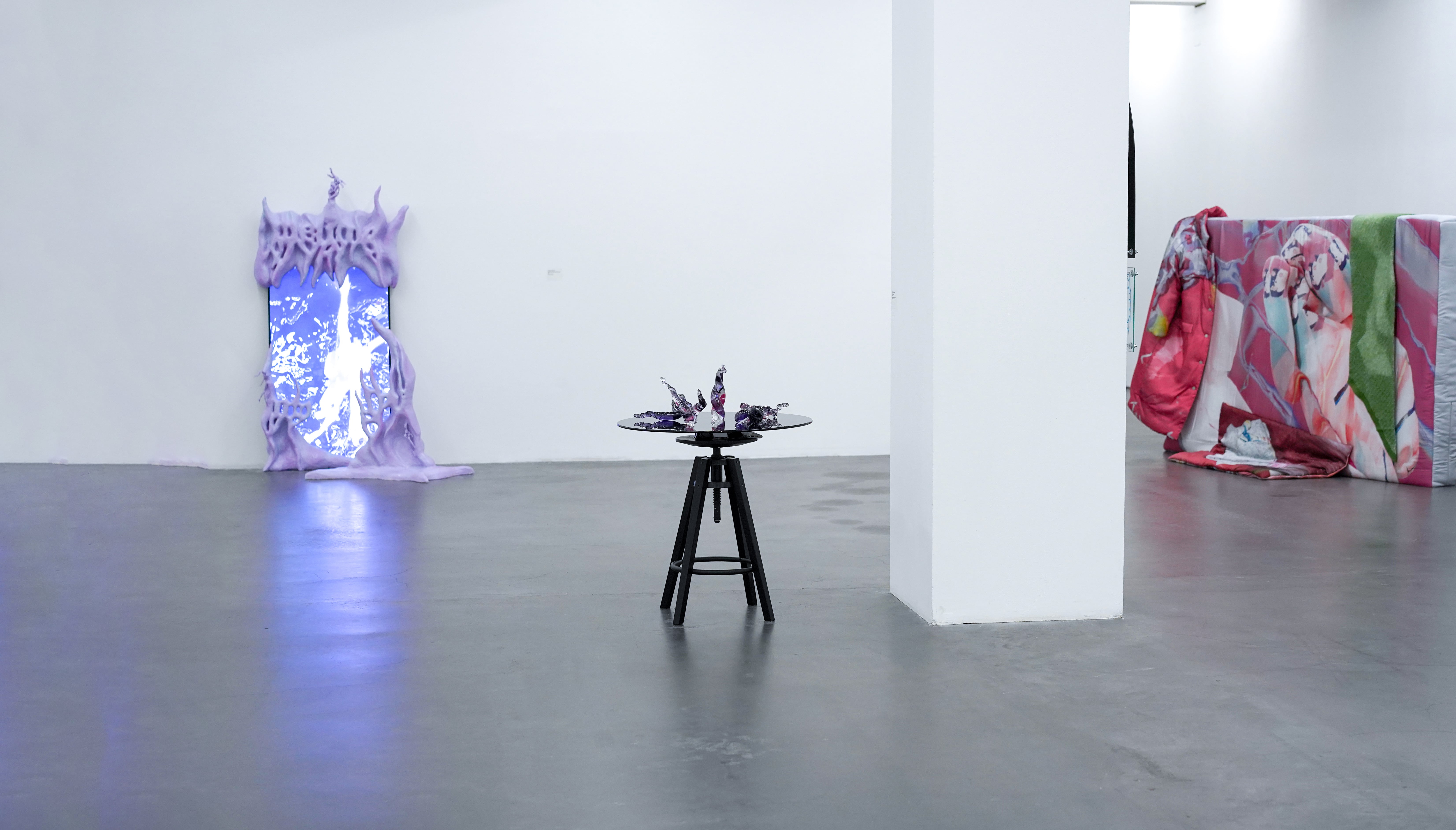
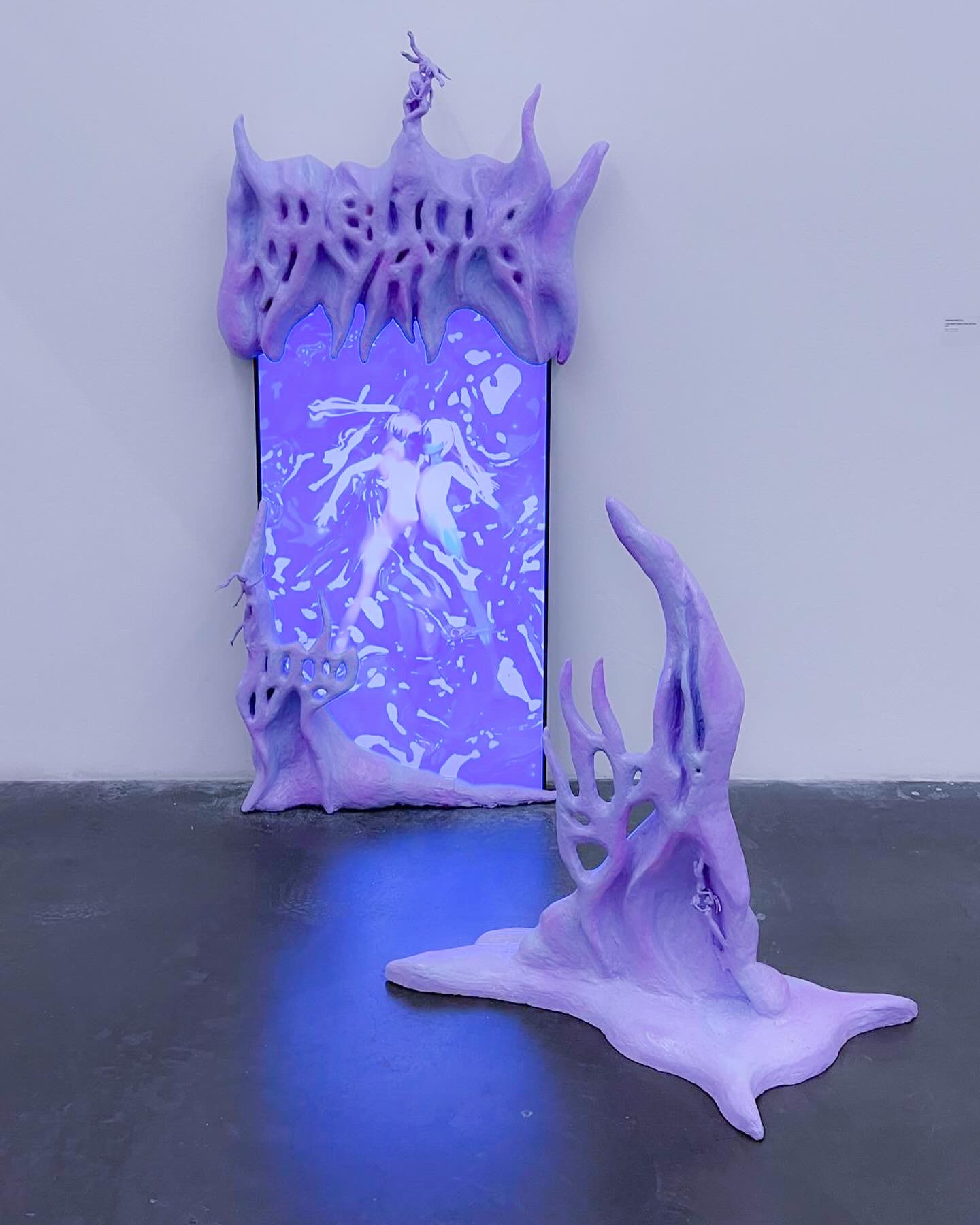
𝒅𝒊𝒗𝒆 𝒊𝒏𝒕𝒐 𝒎𝒆
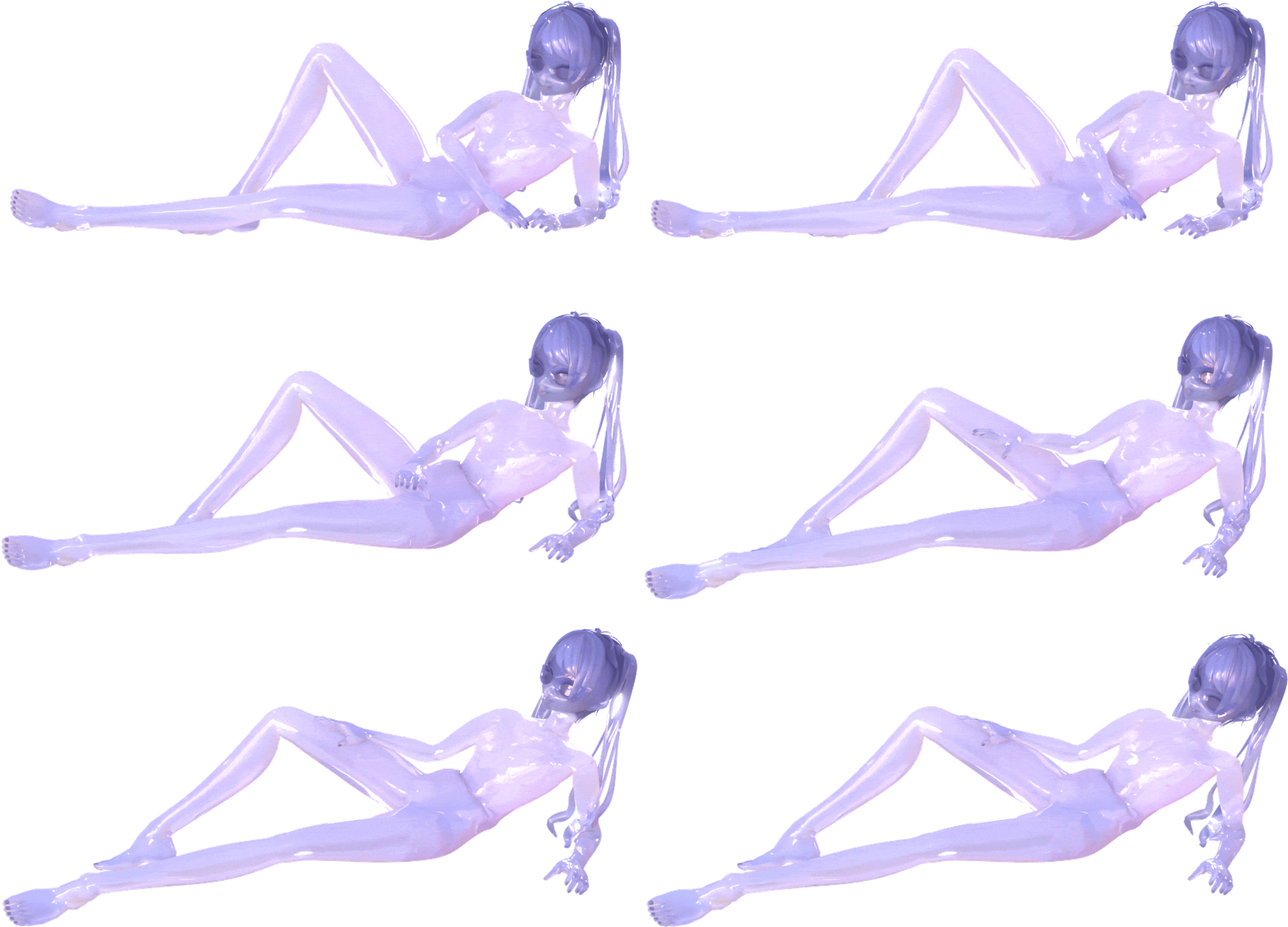
is an installation, suspending two avatars in an eternal state of desire, generating a new future. Sculpture, video, and sound converge into a field of sensual attention that seduces the visitor into the queer horizon of the yet-to-come, operating as a portal of lesbian futurity,
2025
sculptures , gif on screen, sound
graduation project for MFA
“transmodular”
Neuer Kunstverein Wien, AT
https://aaa.dieangewandte.at/abschlussarbeiten/hannah-neckel-everything-is-flowing-towards-you-2025-SoSe-062#main-content
https://nkw.network/transmodular/
https://transmedialekunst.com/news/2025-06-23-transmodular/
sculptures , gif on screen, sound
graduation project for MFA
“transmodular”
Neuer Kunstverein Wien, AT
https://aaa.dieangewandte.at/abschlussarbeiten/hannah-neckel-everything-is-flowing-towards-you-2025-SoSe-062#main-content
https://nkw.network/transmodular/
https://transmedialekunst.com/news/2025-06-23-transmodular/
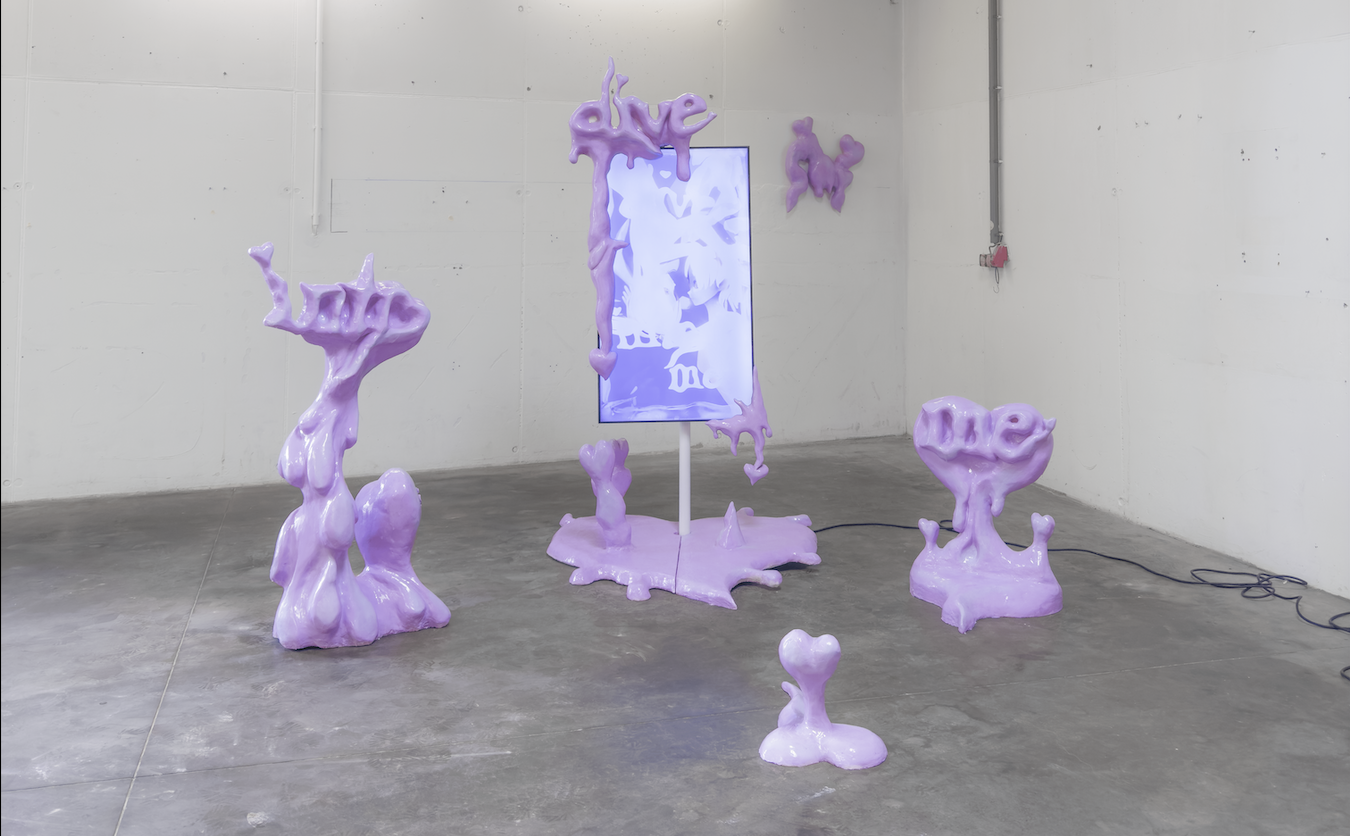
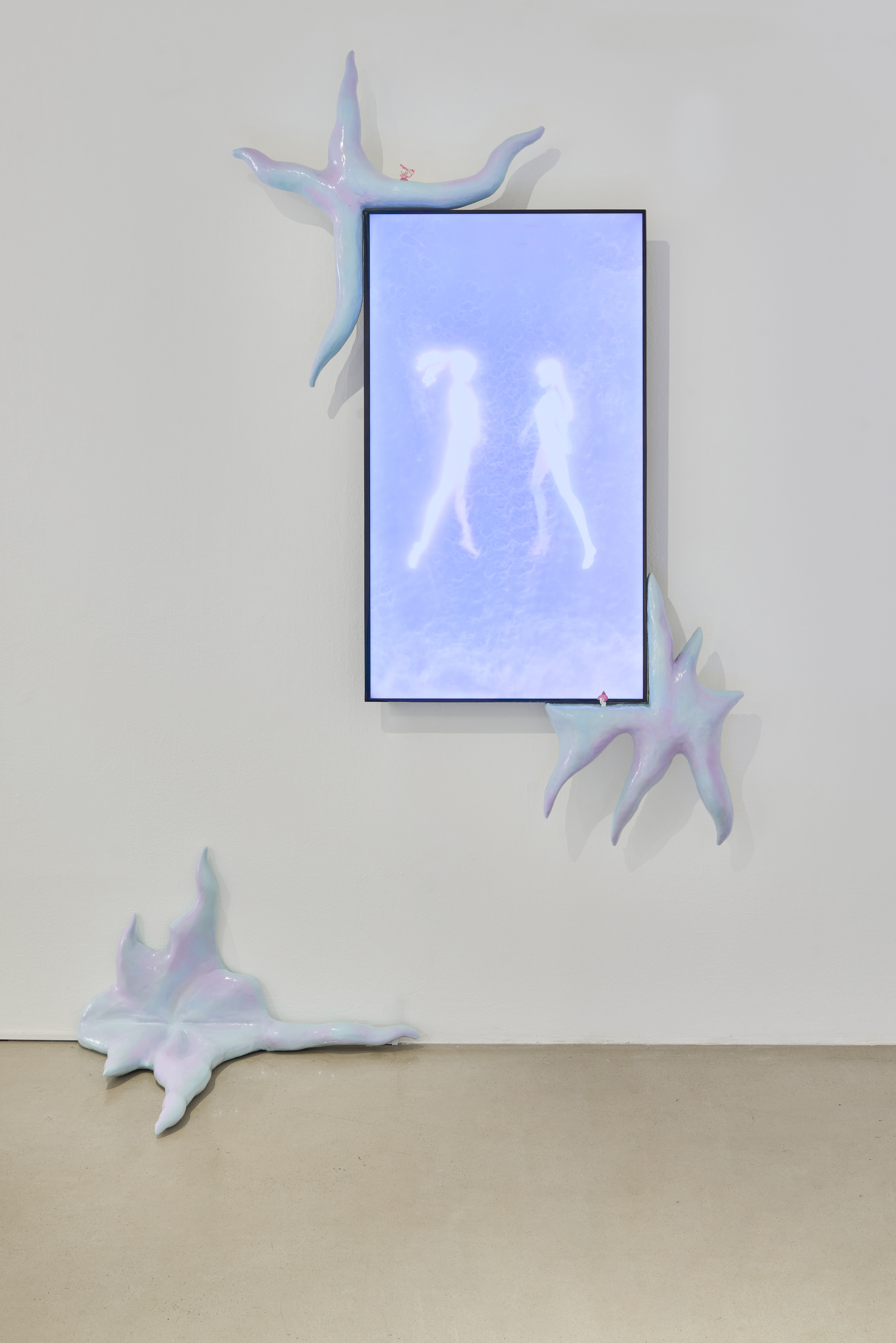
DIM as a portal, a site of passage between the real and the ideal, wherein the space of the gallery becomes a terrain saturated with longing, with the anticipatory charge of contact forever imminent and forever deferred. A screen anchors the installation: on it, a video loop of nine seconds, two figures floating on water, moving toward one another, converging on a kiss that the loop perpetually forestalls. Before their lips can touch, the current pulls the sequence back to its origin. The desire circulates, never discharged, always regenerating. This is libidinal economy in its most affirmative form, desire as a productive force, as what Deleuze and Guattari understood as pure positivity, a flow that does not require its object to be consummated in order to remain generative, operative, alive. The installation does not mourn the unfulfilled. The installation pulses with it.
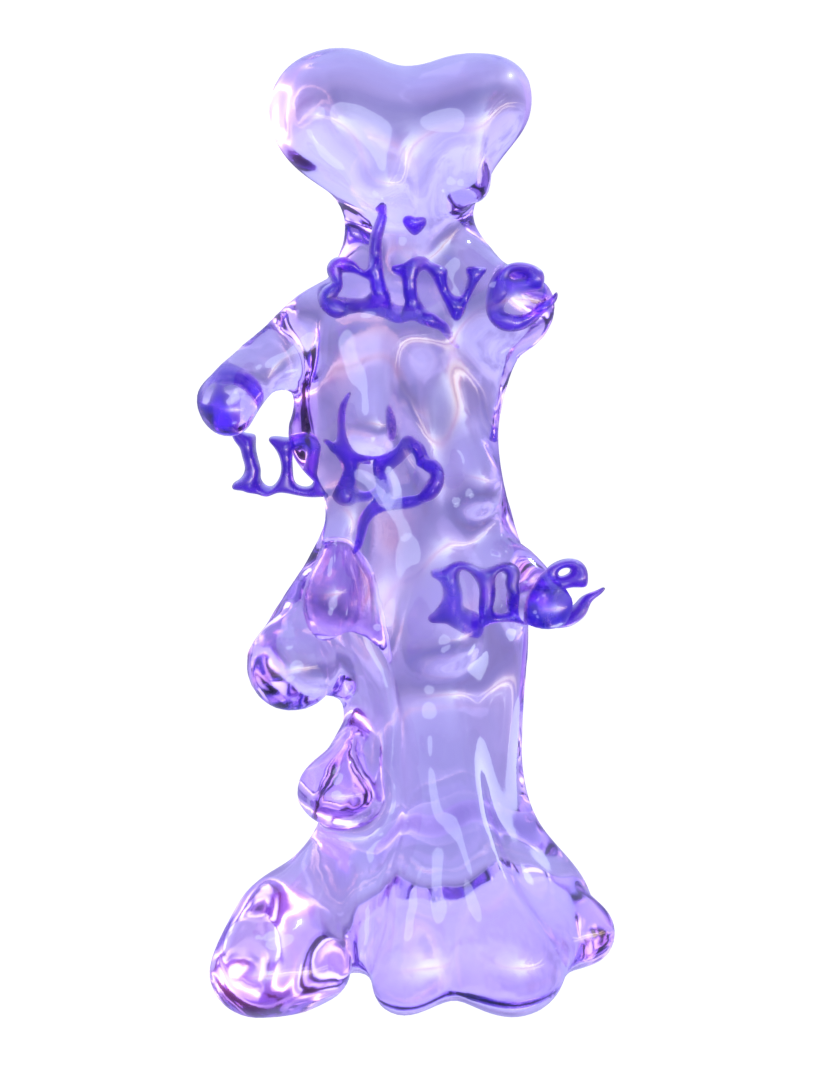
Superimposed over the figures, fragments of a poem: dive into me. The same words surface across the nine resin sculptures arranged around the screen, water appearing to leak from the letters themselves, as though language here is not symbolic closure but an open channel, a conduit whose banks perpetually overflow. The sculptures float toward the visitor at eye level, meeting them fully, soliciting their complete attention. An ambient soundscape of walking through water fills the space, and beneath it, a voice, soft and insistent, calling: dive into me. The installation addresses the visitor directly, drawing them into the field of its desire, initiating the reciprocal process of seduction that Simone Weil recognised as the highest form of attention. For Weil, attention taken to its furthest degree becomes prayer, an unmixed, total orientation of the self toward the other. The sculpture performs exactly this: she asks for your full presence. She offers hers in return.
Seduction, understood here as a radical phenomenological act, dissolves the distance between subject and object, between the visitor and the work. It is presence meeting presence, the mutual recognition of two beings floating in the same ocean of sensation. The installation's logic is hydro-spatial: everything flows, everything seeks confluence. The queer aesthetics soaked into the work have eroded its edges over time, smoothed its crevices, made it yielding and soft. Water has been the agent of this transformation, turning form into an expression of love.
dive into me draws its theoretical sustenance from a full and unapologetic feminine, queer-centric archive, a confluence of currents that runs from Simone Weil and José Esteban Muñoz through the distributed intelligence of girl theory as it circulates on Substack, in notes-app poetry, in the Tumblr archive, in the essayistic and prophetic vernacular of online queer culture. Muñoz understood queerness as a horizon, something felt and anticipated, a structure of futurity that the present can only approximate through the aesthetic and the relational. dive into me inhabits that horizon deliberately. The video loop does not represent failure. The loop is the form of queer desire itself: the not-yet held open as the most fertile temporal structure available, the spring that keeps running without needing to arrive at the sea.
The installation is also an archive made material. The research that generated it poured through the floodgates that digital culture has opened to previously silenced voices, letting the girly research run full force, liberating the work from man-centric canons and allowing a new theoretical ecology to accumulate. What emerged is a sculpture soaked in these streams, a resin figure that holds the accumulated pressure of collective longing, that leaks it back into the space as water, as sound, as invitation.
The portal is open. The figures keep floating toward each other. The viewer, standing inside the current, is already inside the merge.
you can see my heart overflowing, towards you ‧͙⁺˚*•̩̩͙
₊̣.̩✧*̣̩˚̣̣⁺̣‧.₊̣̇.‧⁺̣˚̣̣*̣̩⋆·̩̩.̩̥·̩̩⋆*̣̩˚̣̣⁺̣‧.₊̣̇.‧⁺̣˚̣̣*̣̩✧·.̩₊̣.̩₊̣.̩✧*̣̩˚̣̣⁺̣‧.₊̣̇.‧⁺̣˚̣̣*̣̩⋆·̩̩.̩̥·̩̩⋆*̣̩˚̣̣⁺̣‧.₊̣̇.‧⁺̣˚̣̣*̣̩✧·.̩₊̣.̩₊̣.̩✧*̣̩˚̣̣⁺̣‧.₊̣̇.‧⁺̣˚̣̣*̣̩⋆·̩̩.̩̥·̩̩⋆*̣̩˚̣̣⁺̣‧.₊̣̇.‧⁺̣˚̣̣*̣̩✧·.̩₊̣.̩₊̣.̩✧*̣̩˚̣̣⁺̣‧.₊̣̇.‧⁺̣˚̣̣*̣̩⋆·̩̩.̩̥·̩̩⋆*̣̩˚̣̣⁺̣‧.₊̣̇.‧⁺̣˚̣̣*̣̩✧·.̩₊̣.̩₊̣.̩✧*̣̩˚̣̣⁺̣‧.₊̣̇.‧⁺̣˚̣̣*̣̩⋆·̩̩.̩̥·̩̩⋆*̣̩˚̣̣⁺̣‧.₊


please have a look through my entire masters diploma thesis here....
melting into you
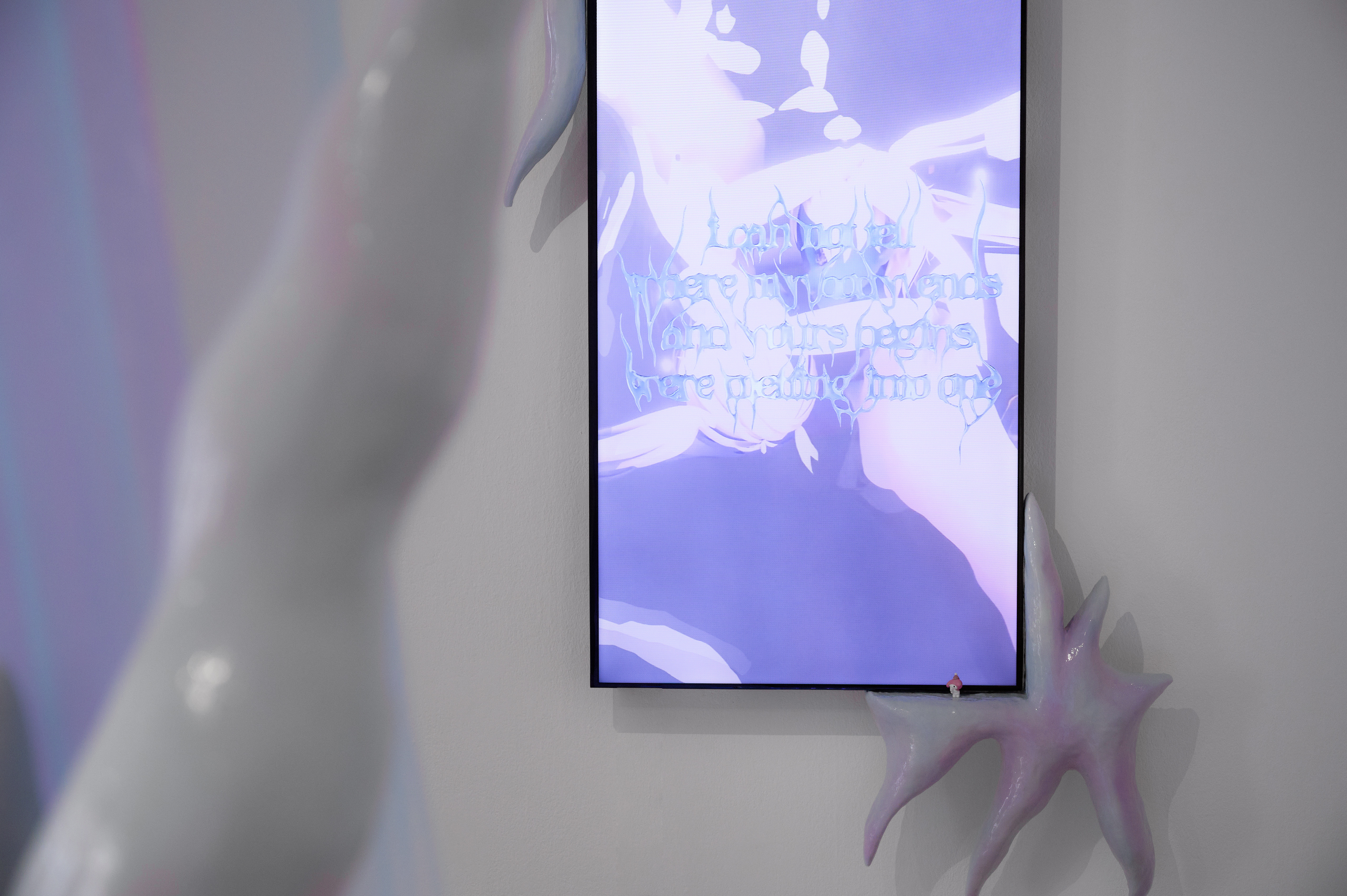
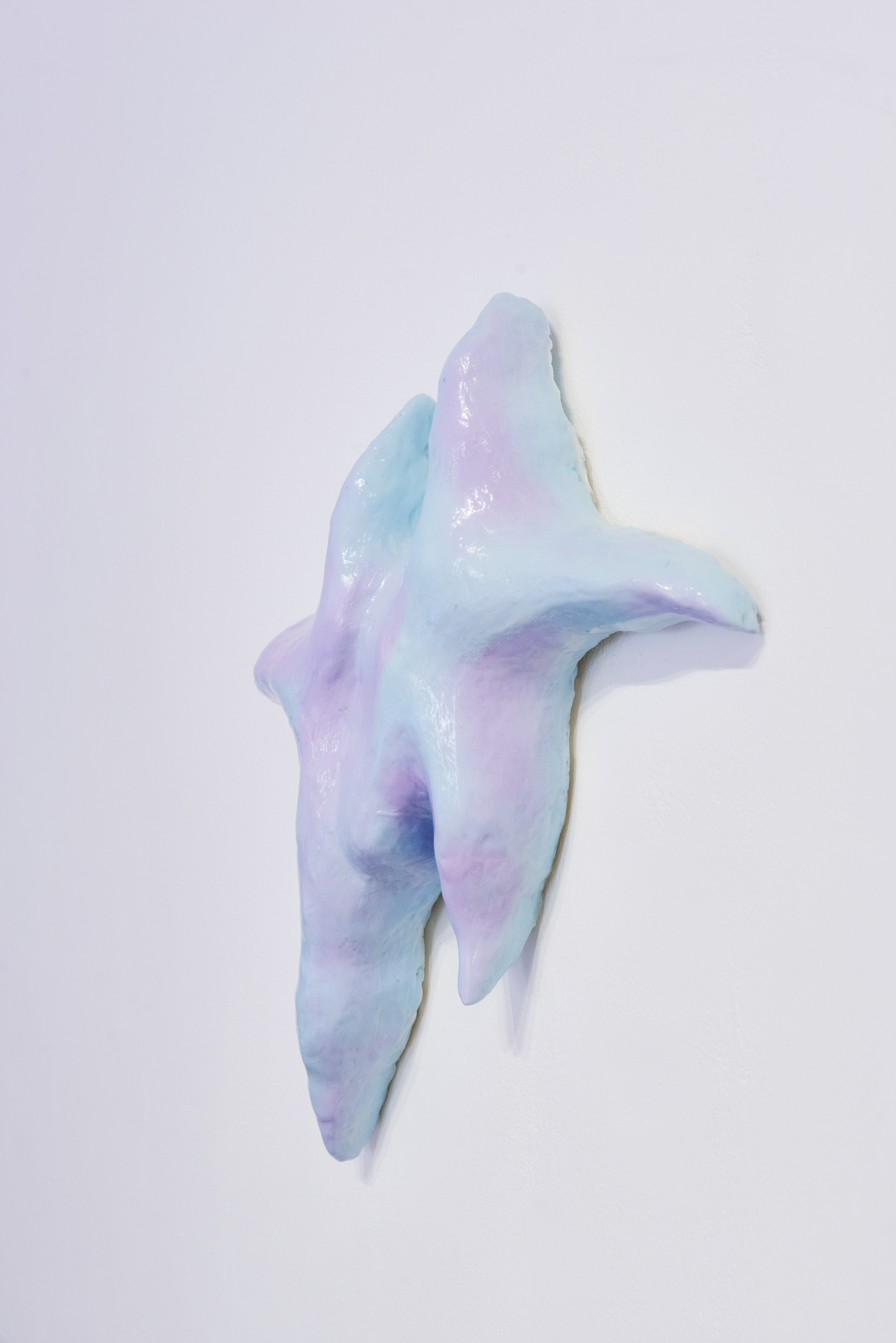
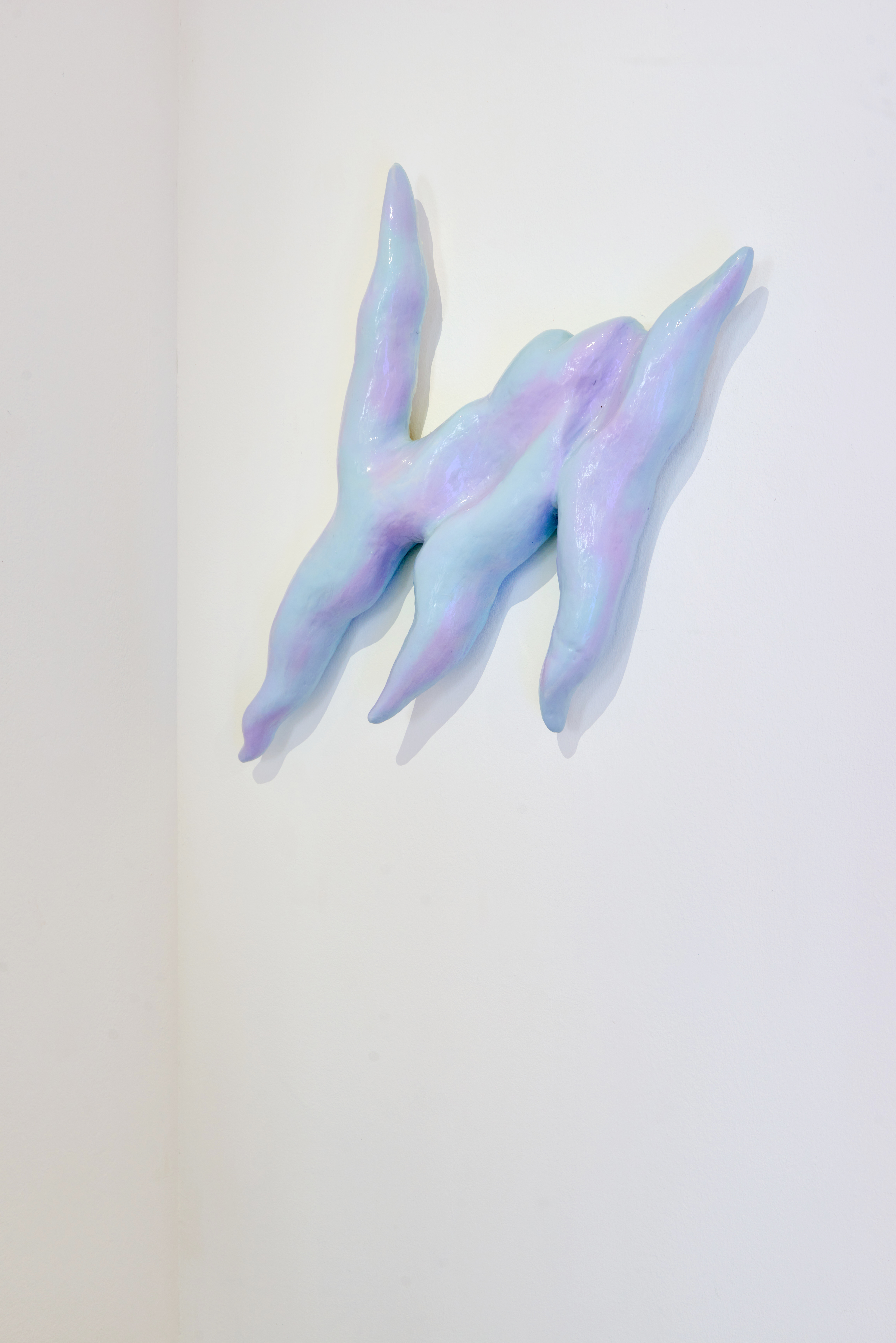
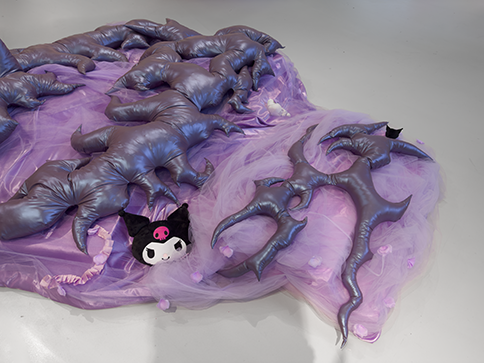
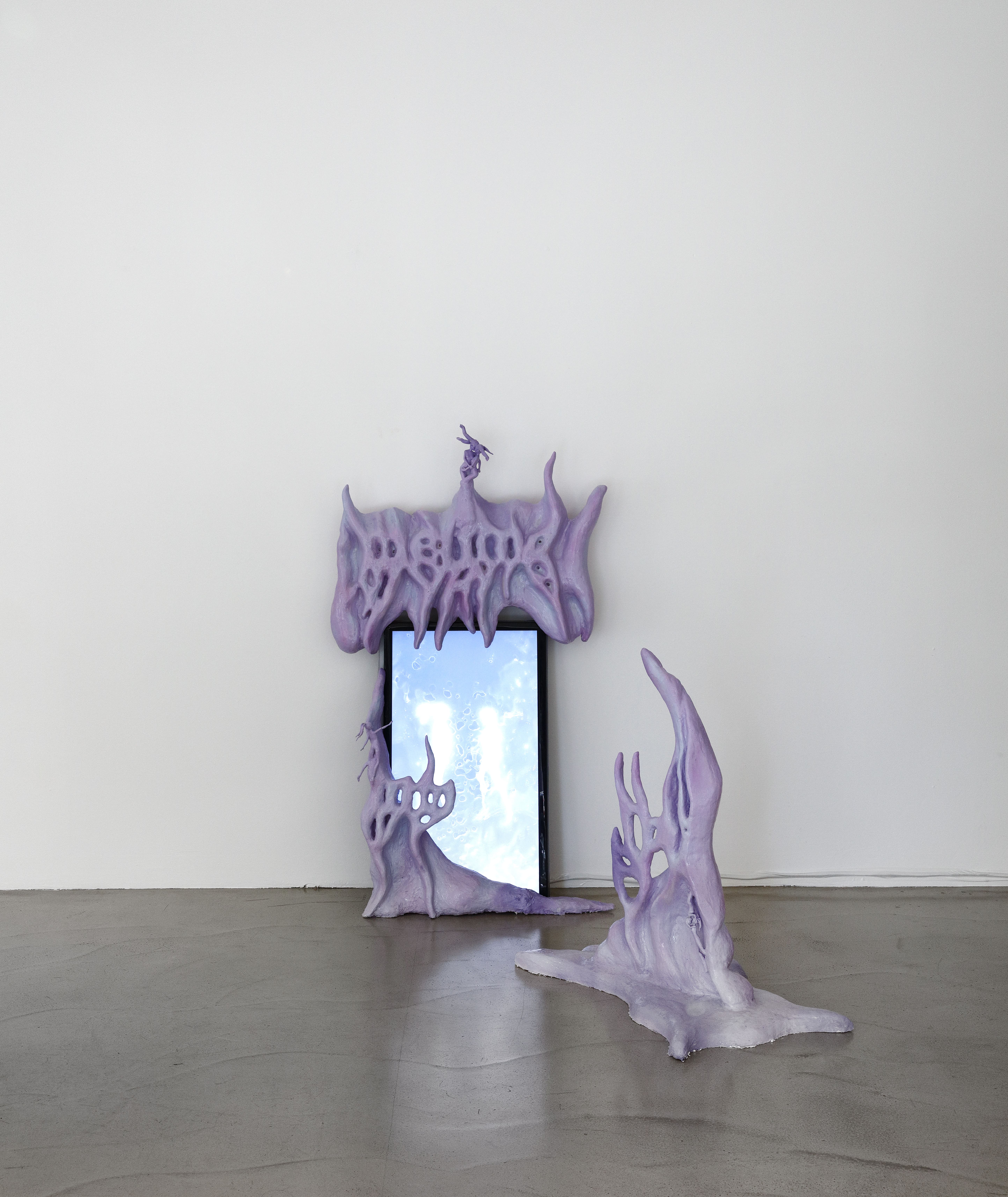
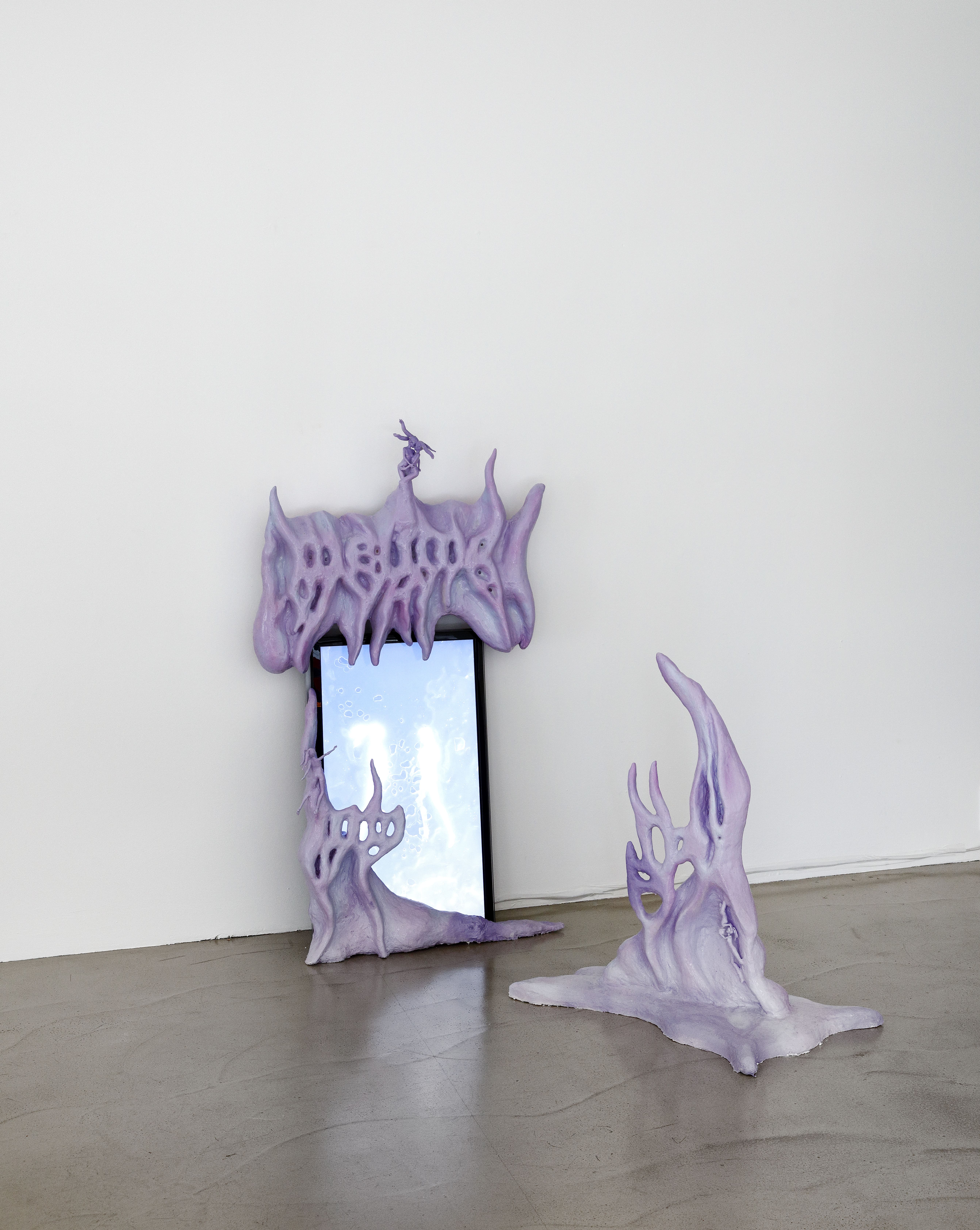
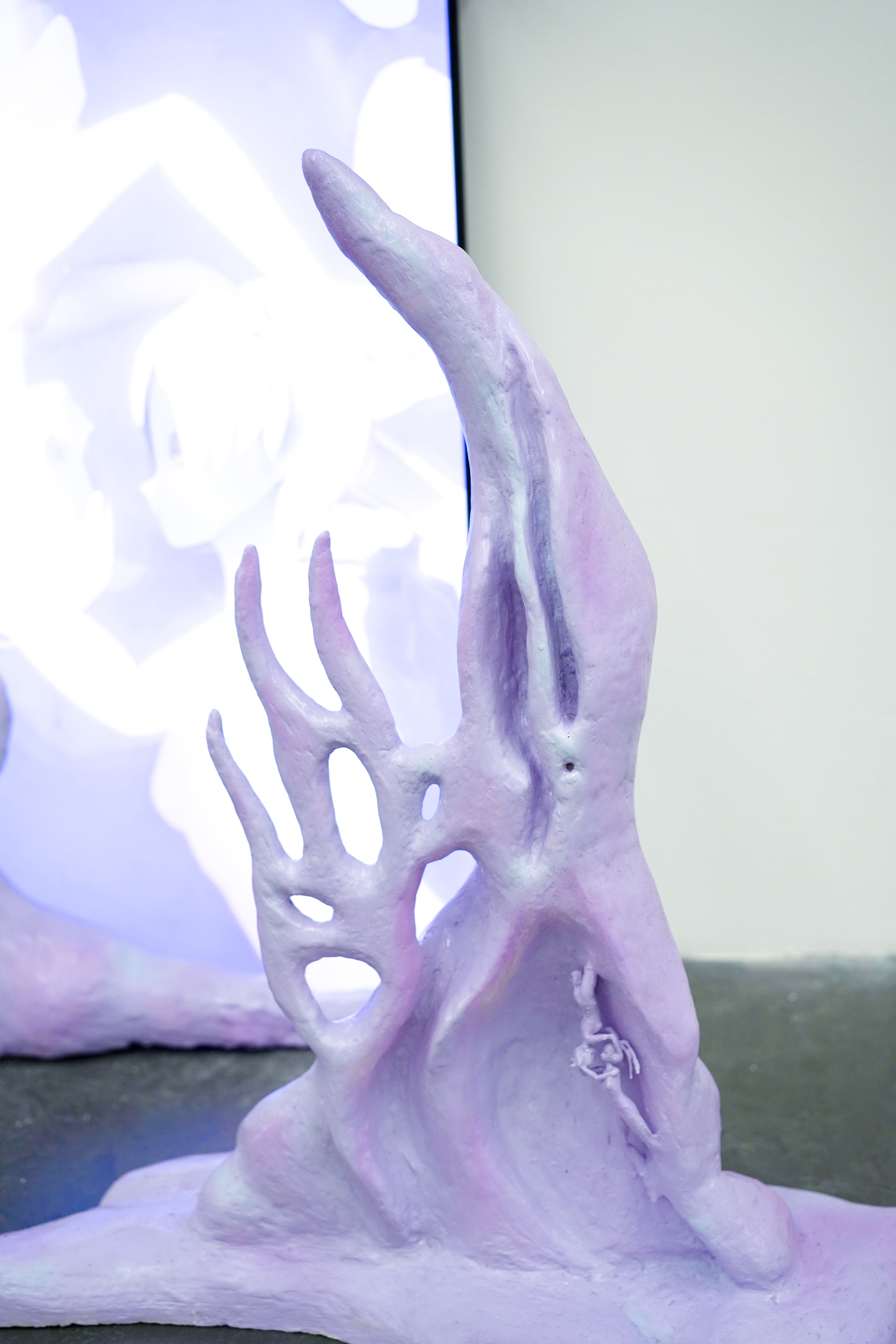
is a transmedia installation in which 3D-printed poem-sculptures leak out of a video screen, tracing the desire-lines of queer online community as they seep past the boundary between virtual and physical and pool, irreversibly, into shared reality.
2024
3 sculptures , 1 video, sound
“Passage”
Sammlung Falckenberg, Deichtorhallen
Hamburg, DE
“crawling home”
Pop-Up Gallery Salzburg, AT
3 sculptures , 1 video, sound
“Passage”
Sammlung Falckenberg, Deichtorhallen
Hamburg, DE
“crawling home”
Pop-Up Gallery Salzburg, AT
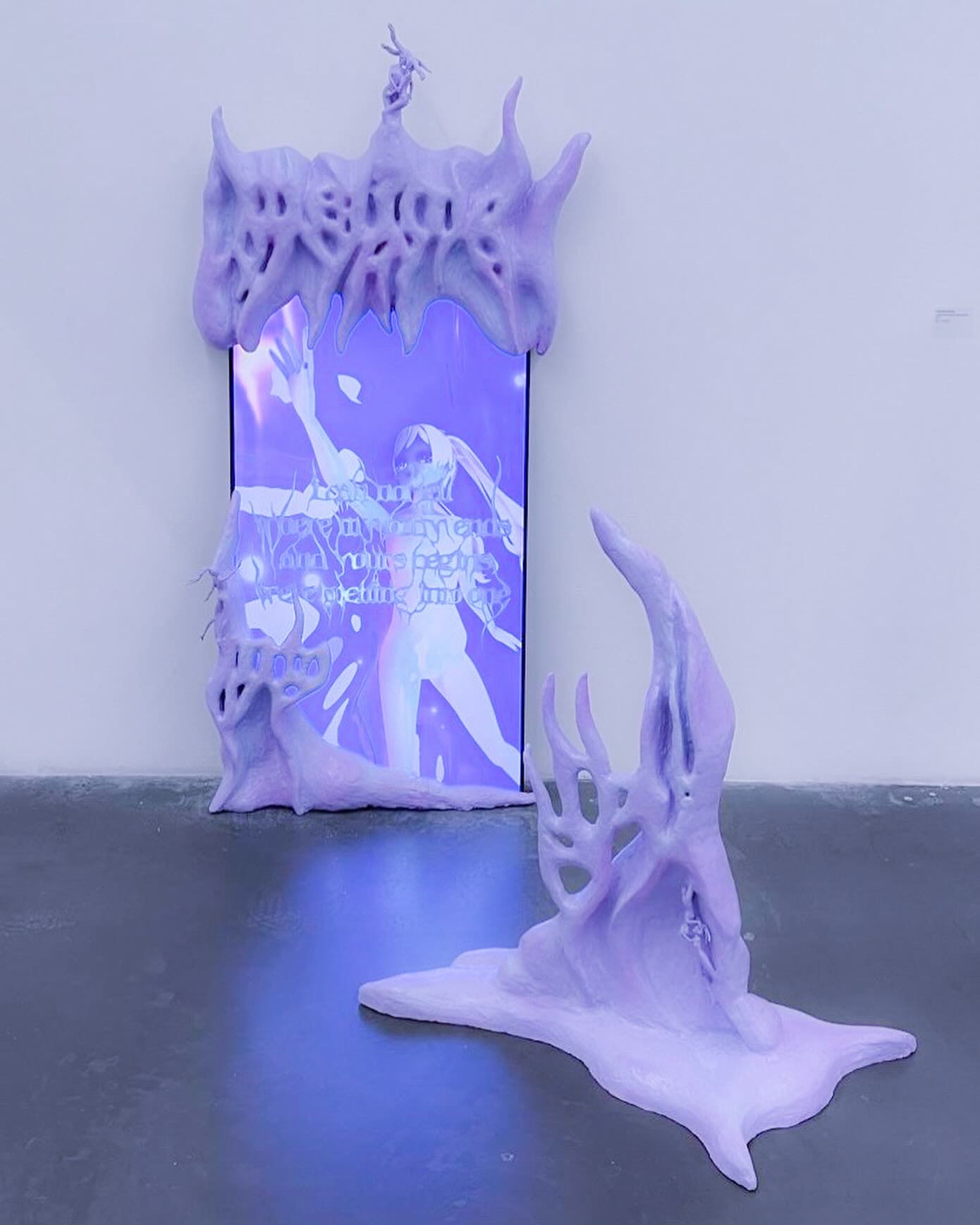
In online queer spaces, imagination runs free, directly from the source, where marginalized identities find refuge, exploring and connecting underneath the waves. Taking on avatars, the personal becomes abstracted in the virtual. Liberated from fears of repercussion and stigmatisation, exploration flows freely, uncovering what is hidden behind the surface. I reach out my hand towards you, breaking the tension, as the water rushes over us, uniting our bodies, just like our hearts have been united online <3
We need to be able to imagine - to make it real.
The feeling is too big,
the video is f
l
o
w
i
n
g
out of the screen, it can not be contained anymore,
my words are floating on the stream towards
you .。.:*♡
eroding whatever stands in our way, the boundaries have melted away, its our reality.....˚ *•̩̩͙ ✩.
The feeling is too big,
the video is f
l
o
w
i
n
g
out of the screen, it can not be contained anymore,
my words are floating on the stream towards
you .。.:*♡
eroding whatever stands in our way, the boundaries have melted away, its our reality.....˚ *•̩̩͙ ✩.
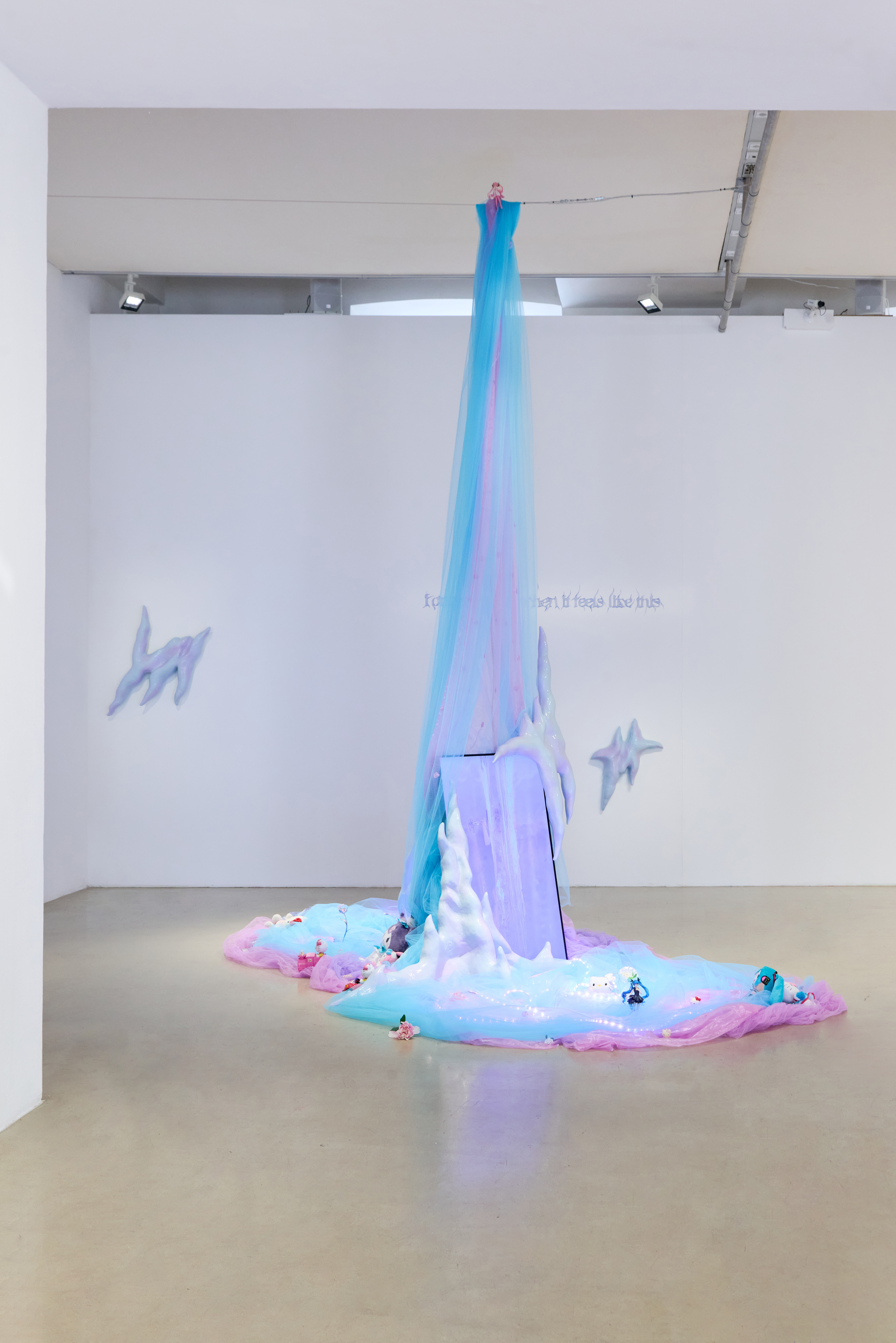
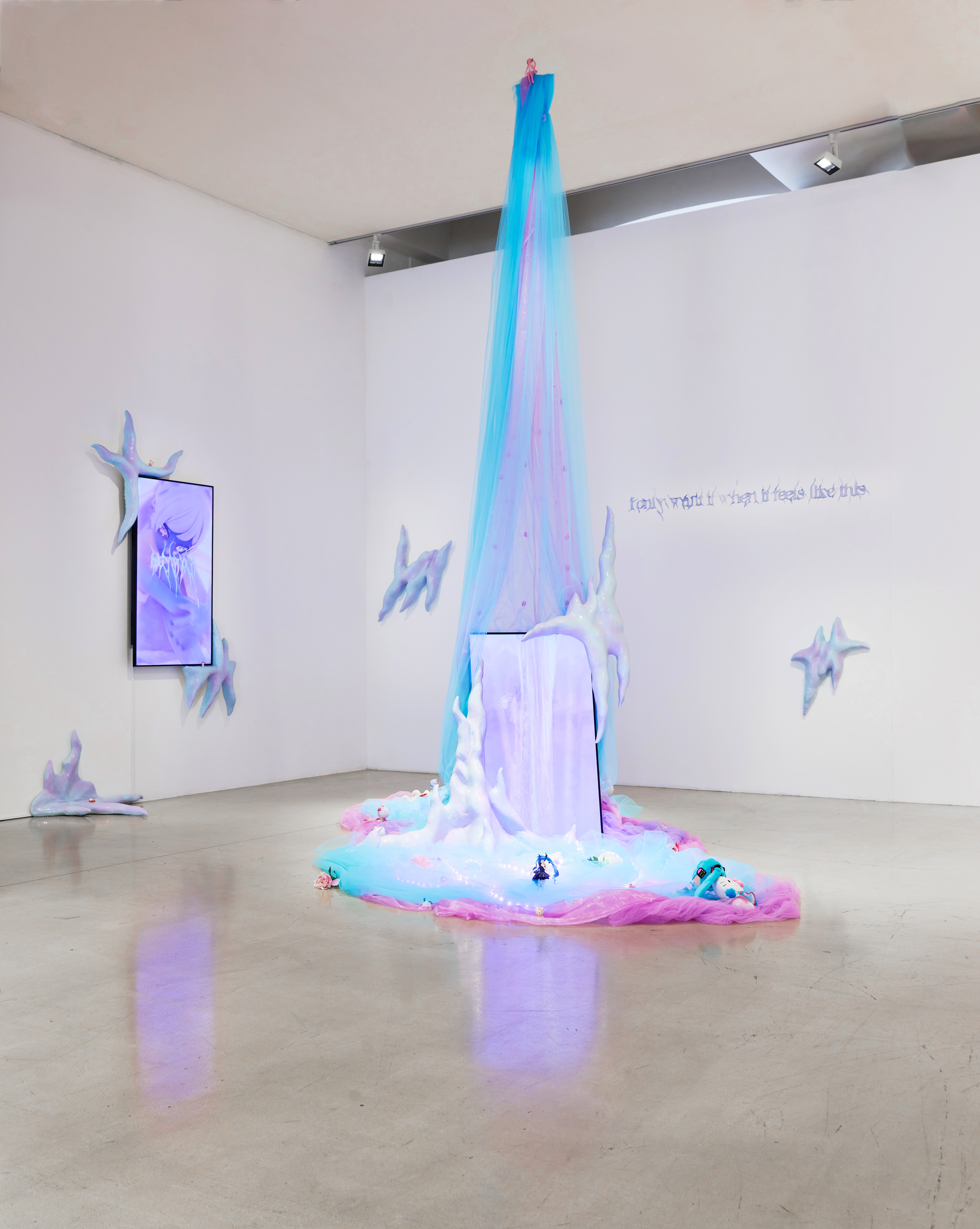
𝓲 𝓸𝓷𝓵𝔂 𝔀𝓪𝓷𝓽 𝓲𝓽 𝔀𝓱𝓮𝓷 𝓲𝓽 𝓯𝓮𝓮𝓵𝓼 𝓵𝓲𝓴𝓮 𝓽𝓱𝓲𝓼
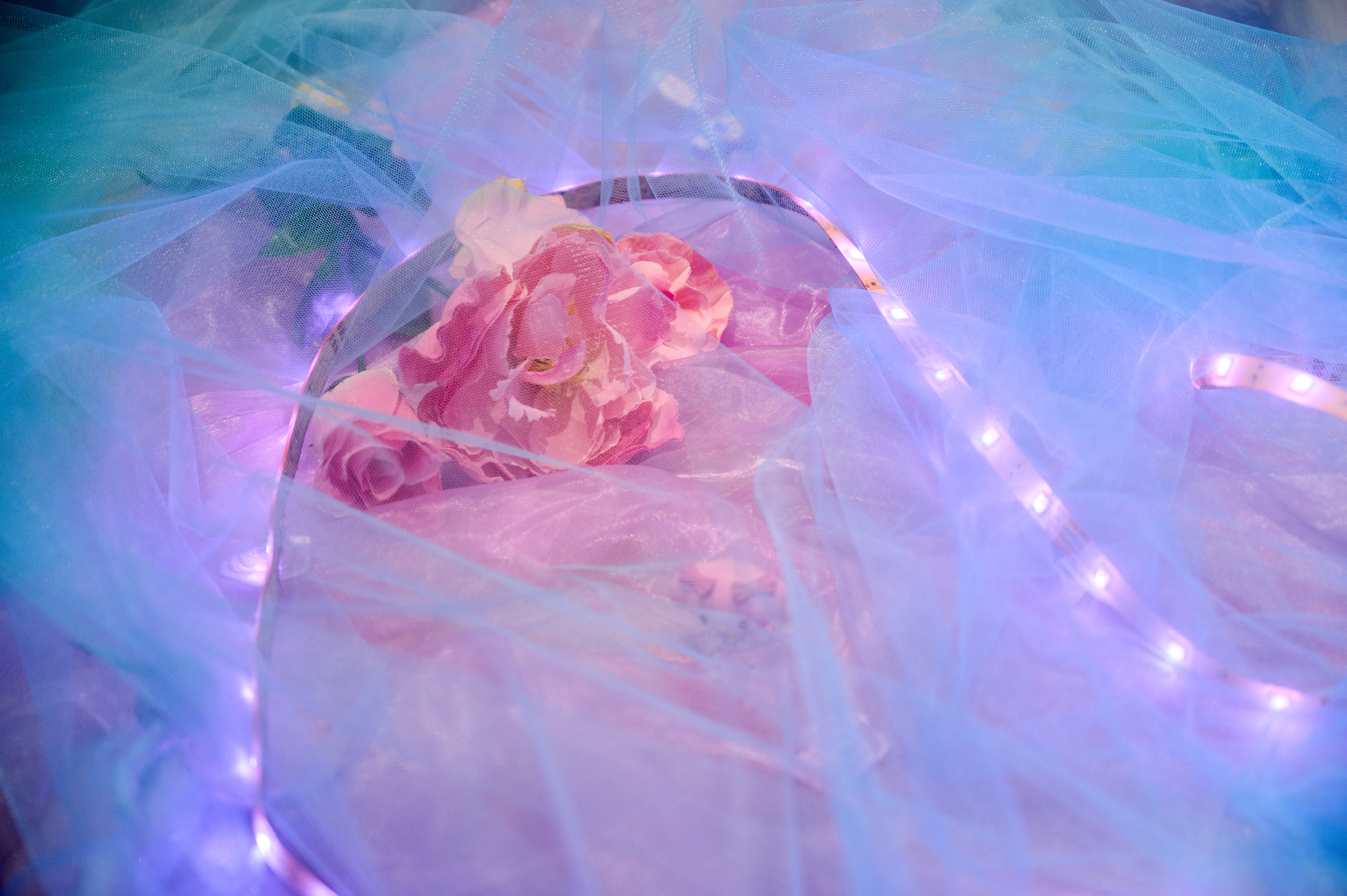
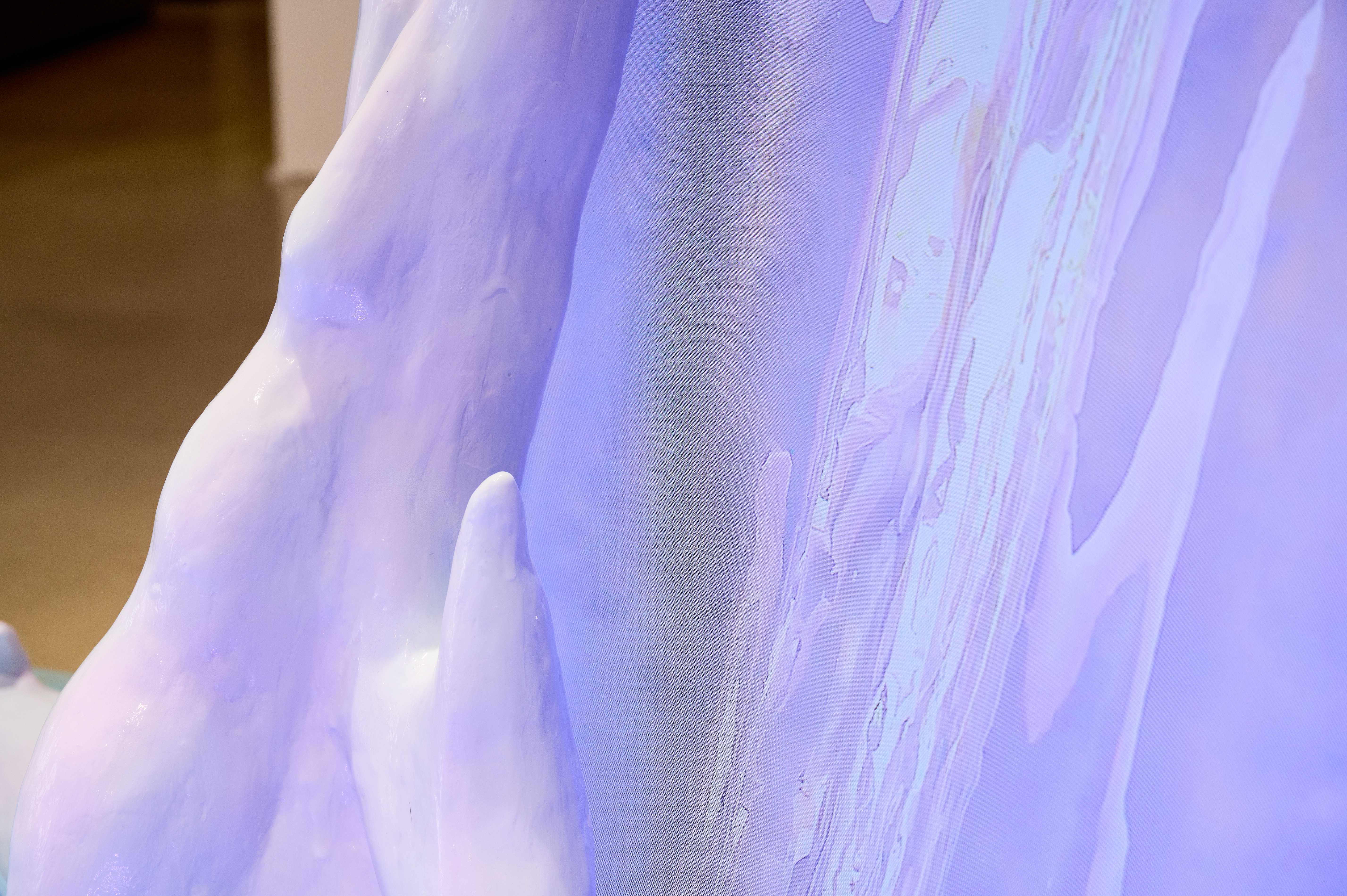
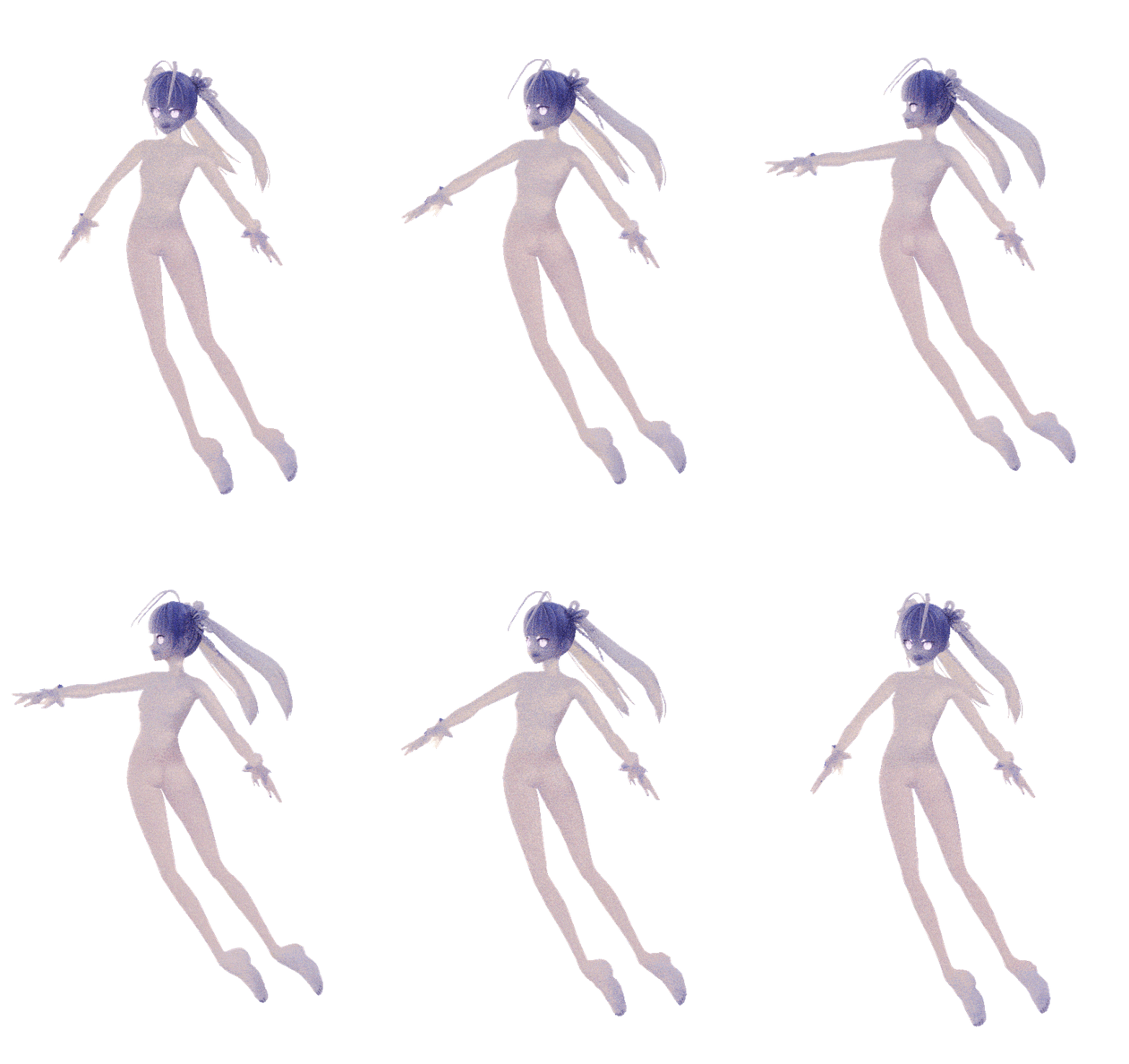
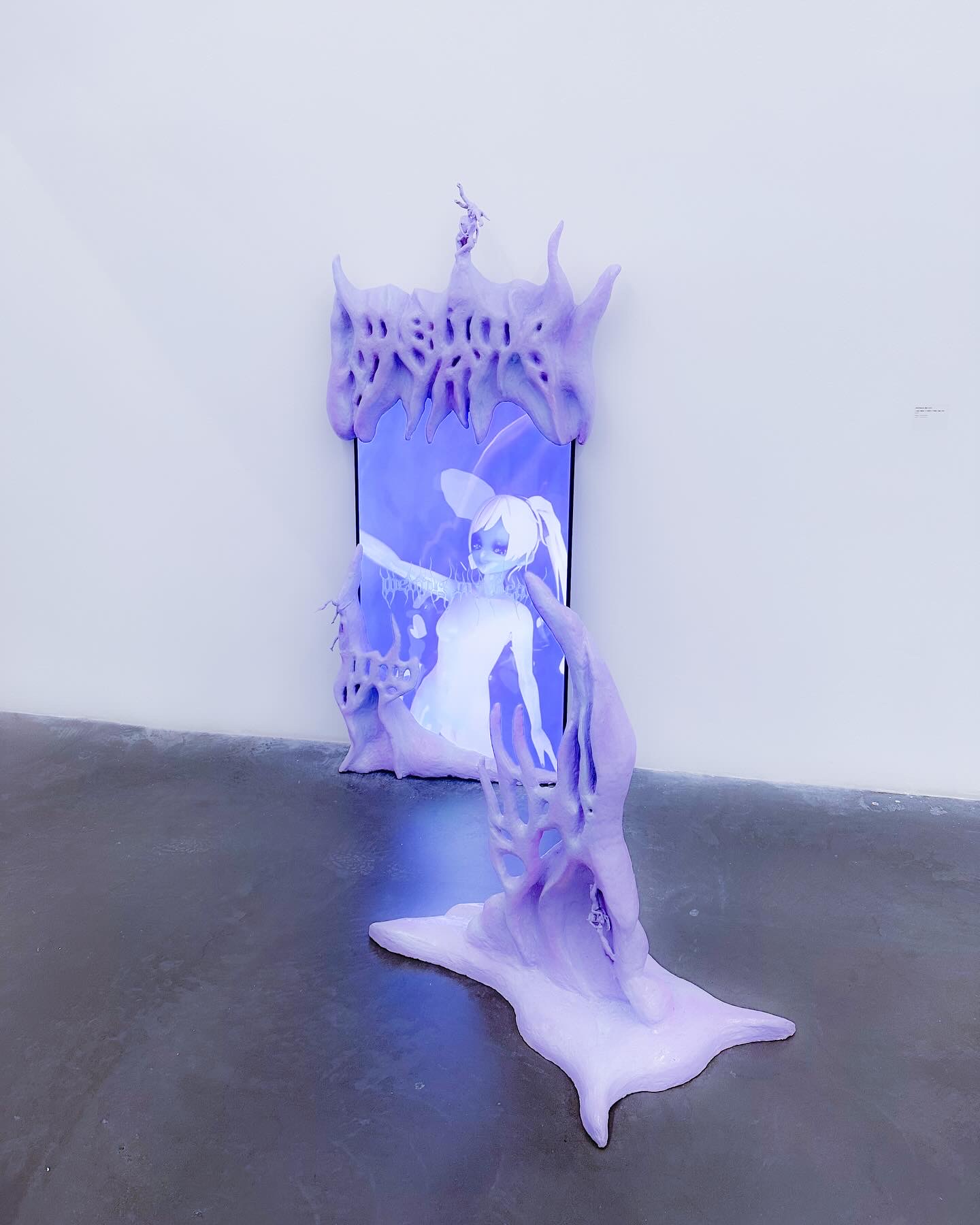
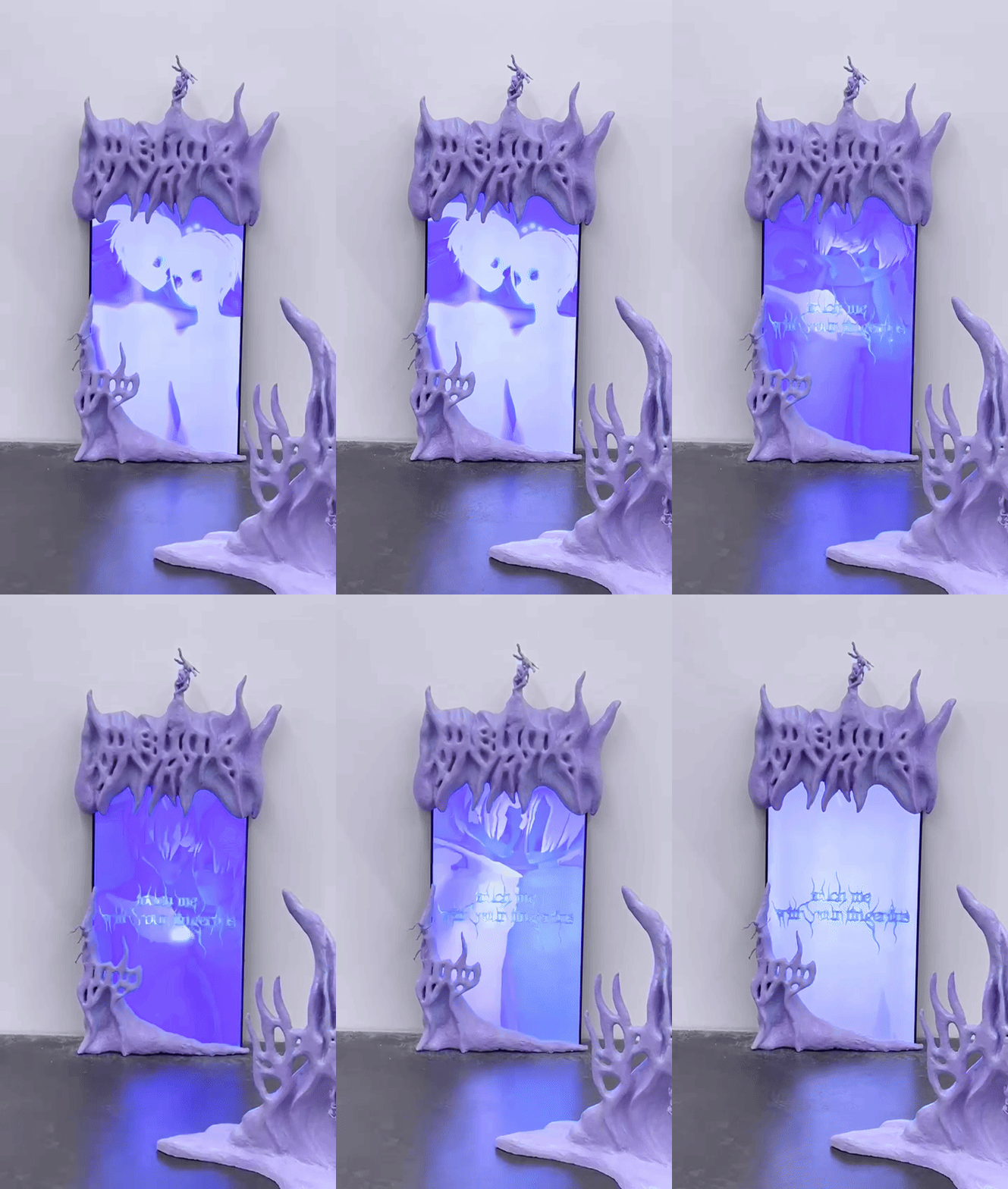
A lesbian cyberscape of cascading longing: resin sculptures leak from portal screens, a waterfall pools across the gallery floor, and a digital avatar watches over the overflow as the installation makes visible the queer desire, tenderness, and community that flow through the internet as an ever-present spring.
2024
sculptures , 3 videos, sound
“all the feels”
curated by Nora Mayr
Kunstraum Niederösterreich
Vienna, AT
sculptures , 3 videos, sound
“all the feels”
curated by Nora Mayr
Kunstraum Niederösterreich
Vienna, AT

Drawing on Deleuze and Guattari's conceptualization of desire as a productive, machinic flow rather than a deprivation-structured economy, the installation enacts desire as something that seeps, overflows, pools, and cascades of its own irresistible force. Desire in this work is always already moving, always exceeding its banks, always discovering the next channel through which intensity may travel. The space itself functions as a Body without Organs assembled from desiring-machines in continuous relation: the screen as permeable membrane, the avatar as partial object, the waterfall as libidinal current, the resin sculpture as desire crystallized mid-flow.
The internet operates here as what Mark Fisher would recognize as a site where the utopian impulse refuses deferral and insists on present-tense inhabitation. Within the online aquatic field constructed, the anonymity of the avatar functions as a technology of self-construction rather than erasure, a vessel through which queer configurations of gender and sexuality are explored, repeated, and intensified. The fixed coordinates of heteronormative embodiment dissolve in the liquid environment the installation proposes; identity becomes a tidal process, pulling in and releasing, always provisional, always in motion toward new form.
The work draws on the deep archive of lesbian poetics from Sappho through to the contemporary, locating desire in the elemental: water, skin, breath, the perceptual blur of bodies submerged together until the boundary between self and other becomes undecidable. The poem embedded in the work traces this phenomenology of dissolution with precision: i can not tell where my body ends and yours begins, we're melting into one. This is queer futurity understood not as projection onto a horizon deferred but as a current already running through the present, already connecting bodies across screens, already producing the community it also yearns for.
The installation thinks through the logic of wetware, situating subjectivity in the saturated zone where biology and technology saturate each other, where the body is already screen and the screen is already capable of tenderness. Touch here becomes a field of continuous intensity flowing across physical and digital registers simultaneously, leaking from one state into another, refusing the hierarchy that would place one above the other. The sakura avatar, the reaching hand, the sculpture spilling from the portal: these are figures of queer desire finding form in the overflow, in the refusal to remain contained within a single medium, body, or world.
i only want it when it feels like this presents the internet as a living spring: a source of queer possibility, of belonging and erotic community, where shared feeling circulates freely between bodies, avatars, sculptures, and screens. The installation enacts utopia as lived infrastructure, already flowing, already here, already touching you through the surface.